Malva pusilla
Sm.
Dwarf Mallow, Low mallow

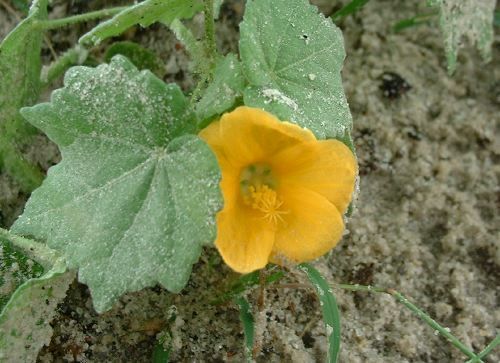
(c) Nikolay Panasenko, some rights reserved (CC BY-NC), uploaded by Nikolay Panasenko

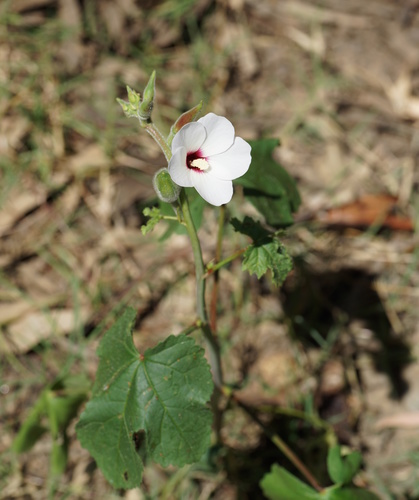
(c) Polina Hetman, some rights reserved (CC BY-NC), uploaded by Polina Hetman

(c) Ирина, some rights reserved (CC BY-NC), uploaded by Ирина
What to Eat
Edible parts: Leaves, Seed
Leaves - raw or cooked. A mild pleasant flavour, it can be used in quantity and makes an excellent salad plant. It is possibly the best for flavour in this genus though it is much lower yielding than the annual M. verticillata 'Crispa' or the perennials M. alcea and M. moschata. Seed - raw or cooked. Best used before it is fully mature, the seed has a pleasant nutty taste but it is rather small and very fiddly to harvest.
Known Hazards
Where to Find It
Europe. Introduced and locally naturalized in Britain.
TEMPERATE ASIA: Afghanistan, Iran, Iraq (north), Turkey, Russian Federation-Ciscaucasia (Ciscaucasia), Armenia, Azerbaijan, Georgia, Russian Federation-Western Siberia (Western Siberia), Russian Federation-Eastern Siberia (Eastern Siberia), Kazakhstan, Kyrgyzstan, Tajikistan EUROPE: Denmark, Norway, Sweden, Austria, Belgium, Czech Republic, Germany, Hungary, Netherlands, Poland, Slovakia, Russian Federation (European part), Belarus, Estonia, Lithuania, Latvia, Moldova, Ukraine (incl. Krym), Bulgaria, Bosnia and Herzegovina, Greece, Croatia, Italy, Montenegro, Romania, Serbia, Slovenia, Portugal
How to Identify
Malva pusilla is a ANNUAL growing to 0.3 m (1ft). See above for USDA hardiness. It is hardy to UK zone 6 and is not frost tender. It is in flower from June to September, and the seeds ripen from August to October. The species is hermaphrodite (has both male and female organs) and is pollinated by Insects. The plant is self-fertile. Suitable for: light (sandy), medium (loamy) and heavy (clay) soils and prefers well-drained soil. Suitable pH: mildly acid, neutral and basic (mildly alkaline) soils. It can grow in semi-shade (light woodland) or no shade. It prefers moist soil. The plant can tolerates strong winds but not maritime exposure.
How to Grow
A very easily grown plant, succeeding in ordinary garden soil, though it prefers a reasonably well-drained and moderately fertile soil in a sunny position. This plant has been extensively cultivated as a pot-herb in some countries. Plants seem to be immune to the predations of rabbits. Plants are prone to infestation by rust fungus.
Propagation: Seed - sow early spring in situ. Germination should take place within 2 weeks.
Medicinal Uses
Demulcent Poultice Urinary. The leaves are demulcent and have occasionally been used internally in the treatment of inflammations of the digestive and urinary systems. Externally they have been used as a poultice for bruises, inflammations, piles etc. This plant is less active than the common mallow (M. sylvestris) and the marsh mallow (Althaea officinalis). The seed is demulcent. It is used in the treatment of coughs, bronchitis, ulceration of the bladder and haemorrhoids. It is applied externally in the treatment of skin diseases.
Other Uses
Dye Teeth. Cream, yellow and green dyes can be obtained from the plant and the seed heads. The root can be used as a toothbrush.