Metroxylon sagu
Rottb.
Sago Palm

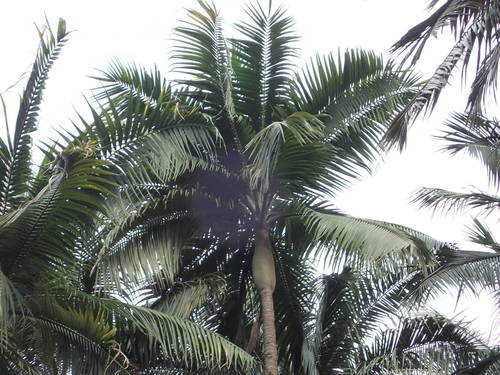
(c) marcel-silvius, some rights reserved (CC BY-NC)

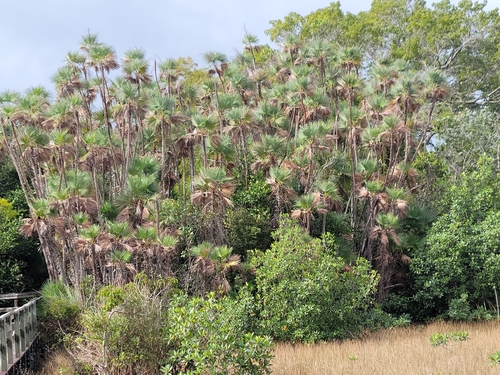
(c) Yanuar Ishaq Dc, some rights reserved (CC BY-NC-SA), uploaded by Yanuar Ishaq Dc

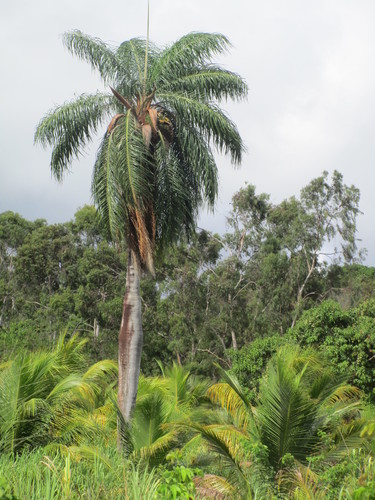
(c) marcel-silvius, some rights reserved (CC BY-NC)
What to Eat
Edible parts: Apical bud Fruit Stem
The pith of the stem is rich in starch. This has been widely used to make sago. The stem is cut down shortly before the tree flowers, since the carbohydrate content is then at its highest. It is chopped into sections and the fibrous inside is washed to extract the starch. Hot water is poured over the slightly sour wet starch and stirred. The resulting glue-like mass is eaten with fish and vegetable dishes. Usually, the wet starch extracted from the stems is boiled, fried or roasted, alone or mixed with other foodstuffs. It is also used industrially in the manufacture of cakes, noodles, kerupuk and custard powders. The fully ripe fruit is astringent, but is eaten as a delicacy by local people. Apical bud - raw or cooked. It is commonly steamed and eaten as a side dish with rice or added to stews. Harvesting this bud effectively eventually kills the individual trunk because it is unable to make side branches.
Known Hazards
Where to Find It
E. Asia - Malaysia.
TROPICAL ASIA: Papua New Guinea, Thailand, Indonesia, Malaysia, Philippines, PACIFIC: Fiji
How to Identify
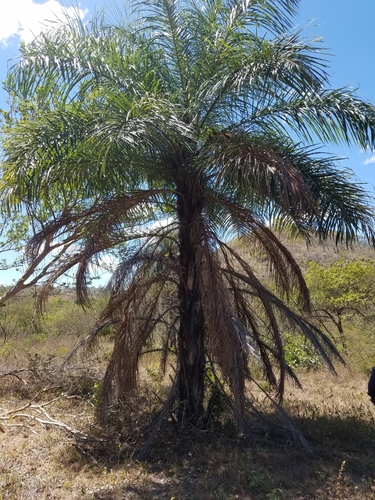
Metroxylon sagu is an evergreen Tree growing to 25 m (82ft) by 10 m (32ft) at a medium rate. See above for USDA hardiness. It is hardy to UK zone 10. The plant is not self-fertile. Suitable for: light (sandy), medium (loamy) and heavy (clay) soils and can grow in heavy clay soil. Suitable pH: mildly acid, neutral and basic (mildly alkaline) soils and can grow in very acid and saline soils. It cannot grow in the shade. It prefers moist or wet soil. The plant can tolerate maritime exposure.
How to Grow
It grows best in areas where annual daytime temperatures are within the range 25 - 36°c, but can tolerate 18 - 40°c. When dormant, the plant can survive temperatures down to about 10°c. It prefers a mean annual rainfall in the range 3,000 - 4,500mm, but tolerates 2,100 - 5,800mm. Plants grow well in full sun, even when small. They grow best in clay soils with a high organic-matter content. In the wild, the plant grows on mineral rich soils with a pH of 4.5 or more. Prefers a pH in the range 5.5 - 6.5, tolerating 4.5 - 8.5. Plants can be grown in soils with very high water tables, succeeding even in swamps. They can even tolerate occasional flooding with saline water. Sago palm is hapaxanthic. Each trunk lives for a number of years without flowering but, once it has flowered and fruited, the leaves senesce and the trunk dies completely. However, one or more suckers develop from the base and take over. The vegetative growth phase lasts for at least 8 years before the tree flowers. A single palm may yield about 180 - 350 kilos of sago. It has been calculated that the labour requirement for each kilo of starch obtained from this plant is far less than for any other starch producing plant. There are hermaphroditic and male flowers. The palm can be classified as a nearly complete obligatory cross-breeder, with easy vegetative multiplication. Spacing: 15-20 ft. (4.7-6 m) 20-30 ft. (6-9 m) 30-40 ft. (9-12 m).
Propagation: Seed - pre-soak for 24 hours in warm water and sow in containers. Germination usually takes several months. The seed germinates only under wet conditions. A rosette grows from the seed, out of which a new bole and new suckers may be formed. Division of suckers. The suckers have the advantage of being readily available and of producing homogeneous offspring, which allows selection of superior forms.
Other Uses
Alcohol Fencing Fertilizer Fibre Fodder Fuel Nails Paper Shelterbelt Soil stabilization Thatching Weaving Wood. Agroforestry Uses: Sago palm has been planted in buffer zones as a method of rehabilitating degraded lands, for instance the coastal plains of Indonesia where thousands of hectares of land had been abandoned. Especially when in wetter soils, the roots help to stabilize the soil by trapping silt. Young palms, with their numerous spines, act as effective barriers for livestock and potential trespassers. As the palms mature and develop above-ground stems, new palms may be planted adjacent to the juveniles to maintain the spininess of the fence. Other Uses The leaves, and the fibres obtained from them, are commonly used for thatching, weaving mats etc. It is said that thatch made from this plant will last for at least 5 years. Processing of the pith to yield starch produces a fibre. The waste from pith processing is used as a fertilizer. Dextrose sugar extract from sago palm starch can be processed to yield alcohol for use as a biofuel. The starch obtained from the stems is also used for various other products including to make a sizing paste for paper and textiles. The cortex of the trunk is also used for firing in paper mills. The bark may be used as a domestic fuel after drying. The frond rachis is often used for fastening between horizontal posts in walls. The bark may be used as a flooring material. The hard outside of the trunk is used for building purposes.
Names & Synonyms
Sago Palm, Ambasao, Ambulung, Ambusao, Balau, Bulu, Bulung, Chr ae saku, Kersula, Kirai, Kresula, Lumbia, Palma de sago, Pohon rumbia, Pohon sagu, Rajang bunkoan, Rambia, Rembi, Rembia, Rembulung, Resula, Rontan, Rumbia, Sa khu, Sago yashi, Sagopalme, Sagoutier, Sagu, Saksak, Tembulu, Tha-gu-bin, Xi mi zong