Epigaea asiatica
Maxim.
Japanese mayflower
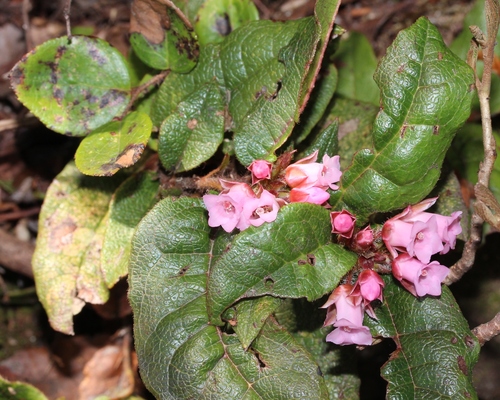
(c) Alpsdake, some rights reserved (CC BY-SA)
(c) Jean-François Olivier, some rights reserved (CC BY-NC)
What to Eat
Edible parts: Fruit
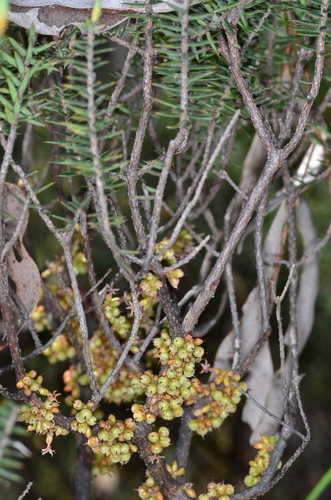
The fruit is edible. No further details are given beyond that the fruit is approximately 10mm in diameter.
Where to Find It
It is a temperate plant. It grows in the mountains in Japan. It is best in a fertile, well-drained, acid soil. It needs an open sunny position. It is resistant to frost but damaged by drought.
Asia, Australia, Britain, China, Europe, Japan*,
How to Identify
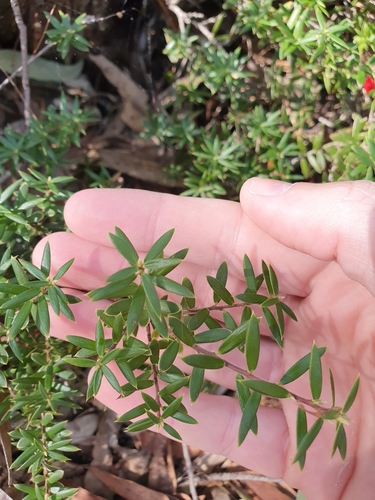
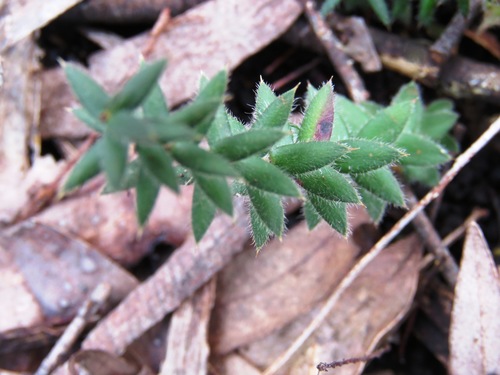
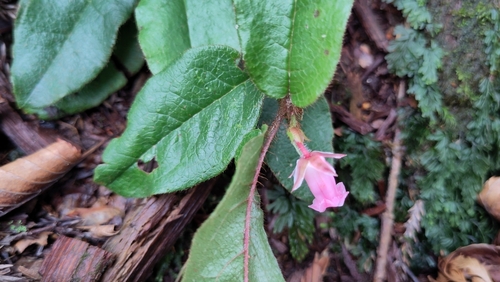
An evergreen plant. It grows 15 cm high and spreads 50 cm wide. The stems are low and lie along the ground. They branch. The leaves are oval and have a wrinkled surface and an irregular edge. The leaves are alternate and have leaf stalks.
How to Grow
Requires an open lime-free humus-rich soil and shade from direct sunlight, succeeding also in deep shade. Grows well in the shade of rhododendrons and other calcifuge shrubs. A difficult plant to grow in cultivation, though it is easier than E. repens. The flower buds require a period of chilling to about 2°c before they will open. The flowers are sweetly scented. They are produced in terminal racemes on the previous year's shoots.
Propagation: Seed is best sown as soon as it is ripe in a shady position in a cold frame. Alternatively, seed — which requires no pre-treatment — can be sown in late winter in a cold frame. Surface sow and keep in light shade, ensuring the compost does not dry out. Germination usually takes 3–5 weeks. Pot up seedlings into individual pots as soon as they are large enough to handle, taking great care as they strongly resent root disturbance. Grow on in light shade in the greenhouse and plant out into permanent positions in the late spring of their second year. Cuttings of half-ripe wood can be taken in July or August in a frame, taken with a part of the previous year's growth. Plants self-layer and can be divided in spring, though this must be done with great care due to their sensitivity to root disturbance.
Medicinal Uses
None known.
Other Uses
Useful as a ground cover plant for shady positions, forming a carpet of growth with plants spaced about 25cm apart each way. This species is probably not very worthwhile for ground cover in Britain due to its difficulty to cultivate.
Wikipedia
Source ↗Epigaea asiatica is a species of Epigaea from Japan. It has pale pink flowers, and seeds that are dispersed by ants.
Notes
There are 3 Epigaea species.
Names & Synonyms
References (3)
- Bodkin, F., 1991, Encyclopedia Botanica. Cornstalk publishing, p 383
- Bull. Acad. Imp. Sci. Saint-Peersbourg 11:432. 1867 (Diagn. pl. nov. jap.)
- Plants for a Future database, The Field, Penpol, Lostwithiel, Cornwall, PL22 0NG, UK. http://www.scs.leeds.ac.uk/pfaf/