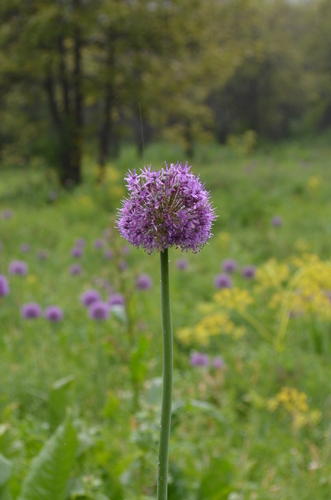
Allium nutans
L.
Blue Chives

(c) Oleg Kosterin, some rights reserved (CC BY), uploaded by Oleg Kosterin

(c) Osmonali Bektemir, some rights reserved (CC BY-NC), uploaded by Osmonali Bektemir
What to Eat
Edible parts: Leaves
Leaves - raw or cooked. A mild, chive-like flavour.
Known Hazards
Where to Find It
Central Asia to Siberia.
TEMPERATE ASIA: Russian Federation (Gorno-Altay, Tyva, Respublika, Altay, Krasnoyarsk, Kemerovskaja oblast, Kurganskaja oblast, Novosibirsk, Omsk, Tyumen), Kazakhstan (east)
How to Identify
Allium nutans is a BULB growing to 0.5 m (1ft 8in). See above for USDA hardiness. It is hardy to UK zone 1 and is not frost tender. It is in flower from June to July, and the seeds ripen from July to August. The species is hermaphrodite (has both male and female organs) and is pollinated by Insects. Suitable for: light (sandy), medium (loamy) and heavy (clay) soils and prefers well-drained soil. Suitable pH: mildly acid, neutral and basic (mildly alkaline) soils. It cannot grow in the shade. It prefers moist soil.
How to Grow
An easily grown plant for a sunny position in a well-drained soil. Grows well with most plants, especially roses, carrots, beet and chamomile, but it inhibits the growth of legumes. This plant is a bad companion for alfalfa, each species negatively affecting the other. Members of this genus are rarely if ever troubled by browsing deer.
Propagation: Seed - sow spring in a cold frame. Germination is usually free and easy, pot up the seedlings as soon as they are large enough to handle easily and plant out in the following spring. Division can be carried out at almost any time of the year but is probably best done in spring. The clumps should be divided at least every 3 or 4 years in order to maintain vigour, the divisions can be planted out direct into their permanent positions.
Medicinal Uses
Although no specific mention of medicinal uses has been seen for this species, members of this genus are in general very healthy additions to the diet. They contain sulphur compounds (which give them their onion flavour) and when added to the diet on a regular basis they help reduce blood cholesterol levels, act as a tonic to the digestive system and also tonify the circulatory system.
Other Uses
Repellent. The juice of the plant is used as a moth repellent. The whole plant is said to repel insects and moles.