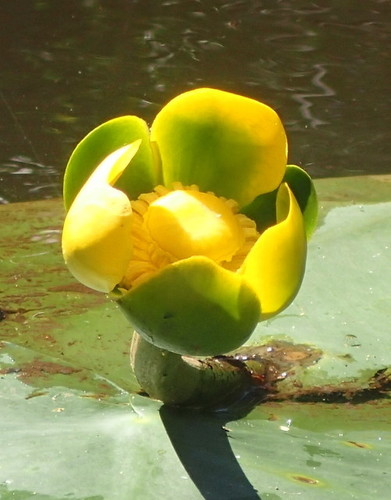
Nymphaea alba
L.
White Water Lily, European white waterlily

(c) Kristin A. Bakkegard, some rights reserved (CC BY-NC), uploaded by Kristin A. Bakkegard

(c) Tatyana Zarubo, some rights reserved (CC BY-NC), uploaded by Tatyana Zarubo

(c) Tatyana Zarubo, some rights reserved (CC BY-NC), uploaded by Tatyana Zarubo
What to Eat
Edible parts: Root, Seed
Coffee. Root - cooked. Eaten when several years old. It contains up to 40% starch, 6% protein. Some caution is advised, see the notes above on toxicity. The roasted seed is a coffee substitute. Seed - cooked. It contains about 47% starch.
Known Hazards
Where to Find It
Most of Europe, including Britain.
TEMPERATE ASIA: Iran (north), Iraq, Israel (extinct), Turkey, Armenia, Azerbaijan, Russian Federation (Krasnodar, Stavropol), Russian Federation (Chelyabinsk) TROPICAL ASIA: India (Jammu and Kashmir) EUROPE: Denmark, Finland, United Kingdom, Ireland, Norway, Sweden, Austria, Belgium, Switzerland, Czech Republic, Germany, Hungary, Netherlands, Poland, Slovakia, Belarus, Estonia, Lithuania, Latvia, Moldova, Russian Federation (Baškortostan, Respublika, Cuvašskaja Respublika, Karelia, Mordovija, Respublika, Tatarstan, Astrakhan, Belgorod, Bryansk, Ivanovo, Kaliningrad, Kalužskaja oblast, Kursk, Leningradskaja oblast, Lipeckaja oblast, Moscow, Nizhniy Novgorod, Novgorod, Orel, Orenburg, Penza, Pskovskaja oblast, Rostov, Ryazan, Samara, Saratov, Smolensk, Tambov, Tula, Tver, Ulyanovsk, Vladimir, Volgogradskaja oblast, Voronezh), Ukraine, Albania, Bulgaria, Bosnia and Herzegovina, Greece, Croatia, Italy, North Macedonia, Montenegro, Romania, Serbia, Slovenia, Spain (incl. Baleares), France (incl. Corsica), Portugal AFRICA: Algeria (north), Morocco, Tunisia
How to Identify
Nymphaea alba is a PERENNIAL. See above for USDA hardiness. It is hardy to UK zone 5. It is in flower from July to August, and the seeds ripen from August to October. The species is hermaphrodite (has both male and female organs) and is pollinated by Flies, beetles. The plant is self-fertile. Suitable for: light (sandy), medium (loamy) and heavy (clay) soils. Suitable pH: mildly acid, neutral and basic (mildly alkaline) soils. It cannot grow in the shade. It can grow in water.
How to Grow
A water plant requiring a rich soil and a sunny position in still or slowly moving water. Best grown in 2 - 2.5 metres of water. Prefers a pH between 6 and 7. Dislikes acid conditions according to another report. This species is hardy to about -20°c. There are two basic types of plant in this genus:- 'crawlers' are species with horizontal roots that often spread freely, with new plants being formed at intervals along the root. These species are useful for naturalising, but they do not flower very freely in the cool summers of Britain. 'clumpers' have vertical roots and form slowly spreading clumps and produce offsets around the crown. These forms flower much more freely in Britain. A very ornamental plant. The flowers, which only open in bright sunshine, have a soft delicate scent.
Propagation: Seed - sow as soon as it is ripe in a greenhouse in pots submerged under 25mm of water. Prick out into individual pots as soon as the first true leaf appears and grow them on in water in a greenhouse for at least two years before planting them out in late spring. The seed is collected by wrapping the developing seed head in a muslin bag to avoid the seed being lost. Harvest it 10 days after it sinks below the soil surface or as soon as it reappears. Division in May. Each portion must have at least one eye. Submerge in pots in shallow water until established.
Medicinal Uses
Anaphrodisiac Anodyne Antiscrophulatic Astringent Cardiotonic Demulcent Dysentery Sedative. The rhizome is anodyne, antiscrofulatic, astringent, cardiotonic, demulcent and sedative. A decoction of the root is used in the treatment of dysentery or diarrhoea caused by irritable bowel syndrome. It has also been used to treat bronchial catarrh and kidney pain and can be taken as a gargle for sore throats. Externally it can be used to make a douche to treat vaginal soreness or discharges. In combination with slippery elm (Ulmus rubra) or flax (Linum usitatissimum) it is used as a poultice to treat boils and abscesses. The rhizome is harvested in the autumn and can be dried for later use. The flowers are anaphrodisiac and sedative. They have a generally calming and sedative effect upon the nervous system, reputedly reducing the sex drive and making them useful in the treatment of insomnia, anxiety and similar disorders. A complete cure of uterine cancer by a decoction and uterine injection has been recorded. According to one report the plant is not used in modern herbal practice, though it has been quoted as a remedy for dysentery.