Oenocarpus distichus
Mart.
Pataua, Bacaba, White bacaba

Paul K from Sydney, Australia (via Wikimedia Commons)

(c) Guillaume Léotard, some rights reserved (CC BY-NC), uploaded by Guillaume Léotard

(c) Joey Santore, some rights reserved (CC BY-NC), uploaded by Joey Santore
What to Eat
Edible parts: Apical bud Fruit Leaves Oil
Oil. Fruit - raw or cooked. It has a thin, fleshy pulp. A high-calorie beverage is commonly made from the fruit by removing the pulp and then whipping it with water. Called 'Bacaba branca', it is highly esteemed locally. It can also be fermented into a vinegar. The pulp of the fruit contains a clear, yellow, sweet-flavoured oil. It can be used as a perfect substitute for olive oil. Used in cooking. Leaves - cooked. The apical bud, often known as a 'palm heart', is eaten as a vegetable. Eating this bud leads to the death of the tree because it is unable to make side shoots.
Where to Find It
S. America - Brazil, Bolivia, Peru
SOUTHERN AMERICA: Brazil (Maranhão, Mato Grosso, Pará, Rondônia, Tocantins), Bolivia (El Beni, Santa Cruz)
How to Identify
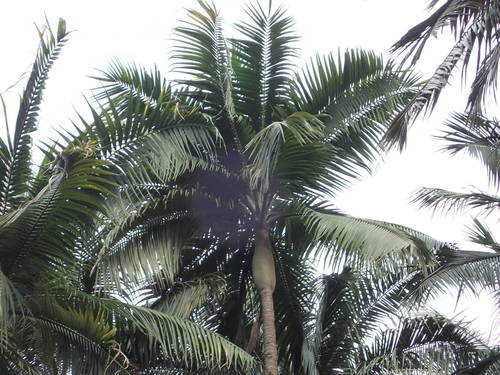
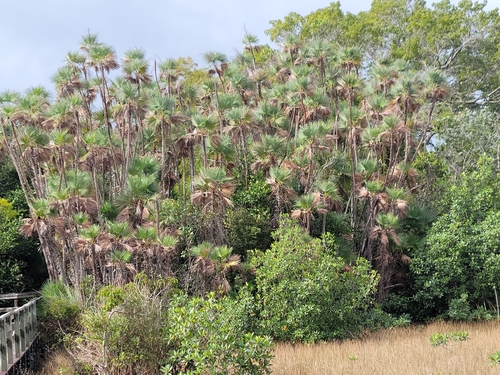
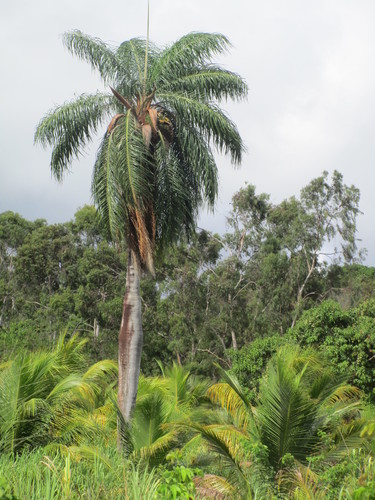
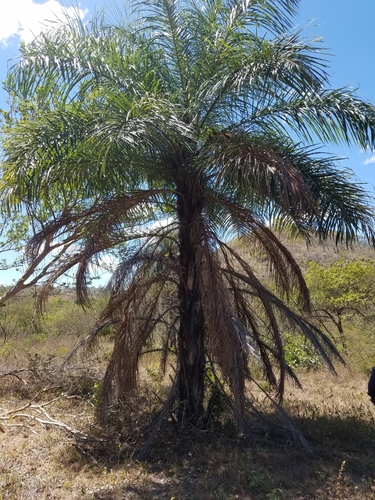
Oenocarpus distichus is an evergreen Tree growing to 8 m (26ft) by 4 m (13ft) at a slow rate. See above for USDA hardiness. It is hardy to UK zone 10. Suitable for: light (sandy), medium (loamy) and heavy (clay) soils and prefers well-drained soil. Suitable pH: mildly acid and neutral soils and can grow in very acid soils. It cannot grow in the shade. It prefers moist soil.
How to Grow
Grows best in a sunny, moist, but well drained position.
Propagation: Seed
Medicinal Uses
The oil from the fruit pulp is emollient.
Other Uses
Oil. The leaves are used for thatching and weaving.
Names & Synonyms
Pataua, Bacaba, White bacaba, Bacaba palm