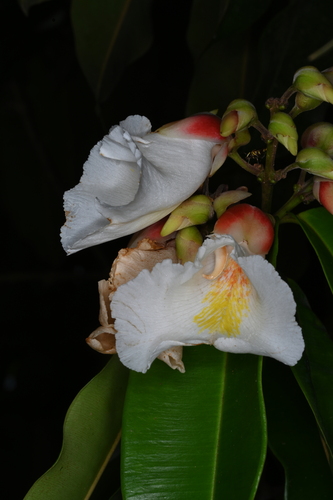
Erisma japura
Spruce ex Warm.
Japura

L. A. Torres Montenegro : Servicios de Biodiversidad EIRL

L. A. Torres Montenegro : Servicios de Biodiversidad EIRL

L. A. Torres Montenegro : Servicios de Biodiversidad EIRL
What to Eat
Edible parts: Seeds
The kernels are eaten raw or boiled. The seeds can also be boiled, soaked in running water for several weeks, and pounded into a butter-like form.
Known Hazards
Where to Find It
A tropical plant. It grows in the rainforest. It grows in the humid lowlands. It occurs in areas with a average annual temperature of 26°C and an annual rainfall of about 3,400 mm.
Amazon, Brazil, Colombia, Guyana, South America, Venezuela,
How to Identify
A large tropical tree native to rainforests in humid lowlands, found in areas with warm temperatures (26°C average) and high rainfall (around 3,400 mm annually). It produces red fruit containing edible kernels that are highly valued as an important food source for local people.
How to Grow
A plant of the humid, lowland tropics. It is found in areas where the mean annual temperature is in the region of 26°c and the mean annual rainfall is around 3,400mm. The rainfall is fairly well distributed, but there is a drier period of about 3 months.
Other Information
The seeds are highly valued. They are an important source of food for local people.
Notes
There are 20 Erisma species.
Names & Synonyms
Badigue, Japura, Kikije-e, Oreja de chimbe, Quaruba-branca
References (14)
- Etkin, N.L. (Ed.), 1994, Eating on the Wild Side, Univ. of Arizona. p 122, 137
- Fern, K., 2012, Tropical Species Database http://theferns.info/tropical/
- Grandtner, M. M. & Chevrette, J., 2013, Dictionary of Trees, Volume 2: South America: Nomenclature, Taxonomy and Ecology. Academic Press p 222
- GRIN
- Hedrick, U.P., 1919, (Ed.), Sturtevant's edible plants of the world. p 293
- Heywood, V.H., Brummitt, R.K., Culham, A., and Seberg, O. 2007, Flowering Plant Families of the World. Royal Botanical Gardens, Kew. p 337
- Kermath, B. M., et al, 2014, Food Plants in the Americas: A survey of the domesticated, cultivated and wild plants used for Human food in North, Central and South America and the Caribbean. On line draft. p 340
- Lopez-Diago, D. & Garcia, N., 2021, Wild edible fruits of Colombia. Biota ColomBiana 22 (2) p 54
- Menninger, E.A., 1977, Edible Nuts of the World. Horticultural Books. Florida p 116
- Paz, F. S., et al, 2021, Edible Fruit Plant Species in the Amazon Forest Rely Mostly on Bees and Beetles as Pollinators. Journal of Economic Entomology, XX(XX), 2021, 1–13
- Roa, J. A. G. & Boada, D. S. G., 2018, Fundación para el Fortalecimiento de la Fruticultura y Plantas Alimenticias no Convencionales en Colombia.
- Smith, N., Mori, S.A., et al, 2004, Flowering Plants of the Neotropics. Princeton. p 398
- Wickens, G.E., 1995, Edible Nuts. FAO Non-wood forest products. FAO, Rome. p158
- World Checklist of Useful Plant Species 2020. Royal Botanic Gardens, Kew