Andromeda polifolia
L.
Marsh Andromeda, Bog rosemary

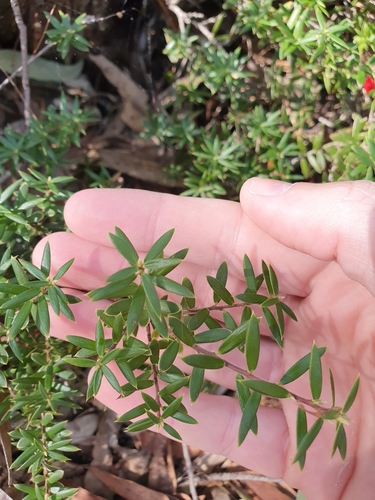
(c) Jari Kontiokorpi, some rights reserved (CC BY-NC), uploaded by Jari Kontiokorpi

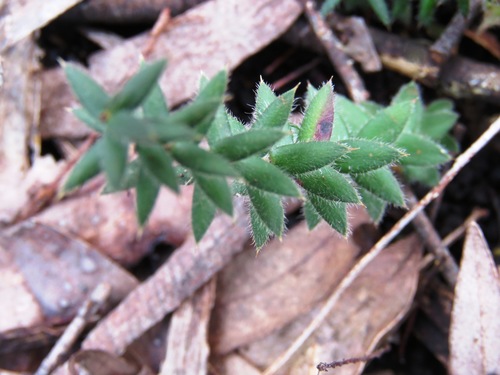
(c) Alexander Yakovlev, some rights reserved (CC BY-NC), uploaded by Alexander Yakovlev

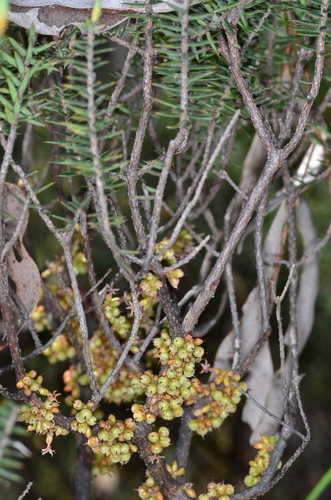
(c) Vladimir Bryukhov, some rights reserved (CC BY-NC), uploaded by Vladimir Bryukhov
What to Eat
Edible parts: Shoots
Tea. The tender leaves and shoot-tips are boiled as an aromatic tea. A delicious drink. Some caution is advised since boiling the plant or infusing it in hot water is said to release a toxic chemical. It is safer to soak the leaves in a jar of water in direct sunlight to make 'sun tea'.
Known Hazards
Where to Find It
Northern temperate regions, in Europe, including Britain, Asia and America.
TEMPERATE ASIA: Russian Federation (Buryatia, Tyva, Respublika, Yakutia-Sakha, Altay, Krasnoyarsk, Chita, Irkutsk, Kemerovskaja oblast, Novosibirsk, Omsk, Tomsk, Tyumen), Mongolia, Russian Federation (Kurile Islands, Habarovskij kraj, Primorye, Amur, Kamcatskij kraj, Cukotskij avtonomnyj okrug), Japan (Hokkaidô, Honshu) EUROPE: Denmark, Finland, United Kingdom, Ireland, Norway, Sweden, Austria, Belgium, Switzerland, Germany, Netherlands, Poland, Belarus, Estonia, Lithuania, Latvia, Moldova, Russian Federation (Karelia, Arkhangelsk), Ukraine, Italy, Romania, Slovenia, France
How to Identify
Andromeda polifolia is an evergreen Shrub growing to 0.3 m (1ft) by 0.6 m (2ft in) at a slow rate. See above for USDA hardiness. It is hardy to UK zone 2. It is in leaf all year, in flower from May to September. The species is hermaphrodite (has both male and female organs) and is pollinated by Bees, Lepidoptera (Moths & Butterflies). The plant is self-fertile. Suitable for: light (sandy) and medium (loamy) soils and prefers well-drained soil. Suitable pH: mildly acid soils and can grow in very acid soils. It can grow in semi-shade (light woodland). It prefers moist or wet soil.
How to Grow
Requires a well-drained, moisture-retentive, lime-free, humus- rich soil and a shady position. Plants spread slowly by means of suckers when they are grown in a suitable position. A very ornamental plant, there are many named varieties.
Propagation: Seed - sow February/March in an acid compost in the greenhouse. Surface sow or only just cover the seed and place in a lightly shaded position. The seed usually germinates in 1 - 2 months at 12°c. Prick out the young seedlings into individual pots as soon as possible, they are prone to damp-off and so should be kept well ventilated. Grow them on in the greenhouse for at least their first winter and plant them out in early summer once they are 15cm or more tall. Cuttings of half-ripe wood, 5 - 7cm with a heel, July/August in a frame in a shady position. Takes 15 months. Layering in August in a semi-shady position. Takes 18 months. Division in early spring. The plants should be 'dropped' beforehand. This entails digging up the plant 6 to 12 months earlier and replanting it somewhat more deeply. The buried branches will then root and form new plants when divided.
Medicinal Uses
Pectoral. The plant is used as a respiratory aid in the treatment of catarrh.
Other Uses
Tannin. Tannin is obtained from the leaves and twigs.