Epigaea repens
L.
Mayflower, Trailing arbutus, Ground Laurel

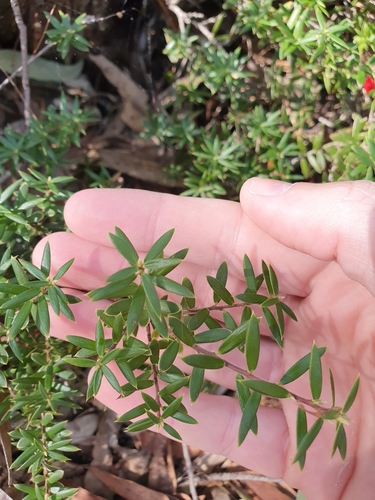
(c) Michael Ellis, some rights reserved (CC BY), uploaded by Michael Ellis

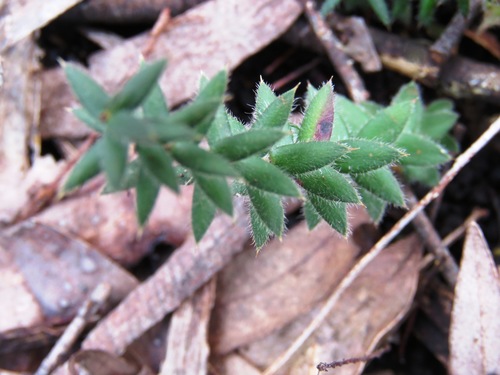
(c) lvconrad1977, some rights reserved (CC BY-NC), uploaded by lvconrad1977

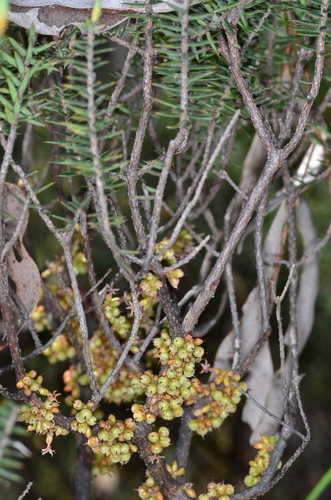
(c) Luke Armstrong, some rights reserved (CC BY-NC), uploaded by Luke Armstrong
What to Eat
Edible parts: Flowers
Flowers - raw. Fragrant, with a spicy slightly acid flavour, they are eaten as a wayside nibble or are added to salads. Thirst quenching.
Where to Find It
Eastern N. America - Newfoundland to Florida and west to Tennessee, Ohio and Michigan.
NORTHERN AMERICA: Canada, Newfoundland and Labrador, Manitoba, United States, Connecticut, Maine, Massachusetts, New Hampshire, Rhode Island, Vermont, Illinois, Wisconsin, Alabama, Delaware, Florida, Kentucky, Maryland, Mississippi, North Carolina, South Carolina, Tennessee, Virginia,
How to Identify
Epigaea repens is an evergreen Shrub growing to 0.1 m (0ft 4in) by 0.3 m (1ft). See above for USDA hardiness. It is hardy to UK zone 2 and is not frost tender. It is in leaf all year, in flower from April to May. The species is hermaphrodite (has both male and female organs). Suitable for: light (sandy) and medium (loamy) soils. Suitable pH: mildly acid and neutral soils and can grow in very acid soils. It can grow in semi-shade (light woodland). It prefers moist soil.
How to Grow
Requires an open lime-free humus-rich soil and shade from direct sunlight. Grows well in the shade of other calcifuge plants such as rhododendrons and also under pine trees. A very cold-hardy plant but it is often excited into premature growth by mild winter weather and is then subject to damage by frost. The flower buds require a period of chilling to about 2°c before they will open. The flowers are deliciously and strongly scented with a rich spicy perfume. There are some named varieties, selected for their ornamental value. A difficult plant to grow in cultivation and very hard to transplant successfully. Another report says that although the genus is generally difficult to cultivate, this species is relatively easy to grow. An evergreen. A clumping mat former. Forming a dense prostrate carpet spreading indefinitely.
Propagation: Seed - best sown as soon as it is ripe in a shady position in a cold frame. Another report says that the seed requires no pre-treatment and can be sown in late winter in a cold frame. Surface sow and place the pot in light shade, do not allow it to dry out. The seed usually germinates in 3 - 5 weeks. As soon as they are large enough to handle, pot up the seedlings into individual pots. Be very careful since they strongly resent root disturbance. Grow them on in light shade in the greenhouse and plant them out in their permanent positions in the late spring of their second years growth. Cuttings of half-ripe wood, July/August in a frame.Take the cutting with a part of the previous year's growth. (This report is unclear as to whether it means a heel of older wood or just a small section of older wood) Plants self-layer and can be divided in the spring but this must be done with great care since they deeply resent root disturbance.
Medicinal Uses
Astringent Diuretic Tonic Urinary. Mayflower is rarely used medicinally, even in folk medicine, though it is a strong urinary antiseptic and is one of the most effective remedies for cystitis, urethritis, prostatitis, bladder stones and particularly acute catarrhal cystitis. The leaves are astringent, diuretic and tonic. An infusion is made from the dried leaves, or a tincture from the fresh leaves. A tea made from the leaves is used in the treatment of kidney disorders, stomach aches, bladder disorders etc. It is of special value when the urine contains blood or pus. Use with caution, the plant contains arbutin and, although this is an effective urinary disinfectant, it hydrolyzes to hydroquinone which is toxic. The leaves can be used fresh or can be harvested in the summer and dried for later use.
Other Uses
Plants can be grown for ground cover, they should be spaced about 25cm apart each way and form a carpet of growth. This species is probably not very worthwhile for ground cover in Britain because of its difficulty to cultivate.