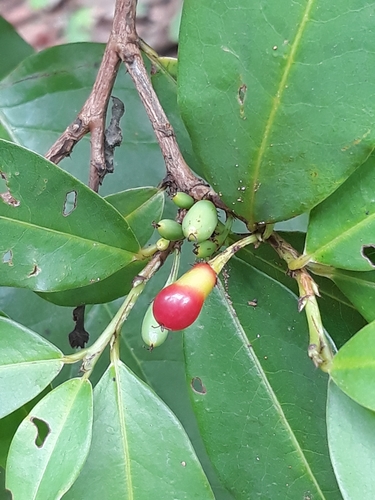
Erythroxylum cuneatum
(Miq.) Kurz.

(c) loupok, some rights reserved (CC BY-NC-ND)
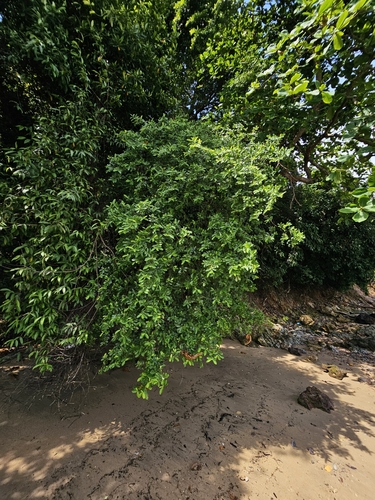
(c) pbsg, some rights reserved (CC BY)
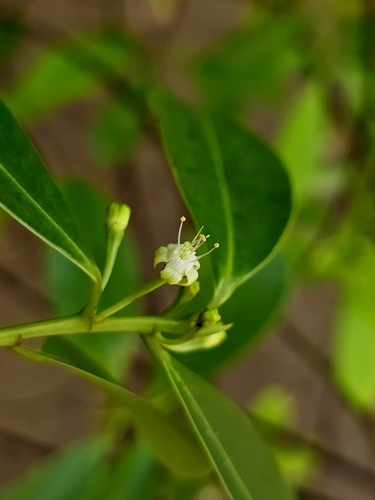
(c) pbsg, some rights reserved (CC BY)
What to Eat
Edible parts: Leaves
The leaves are used as a vegetable, particularly in vegetable soup, and have astringent properties.
Where to Find It
A tropical plant. It can grow behind sandy beaches or on rocky shores. It can also grow in a range of other locations including peat forest and limestone ridges up to 900 m above sea level.
Asia, Indochina, Indonesia, Myanmar, Pacific, Philippines, SE Asia, Thailand,
How to Identify
A small or large tree. They can grow 2.5 to 30 m high. The trunk is up to 35-55 cm across. The small branches are angular. The leaves vary in size and shape. They can be broadly or narrow oval or oblong. They are 5-11 cm long by 2-3 cm wide. They are dark green and shiny above and dull light green underneath. The midrib is sunken above and prominent underneath. The flowers are in clusters of 1-8. They are white to light green. The fruit is fleshy and oval. It is red and 7-12 mm long by 3-6 mm wide.
Medicinal Uses
The plant has various medical benefits.
Notes
There are about 250 Erythroxylum species. It has various medical benefits.
Names & Synonyms
Ankara nula, Asan, Baka, Banka, Buguran, Dook oung, Kakane, Kayu mutoh, Membentaan, Nembentahan
References (4)
- Conn, B.J., (Ed.) 1995, Handbooks of the Flora of Papua New Guinea. Vol 3. Melbourne University Press. p 56
- Kachenchart, B., et al, 2008, Phenology of Edible Plants at Sakaerat Forest. In Proceedings of the FORTROP II: Tropical Forestry Change in a Changing World. Bangkok, Thailand.
- Payens, J. P.D.W., 1958, Connaraceae in Flora Malesiana 5(4) p 534
- Srichaiwong, P., et al, 2014, A Study of the Biodiversity of Natural Food Production to Support Community Upstream of Chi Basin, Thailand. Asian Social Science 10 (2):