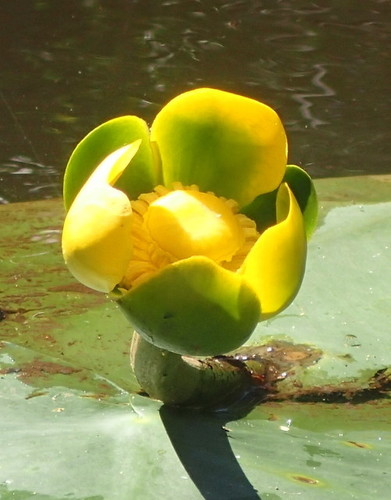
Nymphaea tetragona
Georgi.
Pygmy Water Lily

(c) naokitakebayashi, some rights reserved (CC BY-SA), uploaded by naokitakebayashi

(c) jdmason, some rights reserved (CC BY-NC)

(c) Christelle Dyer, some rights reserved (CC BY-NC), uploaded by Christelle Dyer
What to Eat
Edible parts: Root, Seed
Root. No more details are given.
Where to Find It
N.E. Europe to E. Asia and western N. America.
TEMPERATE ASIA: Russian Federation (Altay, Buryatia, Chelyabinsk, Chita, Irkutsk, Jamalo-Neneckij avtonomnyj okrug (south), Kemerovskaja oblast, Krasnoyarsk, Novosibirsk, Sverdlovsk, Tomsk, Tyumen, Tyva, Respublika, Yakutia-Sakha), Kazakhstan (Alma-Ata (east), Shyghys Qazaqstan oblysy (east), Soltüstik Qazaqstan oblysy, Pavlodar oblysy), Mongolia, Russian Federation (Habarovskij kraj, Primorye, Amur, Kamcatskij kraj, Magadanskaja oblast, Sakhalin), China (north), Korea, Japan (Hokkaidô) TROPICAL ASIA: India (Jammu and Kashmir, Uttar Pradesh (north)), Myanmar (north) NORTHERN AMERICA: Canada (Northwest Territories (southwest), Saskatchewan, Alberta, Manitoba, British Columbia), United States (Alaska, Washington (n.w. (extirpated))) EUROPE: Finland, Russian Federation (Cuvašskaja Respublika, Karelia, Komi, Marij Èl, Respublika, Arkhangelsk, Kirov, Kostroma, Leningradskaja oblast, Moscow, Murmansk (south), Perm, Pskovskaja oblast, Samara, Tver, Vologda)
How to Identify
Nymphaea tetragona is a PERENNIAL. See above for USDA hardiness. It is hardy to UK zone 2. It is in flower from July to August, and the seeds ripen from August to October. The species is hermaphrodite (has both male and female organs) and is pollinated by Flies, beetles. The plant is self-fertile. Suitable for: light (sandy), medium (loamy) and heavy (clay) soils. Suitable pH: mildly acid, neutral and basic (mildly alkaline) soils. It cannot grow in the shade. It can grow in water.
How to Grow
A water plant requiring a rich soil and a sunny position in still. Prefers a pH between 6 and 7. Best grown in 15 - 30cm of water. There are two basic types of plant in this genus (this species is a clumper):- 'crawlers' are species with horizontal roots that often spread freely, with new plants being formed at intervals along the root. These species are useful for naturalising, but they do not flower very freely in the cool summers of Britain. 'clumpers' have vertical roots, they form slowly spreading clumps and produce offsets around the crown. These forms flower much more freely in Britain. A very ornamental plant.
Propagation: Seed - sow as soon as it is ripe in a greenhouse in pots submerged under 25mm of water. Prick out into individual pots as soon as the first true leaf appears and grow them on in water in a greenhouse for at least two years before planting them out in late spring. The seed is collected by wrapping the developing seed head in a muslin bag to avoid the seed being lost. Harvest it 10 days after it sinks below the soil surface or as soon as it reappears. Division in May. Each portion must have at least one eye. Submerge in pots in shallow water until established.