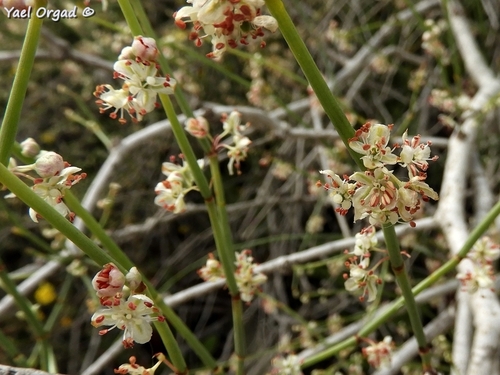
Polygonum multiflorum
Thunb.
He Shou Wu, Tuber fleeceflower

Miami University Turrell Herbarium - Vascular Plants (MU-)

GBIF

Botanical Research Institute of Texas
What to Eat
Edible parts: Flowers, Leaves, Root, Seed
Leaves - raw or cooked. Seed - raw or cooked. It is rather small and fiddly to utilize. Flowers. No more details are given. Root - cooked. It should be washed several times in order to leech out the bitterness. This process will also remove many of the vitamins and minerals from the roots. A famine food, it is only used when all else fails.
Known Hazards
Where to Find It
E. Asia - China.
TEMPERATE ASIA: China (Guangdong Sheng, Henan Sheng, Hubei Sheng, Jiangsu Sheng, Jiangxi Sheng, Shaanxi Sheng, Shanxi Sheng, Sichuan Sheng, Yunnan Sheng)
How to Identify
Polygonum multiflorum is a PERENNIAL CLIMBER growing to 4.5 m (14ft 9in). See above for USDA hardiness. It is hardy to UK zone 7. It is in flower from September to October, and the seeds ripen from October to November. The species is hermaphrodite (has both male and female organs) and is pollinated by Insects. Suitable for: light (sandy), medium (loamy) and heavy (clay) soils. Suitable pH: mildly acid, neutral and basic (mildly alkaline) soils. It can grow in semi-shade (light woodland) or no shade. It prefers moist soil.
How to Grow
Succeeds in an ordinary garden soil but prefers a moisture retentive not too fertile soil in sun or part shade. Repays generous treatment. This species is hardy to at least -15°c. Plants seem to be immune to the predations of rabbits. There is a suggestion that this plant might be dioecious, in which case male and female plants will need to be grown if seed is required.
Propagation: Seed - sow spring in a cold frame. Germination is usually free and easy. When they are large enough to handle, prick the seedlings out into individual pots and plant them out in the summer if they have reached sufficient size. If not, overwinter them in a cold frame and plant them out the following spring after the last expected frosts. Division in spring or autumn. Very easy, larger divisions can be planted out direct into their permanent positions. We have found that it is better to pot up the smaller divisions and grow them on in light shade in a cold frame until they are well established before planting them out in late spring or early summer.
Medicinal Uses
Antibacterial Anticholesterolemic Antipyretic Antispasmodic Antitumor Astringent Cardiotonic Demulcent Deobstruent Hypoglycaemic Laxative Sedative Tonic UrinaryHe Shou Wu is considered to be one of the most important of the Chinese herbal tonics and is widely used in that country. It is said to restore vitality and virility, working especially on the liver and the reproductive, urinary and circulatory systems. Some care should be exercised, however, since excessive doses can cause skin rash and numbness of the extremities. The roots and stems are antibacterial, anticholesterolemic, antispasmodic, astringent, cardiotonic, demulcent, depurative, hypoglycaemic, laxative, sedative, tonic[116, 147, 174, 176, 238, 279]. The roots are taken internally in the treatment of menstrual and menopausal complaints, constipation in the elderly, swollen lymph glands and high cholesterol levels. They are very effective in reducing high cholesterol levels in the blood and increase blood sugar levels. Externally, they are used to treat ringworm, bleeding wounds and sores. The roots are harvested in the autumn, preferably from plants 3 - 4 years old, and are dried for later use. The leaves and roots tonify the liver and kidneys, fortify the blood, strengthen the muscles and prevent premature greying of the hair. The stem is deobstruent and sedative. It is taken internally in the treatment of insomnia and neurasthenia whilst it is applied externally to ringworm. The stems are harvested in late summer or early autumn and are dried for later use. Extracts of the plant have shown antipyretic, antitumour, hypoglycaemic and sedative activity.