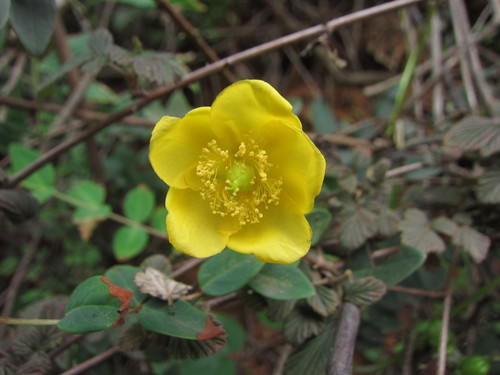
Hypericum sampsonii
Hance.

(c) JODY HSIEH, some rights reserved (CC BY-NC), uploaded by JODY HSIEH

(c) JODY HSIEH, some rights reserved (CC BY-NC), uploaded by JODY HSIEH
What to Eat
Edible parts: Leaves
Edible young leaves and plant tops.
Known Hazards
Where to Find It
E. Asia - China, Japan, India.
TEMPERATE ASIA: China (Anhui Sheng, Fujian Sheng, Gansu Sheng, Guangdong Sheng, Guangxi Zhuangzu Zizhiqu, Guizhou Sheng, Henan Sheng, Hubei Sheng, Hunan Sheng, Jiangsu Sheng, Jiangxi Sheng, Shaanxi Sheng, Sichuan Sheng, Yunnan Sheng, Zhejiang Sheng), Japan (Kyushu), Taiwan TROPICAL ASIA: Myanmar (north), Vietnam (north)
How to Identify
Hypericum sampsonii is a PERENNIAL growing to 0.6 m (2ft). See above for USDA hardiness. It is hardy to UK zone 9. It is in flower from July to August, and the seeds ripen from August to October. The species is hermaphrodite (has both male and female organs) and is pollinated by Insects. The plant is self-fertile. Suitable for: light (sandy), medium (loamy) and heavy (clay) soils and prefers well-drained soil. Suitable pH: mildly acid, neutral and basic (mildly alkaline) soils. It can grow in semi-shade (light woodland) or no shade. It prefers moist soil.
How to Grow
Easily grown in any reasonably good well-drained but moisture retentive soil. Succeeds in sun or semi-shade but flowers better in a sunny position. This plant is unlikely to be very hardy in Britain, though it might succeed outdoors in the milder areas of the country.
Propagation: Seed - sow spring in a greenhouse. Germination usually takes place within 1 - 3 months at 10°c. When they are large enough to handle, prick the seedlings out into individual pots and grow them on in the greenhouse for their first winter. Plant them out into their permanent positions in late spring or early summer, after the last expected frosts. Division in spring. Larger clumps can be replanted direct into their permanent positions, though it is best to pot up smaller clumps and grow them on in a cold frame until they are rooting well. Plant them out in the spring.
Medicinal Uses
Anodyne Depurative Emmenagogue Haemolytic Vermifuge. The plant is anodyne, anticoagulant, depurative, emmenagogue, haemolytic, vermifuge. It stimulates the circulation and can also harm the foetus. Use with caution.