Juncus balticus
Willd.
Baltic Rush

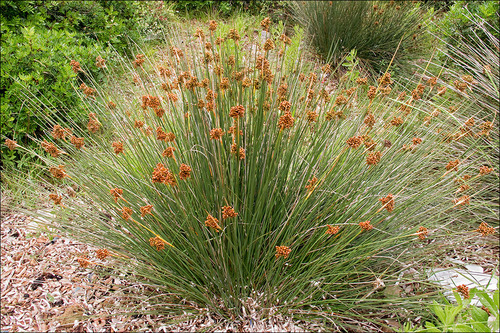
(c) John D Reynolds, some rights reserved (CC BY-NC), uploaded by John D Reynolds

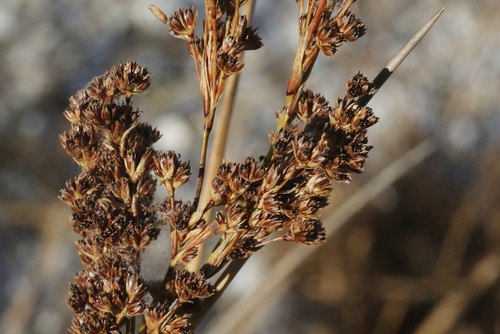
(c) aarongunnar, some rights reserved (CC BY), uploaded by aarongunnar

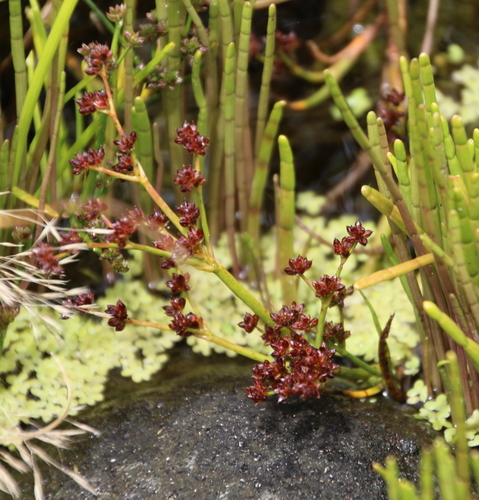
(c) Rob Foster, some rights reserved (CC BY), uploaded by Rob Foster
What to Eat
Edible parts: Seed
A sugar forms along the top of the plant. This can be gathered and eaten as candy. Seed. No more details are given but the seed is very small. The stems are used to make a fermented drink.
Known Hazards
Where to Find It
N. Europe, Northern N. America, N. Asia in boreal areas.
NORTHERN AMERICA: Canada (Northwest Territories, Yukon, Québec, Nova Scotia, Ontario, Prince Edward Island, New Brunswick, Newfoundland and Labrador, Saskatchewan, Alberta, Manitoba, British Columbia), Greenland (south), United States (Alaska, Indiana, Maine, Massachusetts, Michigan, New Hampshire, New York, Ohio, Pennsylvania, Vermont, West Virginia, Illinois, Iowa, Kansas, Minnesota, Missouri, Nebraska, North Dakota, Oklahoma, South Dakota, Wisconsin, Colorado, Idaho, Montana, Oregon, Washington, Wyoming, Arkansas, Virginia, New Mexico, Texas, Arizona, California, Nevada, Utah) EUROPE: Denmark, Finland, United Kingdom, Iceland, Norway, Sweden, Germany, Netherlands, Poland, Estonia, Lithuania, Latvia, Russian Federation (Karelia, Arkhangelsk)
How to Identify
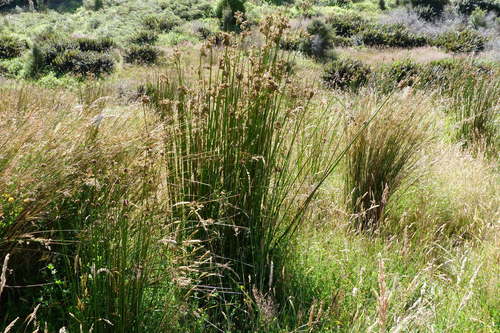
Juncus balticus is a PERENNIAL growing to 1 m (3ft 3in) at a fast rate. See above for USDA hardiness. It is hardy to UK zone 3. It is in flower from June to August. The species is hermaphrodite (has both male and female organs) and is pollinated by Wind. Suitable for: medium (loamy) and heavy (clay) soils. Suitable pH: mildly acid, neutral and basic (mildly alkaline) soils and can grow in saline soils. It can grow in semi-shade (light woodland) or no shade. It prefers moist or wet soil and can grow in water.
How to Grow
Easily grown in a moist soil, bog garden or shallow water. Prefers a heavy soil in sun or light shade. Plants can form large clumps and spread aggressively at the roots.
Propagation: Seed - surface sow in pots in a cold frame in early spring and keep the compost moist. When they are large enough to handle, prick the seedlings out into individual pots and plant them out in the summer if they have grown sufficiently, otherwise in late spring of the following year. Division in spring. Very easy, larger clumps can be replanted direct into their permanent positions, though it is best to pot up smaller clumps and grow them on in a cold frame until they are rooting well. Plant them out in the spring.
Other Uses
Weaving. The stems are used in making woven baskets, thatching, weaving mats etc. The basal portions of the stems have been used as a light yellow-brown decoration on baskets.