Juncus effusus
L.
Soft Rush, Common rush, Lamp rush, Pacific rush

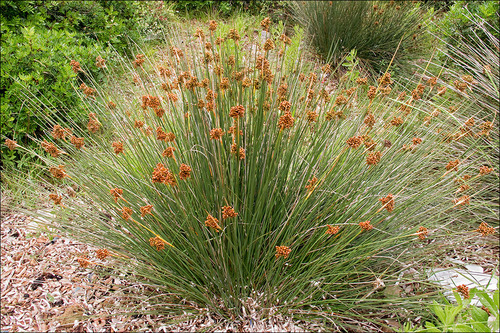
(c) Markus Ackermann, some rights reserved (CC BY-NC), uploaded by Markus Ackermann

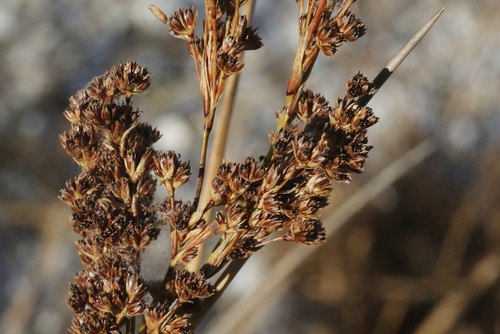
(c) apout, some rights reserved (CC BY-NC)

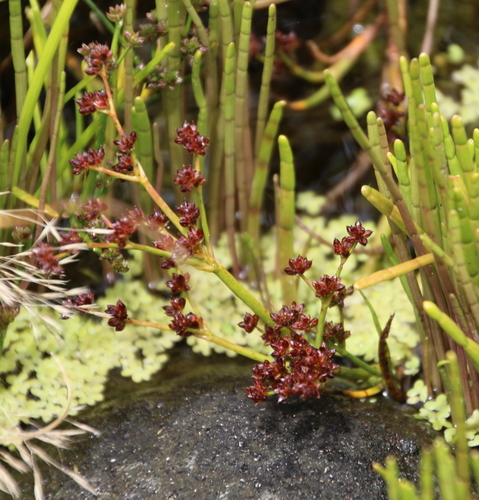
(c) Cara Schildtknecht, some rights reserved (CC BY-NC), uploaded by Cara Schildtknecht
What to Eat
Edible parts: Leaves, Shoots
Young shoots - raw. Some caution is advised, see the notes above on toxicity.
Known Hazards
Where to Find It
Throughout the northern temperate zone, including Britain, east and south Africa, Australasia.
TEMPERATE ASIA: Afghanistan, Cyprus, Iran, Iraq, Turkey, Russian Federation-Ciscaucasia (Ciscaucasia), Armenia, Azerbaijan, Georgia, Russian Federation (Dagestan), Russian Federation (Gorno-Altay, Altay), China (Anhui Sheng, Fujian Sheng, Gansu Sheng, Guangdong Sheng, Guangxi Zhuangzu Zizhiqu, Guizhou Sheng, Hebei Sheng, Heilongjiang Sheng, Henan Sheng, Hubei Sheng, Hunan Sheng, Jiangsu Sheng, Jilin Sheng, Liaoning Sheng, Shandong Sheng, Sichuan Sheng, Xizang Zizhiqu, Yunnan Sheng, Zhejiang Sheng), Taiwan TROPICAL ASIA: India NORTHERN AMERICA: United States (Alaska, Connecticut, Indiana, Maine, Massachusetts, Michigan, New Hampshire, New Jersey, New York, Ohio, Pennsylvania, Rhode Island, Vermont, West Virginia, Illinois, Kansas, Minnesota, Missouri, Nebraska, Oklahoma, Wisconsin, Colorado, Idaho, Montana, Oregon, Washington, Alabama, Arkansas, Delaware, Florida, Georgia, Kentucky, Louisiana, Maryland, Mississippi, North Carolina, South Carolina, Tennessee, Virginia, District of Columbia, Texas, California, Nevada), Canada (Québec, Nova Scotia, Ontario, Prince Edward Island, New Brunswick, Newfoundland and Labrador, Manitoba, British Columbia), (Mexico (Baja California (Norte), Durango, Sinaloa, Aguascalientes, Chiapas, Ciudad de México, Guanajuato, Hidalgo, Jalisco, México, Michoacán de Ocampo, Morelos, Oaxaca, Puebla, Tabasco, Veracruz de Ignacio de la Llave) SOUTHERN AMERICA: Guadeloupe, Haiti, Costa Rica, Guatemala, Honduras, El Salvador, Venezuela, Brazil, Bolivia, Colombia, Ecuador, Peru, Argentina (Catamarca, Río Negro, Salta, Tierra del Fuego, Tucumán), Chile EUROPE: Denmark, Finland, United Kingdom, Ireland, Norway, Sweden, Austria, Belgium, Switzerland, Czech Republic, Germany, Hungary, Netherlands, Poland, Slovakia, Russian Federation (European part), Belarus, Estonia, Lithuania, Latvia, Russian Federation (Saratov, Volgogradskaja oblast), Ukraine (incl. Krym), Albania, Bulgaria, Bosnia and Herzegovina, Greece (incl. Crete), Croatia, Italy (incl. Sardinia, Sicily), Montenegro, Romania, Serbia, Slovenia, Spain, France (incl. Corsica), Portugal AFRICA: Spain (Canarias), Portugal (Azores, Madeira Islands), Algeria, Morocco, Kenya, Tanzania, Uganda, Burundi, Rwanda, Zimbabwe, Lesotho, South Africa (Cape Province, Free State, Kwa. Zulu-Natal, Transvaal), Madagascar, Mauritius
How to Identify
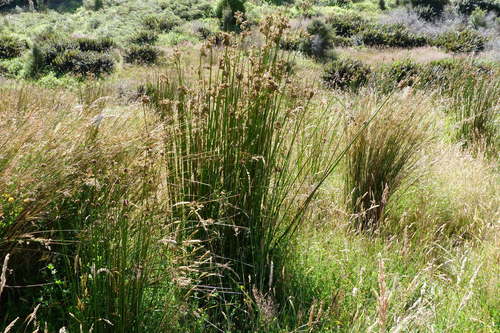
Juncus effusus is a PERENNIAL growing to 1.5 m (5ft) by 0.5 m (1ft 8in). See above for USDA hardiness. It is hardy to UK zone 4. It is in flower from June to August. The species is hermaphrodite (has both male and female organs) and is pollinated by Wind. Suitable for: light (sandy), medium (loamy) and heavy (clay) soils and can grow in heavy clay soil. Suitable pH: mildly acid and neutral soils. It can grow in semi-shade (light woodland) or no shade. It prefers moist or wet soil and can grow in water. The plant can tolerates strong winds but not maritime exposure.
How to Grow
Easily grown in a moist soil, bog garden or shallow water. Prefers a heavy soil in sun or light shade.
Propagation: Seed - surface sow in pots in a cold frame in early spring and keep the compost moist. When they are large enough to handle, prick the seedlings out into individual pots and plant them out in the summer if they have grown sufficiently, otherwise in late spring of the following year. Division in spring. Very easy, larger clumps can be replanted direct into their permanent positions, though it is best to pot up smaller clumps and grow them on in a cold frame until they are rooting well. Plant them out in the spring.
Medicinal Uses
Antiphlogistic Depurative Diuretic Febrifuge Lenitive Lithontripic Pectoral Sedative Urinary. The pith of the stem is antiphlogistic, depurative, discutient, diuretic, febrifuge, lenitive, lithontripic, pectoral and sedative[147, 176, 178, 218, 240]. It is used in the treatment of sore throats, jaundice, oedema, acute urinary tract infection and morbid crying of babies.
Other Uses
Basketry Lighting Paper Strewing String Thatching Weaving. Stems are used in basket making, thatching, weaving mats etc[23, 46, 66, 99, 115, 171]. The stems can also be dried then twisted or braided into ropes for tying or binding. Stems can be peeled (except for a small spine which is left to keep them upright) and soaked in oil then used as a candle. A fibre obtained from the stems is used for making paper. The stems are harvested in late summer or autumn, they are split and cut into usable pieces and then soaked for 24 hours in clear water. They are then cooked for 2 hours with lye and beaten in a blender. The fibres make an off-white paper. When mixed with mulberry fibres they can be used for making stencil paper. The whole plant was formerly used as a strewing herb.