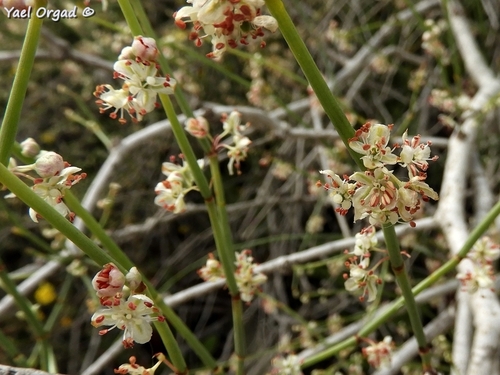
Polygonum dumetorum
L.
Climbing false buckwheat

Clemson University Herbarium (CLEMS-)

Nature Reserve Roztochya

Nature Reserve Roztochya
What to Eat
Edible parts: Leaves, Seed
Leaves - raw or cooked. Seed - raw or cooked. It is rather small and fiddly to utilize.
Known Hazards
Where to Find It
Europe, including Britain, from Scandanavia south and east to Spain, northern and western Asia.
TEMPERATE ASIA: Afghanistan, Iran, Turkey, Russian Federation-Ciscaucasia (Ciscaucasia), Azerbaijan, Georgia, Russian Federation (Buryatia, Gorno-Altay, Tyva, Respublika, Krasnoyarsk, Chelyabinsk, Chita, Irkutsk, Novosibirsk, Omsk, Tyumen), Kazakhstan, Mongolia, Russian Federation (Amur, Habarovskij kraj, Primorye), China (Hebei Sheng, Heilongjiang Sheng, Jiangsu Sheng, Jilin Sheng, Liaoning Sheng, Nei Mongol Zizhiqu, Shandong Sheng, Xinjiang Uygur Zizhiqu), Korea TROPICAL ASIA: Bhutan, India (north), Nepal, Pakistan EUROPE: Denmark, Finland (south), United Kingdom, Sweden, Austria, Belgium, Switzerland, Czech Republic, Germany, Hungary, Netherlands, Slovakia, Russian Federation (European part), Belarus, Estonia, Lithuania, Latvia, Moldova, Russian Federation (Baškortostan, Respublika, Karelia), Ukraine (incl. Krym), Albania, Bulgaria, Bosnia and Herzegovina, Greece, Croatia, Italy (incl. Sicily), North Macedonia, Montenegro, Romania, Serbia, Slovenia, Spain, France (incl. Corsica), Portugal
How to Identify
Polygonum dumetorum is a ANNUAL growing to 1.8 m (6ft). It is in flower from July to September. The species is hermaphrodite (has both male and female organs) and is pollinated by Insects. Suitable for: light (sandy), medium (loamy) and heavy (clay) soils. Suitable pH: mildly acid, neutral and basic (mildly alkaline) soils. It can grow in semi-shade (light woodland) or no shade. It prefers moist soil.
How to Grow
Succeeds in an ordinary garden soil but prefers a moisture retentive not too fertile soil in sun or part shade. Repays generous treatment. Plants seem to be immune to the predations of rabbits.
Propagation: Seed - sow spring in a cold frame. Germination is usually free and easy. When they are large enough to handle, prick the seedlings out into individual pots and plant them out in the summer if they have reached sufficient size. If not, overwinter them in a cold frame and plant them out the following spring after the last expected frosts.
Medicinal Uses
Purgative. Purgative.