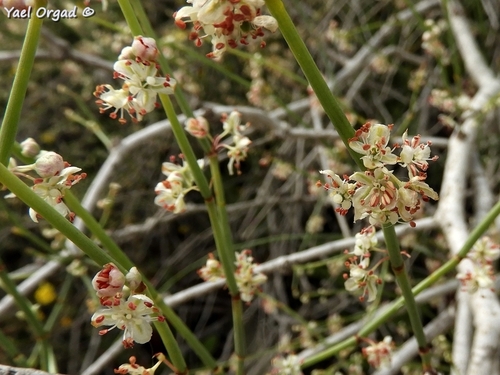
Polygonum persicaria
L.
Red Leg, Spotted ladysthumb

GBIF

GBIF

GBIF
What to Eat
Edible parts: Leaves, Seed, Shoots
Leaves and young shoots - raw or cooked. They contain about 1.9% fat, 5.4% pectin, 3.2% sugars, 27.6% cellulose, 1% tannin. Seed - raw or cooked. It is rather small and fiddly to utilize.
Known Hazards
Where to Find It
Temperate regions of the northern hemisphere, including Britain.
TEMPERATE ASIA: Russian Federation-Ciscaucasia (Ciscaucasia), Armenia, Azerbaijan, Georgia, Kazakhstan, Kyrgyzstan, Tajikistan, Turkmenistan, Uzbekistan, Russian Federation (Kurile Islands, Primorye, Sakhalin), China (Anhui Sheng, Fujian Sheng, Gansu Sheng, Guangxi Zhuangzu Zizhiqu, Guizhou Sheng, Hebei Sheng, Heilongjiang Sheng, Henan Sheng, Hubei Sheng, Hunan Sheng, Jiangxi Sheng, Jilin Sheng, Liaoning Sheng, Nei Mongol Zizhiqu, Ningxia Huizi Zizhiqu, Qinghai Sheng, Shaanxi Sheng, Shandong Sheng, Shanxi Sheng, Sichuan Sheng, Xinjiang Uygur Zizhiqu, Zhejiang Sheng), Korea, Japan (Hokkaidô, Honshu, Kyushu, Shikoku), Taiwan TROPICAL ASIA: Nepal, Indonesia EUROPE: Russian Federation-European part (European part)
How to Identify
Polygonum persicaria is a ANNUAL growing to 0.6 m (2ft). See above for USDA hardiness. It is hardy to UK zone 5. It is in flower from June to October, and the seeds ripen from August to October. The species is hermaphrodite (has both male and female organs). The plant is self-fertile. Suitable for: light (sandy), medium (loamy) and heavy (clay) soils. Suitable pH: mildly acid, neutral and basic (mildly alkaline) soils. It can grow in semi-shade (light woodland) or no shade. It prefers moist soil.
How to Grow
Succeeds in an ordinary garden soil but prefers a moisture retentive not too fertile soil in sun or part shade. Repays generous treatment. Plants seem to be immune to the predations of rabbits.
Propagation: Seed - sow spring in situ.
Medicinal Uses
Astringent Diuretic Lithontripic Poultice Rubefacient Vermifuge. The leaves are astringent, diuretic, rubefacient and vermifuge. An infusion has been used as a treatment for gravel and stomach pains. A decoction of the plant, mixed with flour, has been used as a poultice to help relieve pain. A decoction of the plant has been used as a foot and leg soak in the treatment of rheumatism. The crushed leaves have been rubbed on poison ivy rash.
Other Uses
DyeA yellow dye is obtained from the plant when alum is used as a mordant.