Quercus hypoleucoides
A.Camus
Silverleaf Oak

(c) Matt Ritter, Ph.D., some rights reserved (CC BY-NC), uploaded by Matt Ritter, Ph.D.

(c) Joey Santore, some rights reserved (CC BY-NC), uploaded by Joey Santore

(c) vicsteinmann, some rights reserved (CC BY-NC)
What to Eat
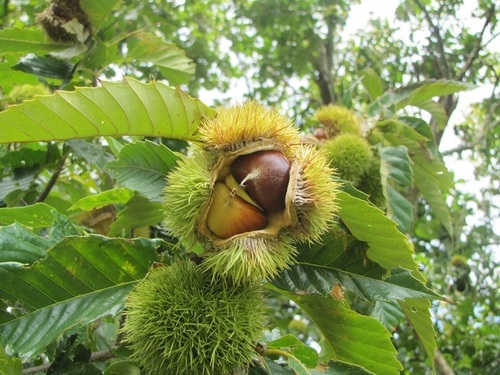
The ellipsoid to oblong seed can be 8 - 16mm long and 5 - 10mm wide. Although we have no specific information for this species, the seeds of all the species of oak are edible - indeed, several species have been used as staple foods, whilst most if not all have been used for food in times of shortage, when better foods were not available. The seed is usually cooked before eating, though it can also be eaten raw. It can be eaten whole, though it is more commonly dried, then ground into a powder and used as a thickening in stews etc or mixed with cereals for making bread. In some species, especially many of those classified as 'white oaks', the seeds are low in tannins and have a more or less sweet and agreeable flavour. The seed of most species, however, have a very bitter flavour, due especially to the presence of tannins. In these species there are various processes that can remove or at least reduce the amount of these bitter substances (although other water-soluble substances, including some minerals, will also be removed). Tannins are water-soluble and therefore the easiest way to remove or reduce tannin levels is by soaking in water. A few different methods are listed:- A traditional method of preparing the seed was to bury it in boggy ground overwinter and allow the wet soil to gradually leach the tannins. The germinating seed was dug up in the spring when it would have lost most of its astringency and bitterness. Another method was to wrap the seeds in a cloth bag and place them in a stream for several weeks. Drying the seed and grinding it to a powder before soaking speeds up the process. The fastest method is to use hot water, by cooking the powder and changing the water several times until the cooking water is no longer bitter. Alternatively, you can use cold water (which is reported to produce the best quality flour). In this case, you soak the powdered seed in cold water for 12 - 24 hours then discard the water. Repeat this process for a number of times until the soak water is no longer bitter. The roasted seed of many Quercus species has been used as a coffee substitute. Silverleaf oak (Quercus hypoleucoides), part of the beech family (Fagaceae), produces edible acorns, though they are considered of average quality compared to other Southwestern oaks. The acorns are typically streaked with orange lines, with dusty outer shells and densely hairy inner shells and nut skins. Fresh nutmeats often have a yellowish-orange tint and a bread-like, yeasty flavor with minimal sweetness—generally unappealing when eaten raw. They also rot quickly unless dehydrated. Processing is necessary: the acorns must be shelled, ground, and thoroughly leached to remove the bitterness of tannins. After leaching, dry roasting or toasting can improve flavor, though even then they remain less desirable than the sweeter acorns of Gambel or gray oak. Despite their shortcomings, silverleaf oak acorns can still be made into flour or meal for breads and porridges if better resources are scarce.
Known Hazards
Where to Find It
Southwestern N. America - Arizona, New Mexico, Texas, northern Mexico
Native to: Arizona, Mexico Northeast, Mexico Northwest, New Mexico, Texas.
How to Identify
Quercus hypoleucoides is an evergreen Tree growing to 8 m (26ft) by 4 m (13ft) at a slow rate. See above for USDA hardiness. It is hardy to UK zone 8 and is not frost tender. The flowers are pollinated by Wind. It is noted for attracting wildlife. Suitable for: light (sandy), medium (loamy) and heavy (clay) soils and prefers well-drained soil. Suitable pH: mildly acid, neutral and basic (mildly alkaline) soils. It cannot grow in the shade. It prefers moist soil. The plant can tolerates strong winds but not maritime exposure.
How to Grow
Quercus hypoleucoides is a moderately cold-hardy tree, tolerating temperatures down to around -15°c when dormant. It grows best in areas with hot summers. In areas with cooler summers, such as the maritime regions of the temperate zone, it often grows poorly, failing to properly ripen its wood and suffering frost damage over the winter. Quercus species generally grow well in a sunny position, though young plants usually tolerate reasonable levels of side shade. They usually prefer a good, deep, fertile loam, which can be on the stiff side. They are also often tolerant of moderate exposure, surviving well but being somewhat stunted. Seedlings soon develop a taproot and become intolerant of root disturbance,;they should be planted into their permanent positions whilst young. Most Quercus species hybridize freely with other members of the genus. Plants in this genus are notably resistant to honey fungus. Silverleaf Oak grows as a semi-evergreen tree or shrub up to 10 m tall. It is common in moist canyons and along ridges but is mainly dominant at high elevations, within pine-oak forests of the northern Mexican Sierra Madre Occidental and coniferous forests of the Madrean Sky Islands in Arizona and western Mexico The acorns of Q. hypoleucoides are eaten by squirrels and many species of birds. USDA Hardiness & Weed Potential: Silverleaf oak is found primarily in southeastern Arizona and southwestern New Mexico, extending into northern Mexico. It thrives in mountainous habitats and is adapted to USDA Hardiness Zones 7–10. As a native species, it is not considered weedy or invasive.
Propagation: Seed - it quickly loses viability if it is allowed to dry out. It can be stored moist and cool overwinter but is best sown as soon as it is ripe in an outdoor seed bed, though it must be protected from mice, squirrels etc. Small quantities of seed can be sown in deep pots in a cold frame. Plants produce a deep taproot and need to be planted out into their permanent positions as soon as possible, in fact seed sown in situ will produce the best trees. Trees should not be left in a nursery bed for more than 2 growing seasons without being moved or they will transplant very badly. This is a cultivar and it will not breed true from seed.
Medicinal Uses
Quercus (oak) species are used in the traditional medicine of many cultures, being valued especially for their tannins. Various parts of the plant can be used, most frequently it is the leaves, bark, seeds, seed cups or the galls that are produced as a result of insect damage. A decoction or infusion is astringent, antibacterial, antifungal, antiseptic, styptic and haemostatic. It is taken internally to treat conditions such as acute diarrhea, dysentery and haemorrhages. Externally, it is used as a mouthwash to treat toothache or gum problems and is applied topically as a wash on cuts, burns, various skin problems, haemorrhoids and oral, genital and anal mucosa inflammation. Extracts of the plant can be added to ointments and used for the healing of cuts.
Other Uses
The leaves of most species in this genus are more or less rich in tannins. A mulch of the partially decayed leaves can be placed around vulnerable plants in order to repel slugs, snails, grubs etc, and these will in time break down to add humus and nutrients to the soil. Fresh leaves should be used with caution, however, since as these decay they utilize some of the nitrogen in the soil and thus can inhibit plant growth. Oak galls are excrescences that are sometimes produced in great numbers on the tree and are caused by the activity of the larvae of different insects. The insects live inside these galls, obtaining their nutrient therein. When the insect pupates and leaves, the gall can be used as a rich source of tannin, which can also be used as a dyestuff and by many cultures to make ink. The bark of oak trees is also usually rich in tannins and can be used as a dyestuff and for waterproofing rope. As a source of wood and lumber, the genus Quercus is one of the most important of all groups of trees. We have no specific information for this species, but in general, the timber is noted for its strength, durability, and beauty and is used everywhere for innumerable purposes, ranging from fuel to railroad ties, construction of buildings and ships, interior trim, flooring, and all grades of furniture. Different species' woods vary according to their physical qualities; some are very hard and tough, while others are lighter in weight, softer, and less tough. The wood is utilized as firewood, especially in Mexico. Silverleaf Oak is used as an ornamental due to its unusual foliage.
Names & Synonyms
Silverleaf oak (Quercus hypoleucoides)
More from Fagaceae