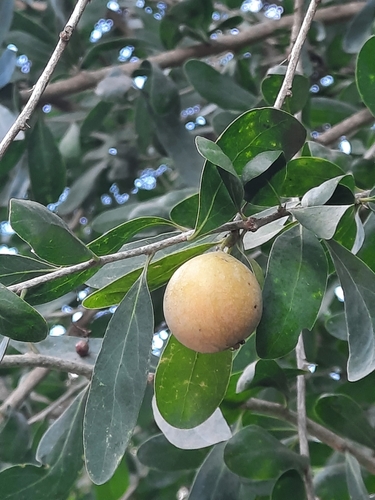
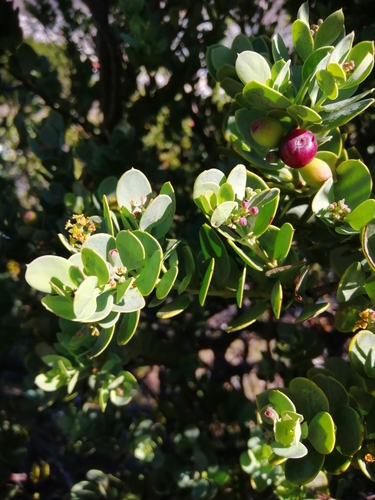
Exocarpos sparteus
R. Br.
Slender Cherry, Broom Ballart, Native cherry
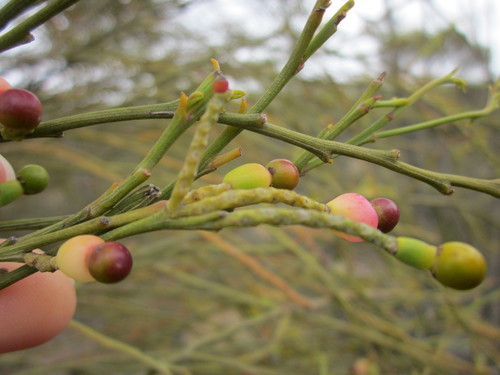
(c) kdunnart, some rights reserved (CC BY-NC), uploaded by kdunnart
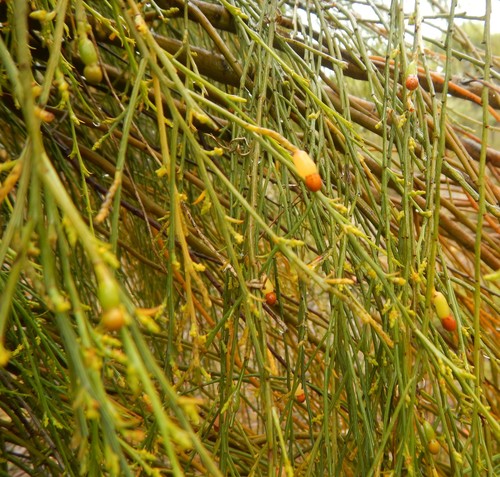
(c) davidsando, some rights reserved (CC BY-NC), uploaded by davidsando
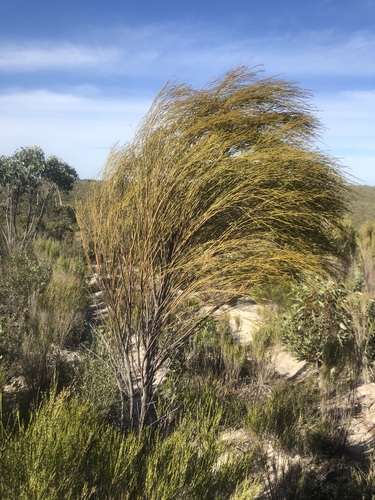
(c) davidsando, some rights reserved (CC BY-NC), uploaded by davidsando
What to Eat
Edible parts: Fruit
The small fruit and their stalks are edible.
Where to Find It
It grows on sandstone areas over limestone. Plants will regenerate after fire. It grows in the Mallee in Australia.
Australia*,
How to Identify
An upright shrub. It grows partly attached to or growing on other plants. It grows to 3.5 m high. The stems are ribbed and usually without leaves except on the flowering branches. The flowers are very small and yellow or yellowish-green. Occasionally they are white. The fruit are small and egg-shaped. They are succulent and 2-3 mm across. One bush can have thousands of fruit. The fruit change from orange-red to deep crimson. The seed is external to the fruit. The fruit, and its stalk are edible.
Wikipedia
Source ↗Exocarpos sparteus is an Australian endemic plant species, commonly known as the broom ballart, slender cherry, or native cherry. The species is found in all states of mainland Australia.
Notes
There are about 26 Exocarpus species.
Names & Synonyms
Djuk
References (12)
- Bindon, P., 1996, Useful Bush Plants. Western Australian Museum. p
- Bodkin, F., 1991, Encyclopedia Botanica. Cornstalk publishing, p 466
- Cancilla, D., 2018, Ethnobotanical and Ethnozoological Values Desktop Assessment - Eliwana Project. p 12
- Dashorst, G.R.M., and Jessop, J.P., 1998, Plants of the Adelaide Plains & Hills. Botanic Gardens of Adelaide and State Herbarium. p 50
- Daw, B., Walley, T. & Keighery, G., 2001, Bush Tucker. Plants of the South-West. Department of Conservation and Land Management. Western Australia. p 50
- Elliot, W.R., & Jones, D.L., 1992, Encyclopedia of Australian Plants suitable for cultivation. Vol 4. Lothian. p 270
- Lazarides, M. & Hince, B., 1993, Handbook of Economic Plants of Australia, CSIRO. p 113
- Low, T., 1991, Wild Food Plants of Australia. Australian Nature FieldGuide, Angus & Robertson. p 136
- Mallee Wildflower Committee, Flowers of the Mallee. p 7
- Paczkowska, G . & Chapman, A.R., 2000, The Western Australian Flora. A Descriptive Calatogue. Western Australian Herbarium. p 526
- Smith, K & I., 1999, Grow your own bushfoods. New Holland. Australia. p 29
- Urban, A., 1990, Wildflowers of Inland Australia. Portside editions. p 30