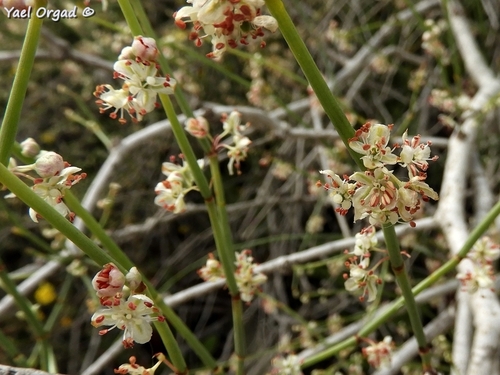
Fallopia japonica
(Houtt.) Ronse Decr.
Japanese knotweed, Mexican-bamboo
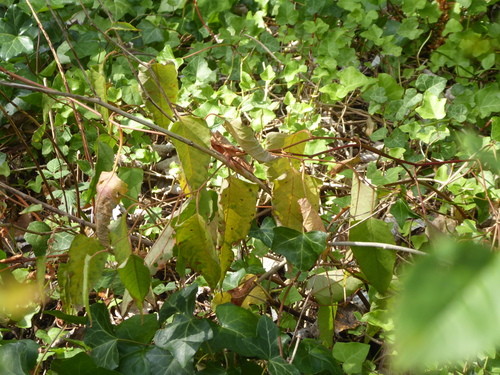
(c) jamie-aa, some rights reserved (CC BY-NC)
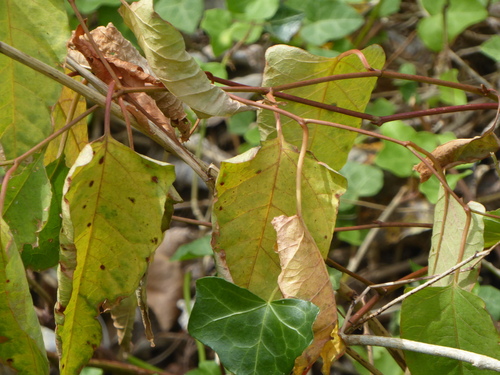
(c) jamie-aa, some rights reserved (CC BY)
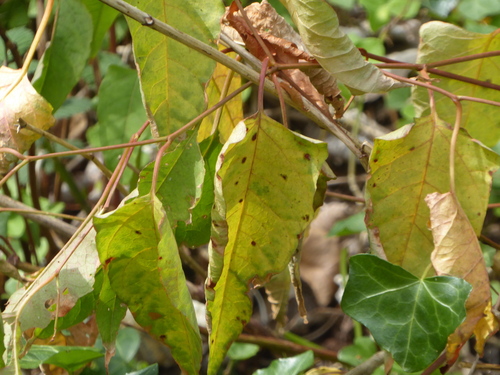
(c) jamie-aa, some rights reserved (CC BY)
What to Eat
Edible parts: Leaves, Vegetable
Japanese knotweed flowers are valued by some beekeepers as an important source of nectar for honeybees, at a time of year when little else is flowering. Japanese knotweed yields a monofloral honey, usually called bamboo honey by northeastern U.S. beekeepers, like a mild-flavored version of buckwheat honey (a related plant also in the Polygonaceae). The young stems are edible as a spring vegetable, with a flavour similar to rhubarb. In some locations, semi-cultivating Japanese knotweed for food has been used as a means of controlling knotweed populations that invade sensitive wetland areas and drive out the native vegetation. It is eaten in Japan as sansai or wild foraged vegetable. In Europe, young shoots have been used in restaurant cuisine. Knotweed can grow up to 30 cm per day, hence it is a fast-growing vegetable tolerant of poor quality soils. Because knotweed is resistant to over-harvesting, it is more often foraged than cultivated as a vegetable. The plant can be eaten raw or cooked. Ground-feeding songbirds and gamebirds also eat the seeds.
Where to Find It
A temperate plant. It needs well-drained soil. It suits hardiness zones 3-8. Tasmania Herbarium.
Asia, Australia, Balkans, Bosnia, Britain, China, Europe, Ireland, Japan, Korea, Luxembourg, New Zealand, North America, Romania, Slovenia, Taiwan, Tasmania, USA,
How to Identify
A vigorous herb which forms suckers. It keeps growing from year to year. It has underground stems or rhizomes. The leaves are oval. The leaf stalks are short. The flowers are small and creamy-white. They are in showy panicles. The fruit has 2 or 3 angles and is like a nut.
How to Grow
It can be grown from seed or division.
Notes
There are 7-9 Fallopia species. They grow in temperate places. It can be seriously invasive. It has high levels of anti-oxidants and probably anti-cancer and anti-aging properties.
Names & Synonyms
Fleece Flower, Japanska kiselica, Japonski dresnik, Meigetu-So
References (13)
- Beckstrom-Sternberg, Stephen M., James A. Duke, and K.K. Wain. "The Ethnobotany Database." http://probe.nalusda.gov:8300/cgi-bin/browse/ethnobotdb. (ACEDB version 4.3 - data version July 1994). (As Reynoutria japonica)
- Bot. J. Linn. Soc. 98:369. 1988
- Bremness, L., 1994, Herbs. Collins Eyewitness Handbooks. Harper Collins. p 209 (As Reynoutria japonica)
- Chen, B. & Qiu, Z., Consumer's Attitudes towards Edible Wild Plants, Ishikawa Prefecture, Japan. p 24 www.hindawi.com/journals/ijfr/aip/872413.pdf (As Reynoutria japonica)
- Cundall, P., (ed.), 2004, Gardening Australia: flora: the gardener's bible. ABC Books. p 597
- Irving, M., 2009, The Forager Handbook, A Guide to the Edible Plants of Britain. Ebury Press p 169
- Kimura
- Luczaj, L., et al, 2015, Wild food plants and fungi used by Ukrainians in the western part of the Maramureş region in Romania. Acta Soc Bot Pol 84(3):339–346
- Marinelli, J. (Ed), 2004, Plant. DK. p 454
- Moerman, D. F., 2010, Native American Ethnobotany. Timber Press. p 423 (As Polygonum cuspidatum)
- Redzic, S. J., 2006, Wild Edible Plants and their Traditional Use in the Human Nutrition in Bosnia-Herzegovina. Ecology of Food and Nutrition, 45:189-232 (As Reynoutria japonica)
- Tasmanian Herbarium Vascular Plants list p 45
- www.ediblewildfood.com