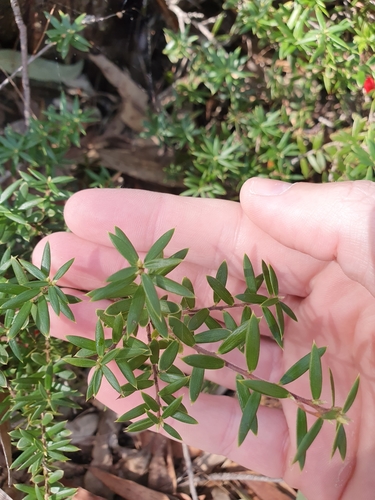
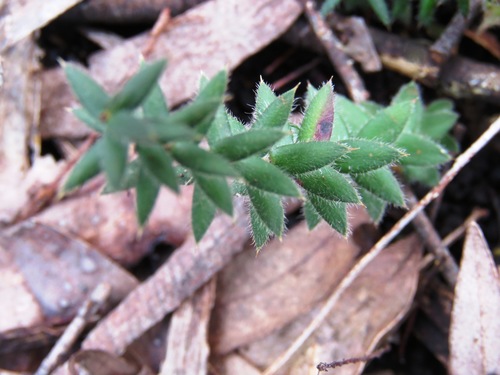
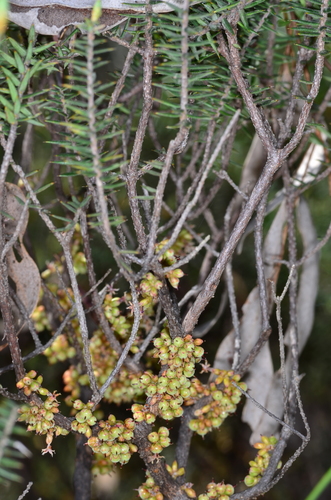
Gaultheria rigida
Kunth

(c) Andrés Ramírez-Barrera, some rights reserved (CC BY), uploaded by Andrés Ramírez-Barrera
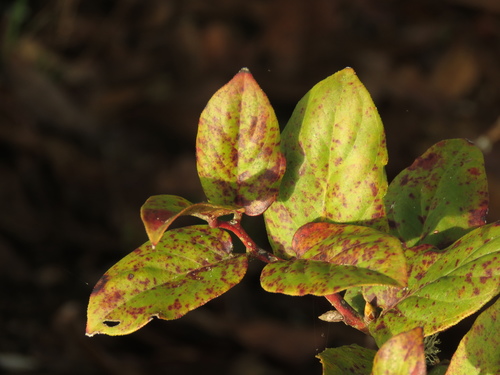
(c) Mateo Hernandez Schmidt, some rights reserved (CC BY-NC-SA), uploaded by Mateo Hernandez Schmidt
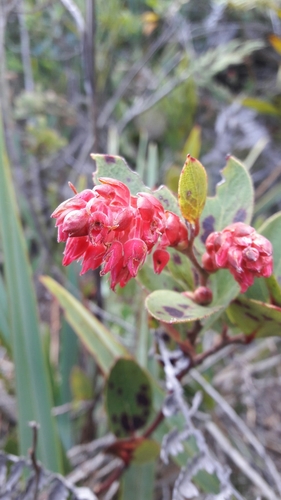
(c) Juan Andrés leyva, some rights reserved (CC BY-NC), uploaded by Juan Andrés leyva
What to Eat
Edible parts: Fruit
The fruit can be eaten raw or cooked.
Where to Find It
It is a temperate plant.
Andes, Chile - Juan Fernandez island, Ecuador, South America,
How to Identify
Evergreen shrub with year-round foliage. Hermaphrodite, insect-pollinated. Tolerates light sandy and medium loamy soils. Grows in full to semi-shade, thriving in mildly acid and very acid soils. Prefers moist soil.
How to Grow
We have very little information on this species and do not know if it will be hardy in Britain. The following notes are based on the general needs of the genus. Prefers a cool moist but not boggy humus rich soil in shade or semi-shade. A peat and moisture loving species, it requires a lime-free soil. Plants in this genus are notably resistant to honey fungus.
Propagation: Seed requires cold stratification — pre-chill for 4–10 weeks, then surface sow in lime-free compost in a shady part of the greenhouse and keep the compost moist. Germination is usually good, typically within 1–2 months at 20°C, but seedlings are prone to damping off. Water carefully, ensure good ventilation, and watering with a garlic infusion can also help prevent damping off. Prick out seedlings into individual pots when about 25mm tall and grow on in light shade in the greenhouse for at least their first winter. Plant out in late spring or early summer; seedlings are susceptible to spring frosts and may need protection for their first few years outdoors. Leaves remain very small for the first few years. Take cuttings of half-ripe wood 3–6cm long in July/August in a shaded frame; roots form in late summer or spring with a good success rate. Divide in spring when new growth is about 7cm tall. Larger clumps can go directly into permanent positions, though smaller clumps are best potted up and grown on in a cold frame until rooting well, then planted out in spring.
Medicinal Uses
None known.
Other Uses
None known.
Wikipedia
Evergreen shrub with year-round foliage. Hermaphrodite, insect-pollinated. Tolerates light sandy and medium loamy soils. Grows in full to semi-shade, thriving in mildly acid and very acid soils. Prefers moist soil.
Notes
There are about 170 Gaultheria species.
Names & Synonyms
References (1)
- Plants for a Future database, The Field, Penpol, Lostwithiel, Cornwall, PL22 0NG, UK. http://www.scs.leeds.ac.uk/pfaf/