Grewia barteri
Burret
Keli

Royal Botanic Gardens, Kew

Royal Botanic Gardens, Kew
What to Eat
Edible parts: Fruit, Gum, Bark
The fruit is edible. The gum and bark are used for flavoring; the bark is dried, powdered, and used as a flavoring agent in sauces.
Where to Find It
A tropical plant. It grows in savannah woodland and near rivers in some parts of West Africa.
Africa, Benin, Burkina Faso, Cameroon, Central Africa, Chad, Ghana, Mali, Nigeria, West Africa,
How to Identify
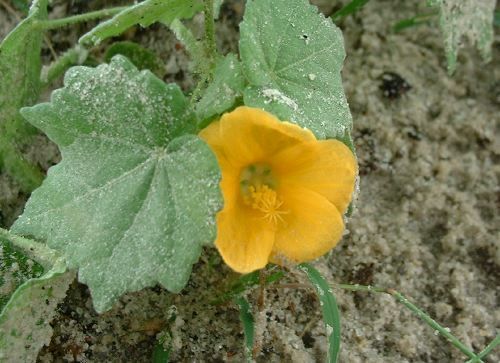
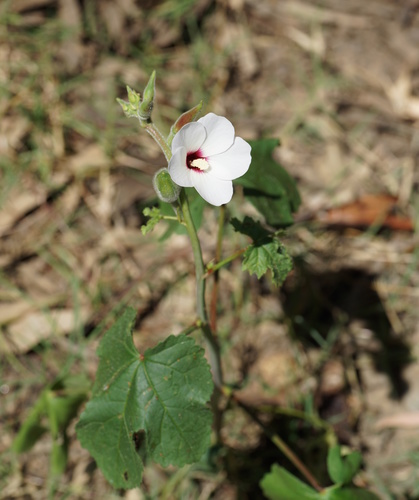
A scrambling shrub in the family Malvaceae native to savannah woodlands and riverside areas of West Africa, growing 2–6 m tall.
How to Grow
Propagation: Seed - best sown as soon as it is ripe. Stored seed is likely to have a hard seedcoat and may benefit from scarification before sowing in order to speed up and improve germination. This can usually be done by pouring a small amount of nearly boiling water on the seeds (being careful not to cook them!), allowing the mix to cool somewhat and then leaving it in a warm place to soak for 12 - 24 hours. Sow the seeds in situ or in a nursery seedbed or trays - do not allow the compost to become dry. Germination and early growth are usually quite quick. Cuttings - best taken with a heel.
Medicinal Uses
The twigs and gum are used in sauces and for flavoring.
Other Uses
A fibre obtained from the stems can be used to make rope. The stems are strong and flexible and can be used as a rope. The twigs contain a gummy exudate which is used as a binding agent The wood is used for fuel.
Notes
There are about 200 Grewia species. They are mostly tropical. The fruit of most may be edible. These were in the Sparrmanniaceae and the Tiliaceae.
Names & Synonyms
Gourkou, Gurku, Mosocor, Rankya, Sari
References (8)
- Abbiw, D.K., 1990, Useful Plants of Ghana. West African uses of wild and cultivated plants. Intermediate Technology Publications and the Royal Botanic Gardens, Kew. p 47
- Burkill, H. M., 1985, The useful plants of west tropical Africa, Vol. 5. Kew.
- Dalziel, J. M., 1937, The Useful plants of west tropical Africa. Crown Agents for the Colonies London.
- Hanawa, Y., 2013, Wild edible plants used by Guiziga people of far north region of Cameroon. Int. J. Med. Arom. Plants. Vol 3 (2) : 136-143
- Jardin, C., 1970, List of Foods Used In Africa, FAO Nutrition Information Document Series No 2.p 140
- Peters, C. R., O'Brien, E. M., and Drummond, R.B., 1992, Edible Wild plants of Sub-saharan Africa. Kew. p 191
- Vivien, J., & Faure, J.J., 1996, Fruitiers Sauvages d'Afrique. Especes du Cameroun. CTA p 351
- World Checklist of Useful Plant Species 2020. Royal Botanic Gardens, Kew