Grewia eriocarpa
Juss.

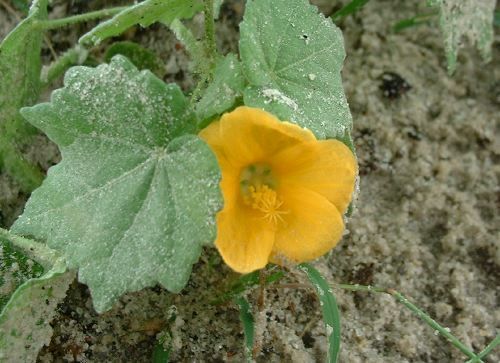
(c) Penny Wang, some rights reserved (CC BY-NC), uploaded by Penny Wang

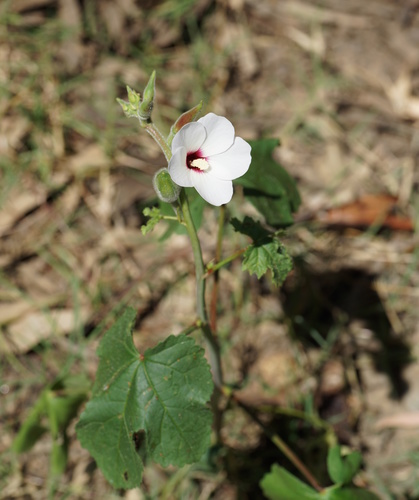
(c) copyboy, some rights reserved (CC BY-NC)
What to Eat
Edible parts: Fruit, Flower bud
The small round bluish fruits are eaten raw.
Where to Find It
A tropical plant. They thrive in forests along streams at low altitudes throughout the Philippines. In Yunnan.
Asia, Bhutan, Cambodia, China, Hainan, Himalayas, India, Indochina, Indonesia, Laos, Malaysia, Myanmar, Nepal, Pacific, Philippines, SE Asia, Sikkim, Sri Lanka, Taiwan, Thailand, Vietnam,
How to Identify
A small tree. It grows 2-6 m tall. The crown is straggling and the branches are slender and drooping. The leaves are alternate, densely hairy and pointed at the tip. They are slanting at the base and the lower surface is whitish. The flowers are small and yellow. The fruit are small, round and bluish. They are slightly 2-4 lobed.
How to Grow
Propagation: Seed - we have no specific information for this species but seed of this genus is generally best sown as soon as it is ripe. Stored seed has a hard seedcoat and may benefit from scarification before sowing in order to speed up and improve germination. This can usually be done by pouring a small amount of nearly boiling water on the seeds (being careful not to cook them!), allowing the mix to cool somewhat and then leaving it in a warm place to soak for 12 - 24 hours. Sow the seeds in situ or in a nursery seedbed or trays - do not allow the compost to become dry. Germination and early growth are usually quite quick. Cuttings - best taken with a heel.
Medicinal Uses
Grewia species are valued in many cultures for their medicinal virtues. The main medicinal action appears to come from the mucilage that is found in the leaves, stems and roots, which has been shown to have soothing and healing properties. Taken internally it is often used as a remedy for diarrhoea and dysentery, for example, whilst externally it is applied to wounds, cuts, ulcers, irritations etc. The plant can be taken as a simple infusion or decoction, or it can be applied topically as a poultice of the plant, or the mucilage can be extracted from the plant, if required, by maceration and then decoction. The bark ingredient with spirit use to prevent skin, sickness. It is assumed that this means a tincture of the bark in alcohol is used to treat skin conditions. An ethanolic extract of stem bark has shown CNS depressant activity.
Other Uses
A good quality fibre obtained from the bark is used to make ropes. The fibre is extracted from the bark as soon as it is removed from the tree and makes a rope of average strength. The rope is used for hauling and binding. The fibre is sometimes used for making hat braids. The wood is light in weight, tough, strong and elastic. It is generally used for small articles where toughness and elasticity are required, such as tool handles, shoulder poles for carrying small loads, pestles, bows and billiards cues and, because it splits well, it is also used to make shingles.
Notes
There are about 200 Grewia species. They are mostly tropical. The fruit of most may be edible. These were in the Sparrmanniaceae and the Tiliaceae.
Names & Synonyms
Bariuan, Bay kriem nhi, Matang, Ngou Kun Shu, Pin-tayaw, Syalphusrey
References (13)
- Altschul, S.V.R., 1973, Drugs and Foods from Little-known Plants. Notes in Harvard University Herbaria. Harvard Univ. Press. Massachusetts. no. 2713
- Ann. Mus. Natl. Hist. Nat. 4:93. 1804
- Brown, W.H., 1920, Wild Food Plants of the Philippines. Bureau of Forestry Bulletin No. 21 Manila. p 110
- Gardner, S., et al, 2000, A Field Guide to Forest Trees of Northern Thailand, Kobfai Publishing Project. p 90
- Kachenchart, B., et al, 2008, Phenology of Edible Plants at Sakaerat Forest. In Proceedings of the FORTROP II: Tropical Forestry Change in a Changing World. Bangkok, Thailand.
- Kaewjampa, N., et al, 2014, Investigation Species of Edible Tree and Medicinal Plants in Faculty of Agriculture, Khon Kaen University. International Journal of Environmental and Rural Development (2014) 5-1
- Martin, M.A., 1971, Introduction L'Ethnobotanique du Cambodge. Centre National de la Recherche Scientifique. Paris.
- Monsalud, M.R., Tongacan, A.L., Lopez, F.R., & Lagrimas, M.Q., 1966, Edible Wild Plants in Philippine Forests. Philippine Journal of Science. p 550
- Phon, P., 2000, Plants used in Cambodia. © Pauline Dy Phon, Phnom Penh, Cambodia. p 323
- Reis, S. V. and Lipp, F. L., 1982, New Plant Sources for Drugs and Foods from the New York Botanical Garden herbarium. Harvard. p 176
- Sharma, G., et al, 2016, Agrobiodiversity in the Sikkim Himalaya. International Centre for Integrated Mountain Development, ICIMOD Working Paper 2016/5 p 20 (As Grewia vestita)
- Sundriyal, M., et al, 2004, Dietary Use of Wild Plant Resources in the Sikkim Himalaya, India. Economic Botany 58(4) pp 626-638 (As Grewia vestita)
- World Checklist of Useful Plant Species 2020. Royal Botanic Gardens, Kew