Grewia multiflora
Juss.
Danglin

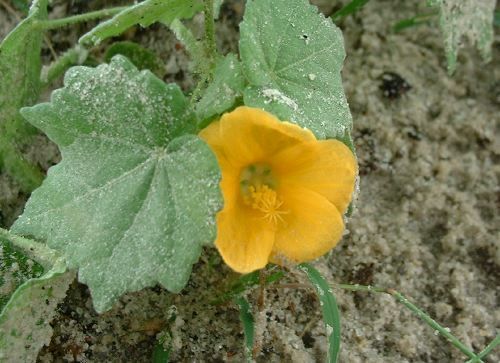
Wikimedia Commons - John Tann from Sydney, Australia

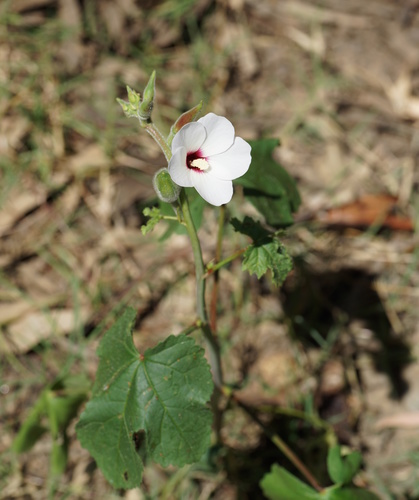
Wikimedia Commons - John Tann from Sydney, Australia
What to Eat
Edible parts: Fruit
The young leaves are cooked and eaten, and can also be dried and used as a tea substitute. The ripe fruits are eaten fresh.
Where to Find It
A tropical plant. They grow naturally in coastal monsoon vine-forest. They are common in areas of shrub in hill country throughout the Philippines. In Yunnan.
Asia, Australia, China, Fiji, Himalayas, India, Indonesia, Malaysia, Myanmar, Pacific, Pakistan, Philippines, SE Asia,
How to Identify
A shrub or small tree. It grows 1-2 m tall. The branches are slender and sparsely covered with soft hairs when young. The leaves are oblong and the base is bluntly rounded with 3 veins and rounded toothed edges. The leaves are 6-13.5 cm long by 4.5-11 cm wide. They are dull green above and paler underneath. They have a leaf like appendage at the base of the leaf stem which is without hairs. The flowers are yellowish green. The flowers with stamens are about 1 cm long. They occur in clusters in the axils of leaves. The fruit are oval and hairless when old. They have 1-4 lobes and are 0.8-1.3 cm across. They are purplish black and the stones have one seed.
Nutrition Score: 44/100
| Part | Moisture | kJ | kcal | Protein | Vit A | Vit C | Iron | Zinc |
|---|---|---|---|---|---|---|---|---|
| Fruit | 61 | 458 | 110 | 1.5 | — | 3 | 17.9 | 1.2 |
How to Grow
Plants can be grown from seed.
Propagation: Seed - we have no specific information for this species but seed of this genus is generally best sown as soon as it is ripe. Stored seed has a hard seedcoat and may benefit from scarification before sowing in order to speed up and improve germination. This can usually be done by pouring a small amount of nearly boiling water on the seeds (being careful not to cook them!), allowing the mix to cool somewhat and then leaving it in a warm place to soak for 12 - 24 hours. Sow the seeds in situ or in a nursery seedbed or trays - do not allow the compost to become dry. Germination and early growth are usually quite quick. Cuttings - best taken with a heel.
Medicinal Uses
Grewia species are valued in many cultures for their medicinal virtues. The main medicinal action appears to come from the mucilage that is found in the leaves, stems and roots, which has been shown to have soothing and healing properties. Taken internally it is often used as a remedy for diarrhoea and dysentery, for example, whilst externally it is applied to wounds, cuts, ulcers, irritations etc. The plant can be taken as a simple infusion or decoction, or it can be applied topically as a poultice of the plant, or the mucilage can be extracted from the plant, if required, by maceration and then decoction. . A juice obtained from the root is taken in order to provide relief from coughs and colds. A juice obtained from the bark is taken in order to treat stomach disorders. A paste made from the bark is applied as a poultice on boils. An alcohol extract of the aerial parts has shown antiinflammatory activity.
Other Uses
The stem fibres are used for cordage. The bast is pale yellow-orange and is a non-staining fibre. Rope made from it is rather weak, but is said to be very durable for dry-weather use. It is a very commonly used rope in the Philippines. The plant is densely branched and responds well to trimming. It is often used as a hedge in India.
Production
In north India plants flower and fruit August to January.
Notes
There are about 200 Grewia species. They are mostly tropical. The fruit of most may be edible. These were in the Sparrmanniaceae and the Tiliaceae.
Names & Synonyms
Bhansuli
References (11)
- Ann. Mus. Natl. Hist. Nat. 4:89, t. 47. 1804
- Bajpai, O., et al, 2015, Tree species of the Himalayan Terai region of Uttar Pradesh, India: a checklist. Check List 11(4): 1718
- Brock,J., 1993, Native Plants of Northern Australia, Reed. p 210
- Chaudhary, L. B., et al, 2014, Tree Resources of Katerniaghat Wildlife Sanctuary, Uttar Pradesh, India with especial emphasis on Conservation Status, Phenology and Economic Values. International Journal of Environment. 3(1)
- Cherikoff V. & Isaacs, J., The Bush Food Handbook. How to gather, grow, process and cook Australian Wild Foods. Ti Tree Press, Australia p 200
- Lazarides, M. & Hince, B., 1993, Handbook of Economic Plants of Australia, CSIRO. p 125
- Low, T., 1991, Wild Food Plants of Australia. Australian Nature FieldGuide, Angus & Robertson. p 116
- Monsalud, M.R., Tongacan, A.L., Lopez, F.R., & Lagrimas, M.Q., 1966, Edible Wild Plants in Philippine Forests. Philippine Journal of Science. p 551
- Smith, N. M., 1991, Ethnobotanical Field Notes from the Northern Territory, Australia, J. Adelaide Bot. Gard. 14(1): 1-65
- Tiwi Plants and Animals. 2001, Aboriginal flora and fauna knowledge from Bathurst and Melville Islands, northern Australia. Northern Territory Botanical Bulletin; No. 24 p 56
- Wheeler, J.R.(ed.), 1992, Flora of the Kimberley Region. CALM, Western Australian Herbarium, p 167