Grewia oxyphylla
Burret
Blush plum
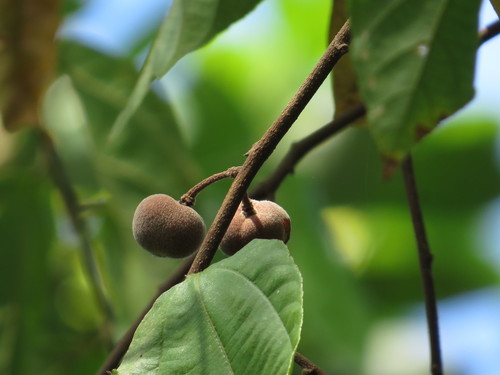
(c) kerrycoleman, some rights reserved (CC BY-NC), uploaded by kerrycoleman

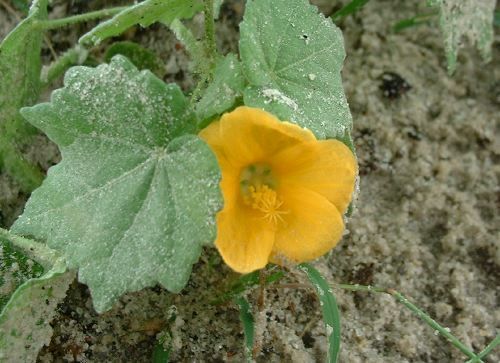
(c) Geoffrey Sinclair, some rights reserved (CC BY-NC)

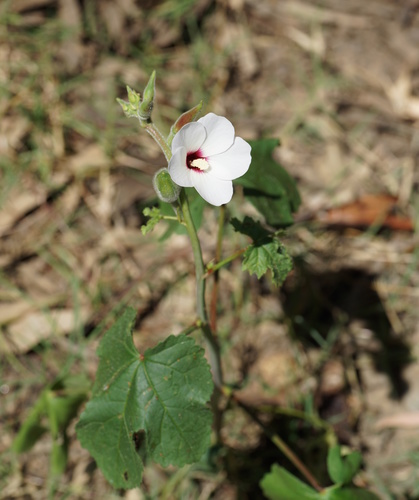
(c) Geoffrey Sinclair, some rights reserved (CC BY-NC)
What to Eat
Edible parts: Fruit
The fruit is edible.
Where to Find It
It is a tropical plant. It grows on sand and in vine thickets close to the coast. It can be in monsoon forest. It grows near sea level and up to 100 m above sea level.
Asia, Australia*, East Timor, SE Asia, Timor-Leste,
How to Identify
It can be a climber, a shrub or a tree. It grows 2-8 m high. The vine can be 5 cm across. The leaf blades are oval and 6-13 cm long by 2-8 cm wide. The base of the leaf can have 2 teeth or glandular lobes. The flowers are green and white. The fruit are 1-2 cm long by 1 cm wide. They are hairy. The seeds are 6-8 mm long by 4-5 mm wide.
Wikipedia
Source ↗Grewia oxyphylla is an Australian species of flowering plant in the mallow family, Malvaceae.
Notes
There are about 200 Grewia species. They are mostly tropical. The fruit of most may be edible. These were in the Sparrmanniaceae and the Tiliaceae.
Names & Synonyms
References (5)
- Cowie, I, 2006, A Survey of Flora and vegetation of the proposed Jaco-Tutuala-Lore National Park. Timor-Lests (East Timor) www.territorystories.nt/gov.au p 53
- Hardwick, G., 2001, Economically Useful Plants for Northern Australia: Master Species List. Crusader eBooks.
- Paczkowska, G . & Chapman, A.R., 2000, The Western Australian Flora. A Descriptive Calatogue. Western Australian Herbarium. p 562
- Vigilante, T., et al, 2013, Island country: Aboriginal connections, values and knowledge of the Western Kimberley islands in the context of an island biological survey. Records of the Western Australian Museum Supplement 81: 145-182
- Wheeler, J.R.(ed.), 1992, Flora of the Kimberley Region. CALM, Western Australian Herbarium, p 168