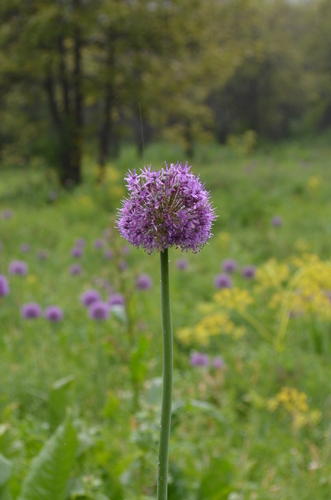
Allium grayi
Regel
Chinese garlic

wikimedia · cc0
Wikimedia Commons - ぎらん
Wikimedia Commons - ぎらん

wikimedia · cc0
Wikimedia Commons - LNDDYL
Wikimedia Commons - LNDDYL
wikimedia · cc-by-sa
Wikimedia Commons - Qwert1234
Wikimedia Commons - Qwert1234
What to Eat
Edible parts: Flowers, Leaves, Root, Bulb, Vegetable, Herb
The bulbs are eaten raw or cooked. The leaves are eaten raw or cooked. The flowers are used raw to flavour salads.
Where to Find It
It grows naturally in low hills all over Japan.
Asia, China, Japan, Korea, Manchuria, Mongolia, Russia,
Countries: United Arab Emirates, Afghanistan, Armenia, Azerbaijan, Bangladesh, Bahrain, Brunei, Bhutan, China, Georgia, Indonesia, Israel, India, Iraq, Iran, Jordan, Japan, Kyrgyzstan, Cambodia, North Korea, South Korea, Kuwait, Kazakhstan, Laos, Lebanon, Sri Lanka, Myanmar, Mongolia, Maldives, Malaysia, Nepal, Oman, Philippines, Pakistan, Qatar, Russia, Saudi Arabia, Singapore, Syria, Thailand, Tajikistan, Timor-Leste, Turkmenistan, Turkey, Taiwan, Uzbekistan, Vietnam, Yemen
How to Identify
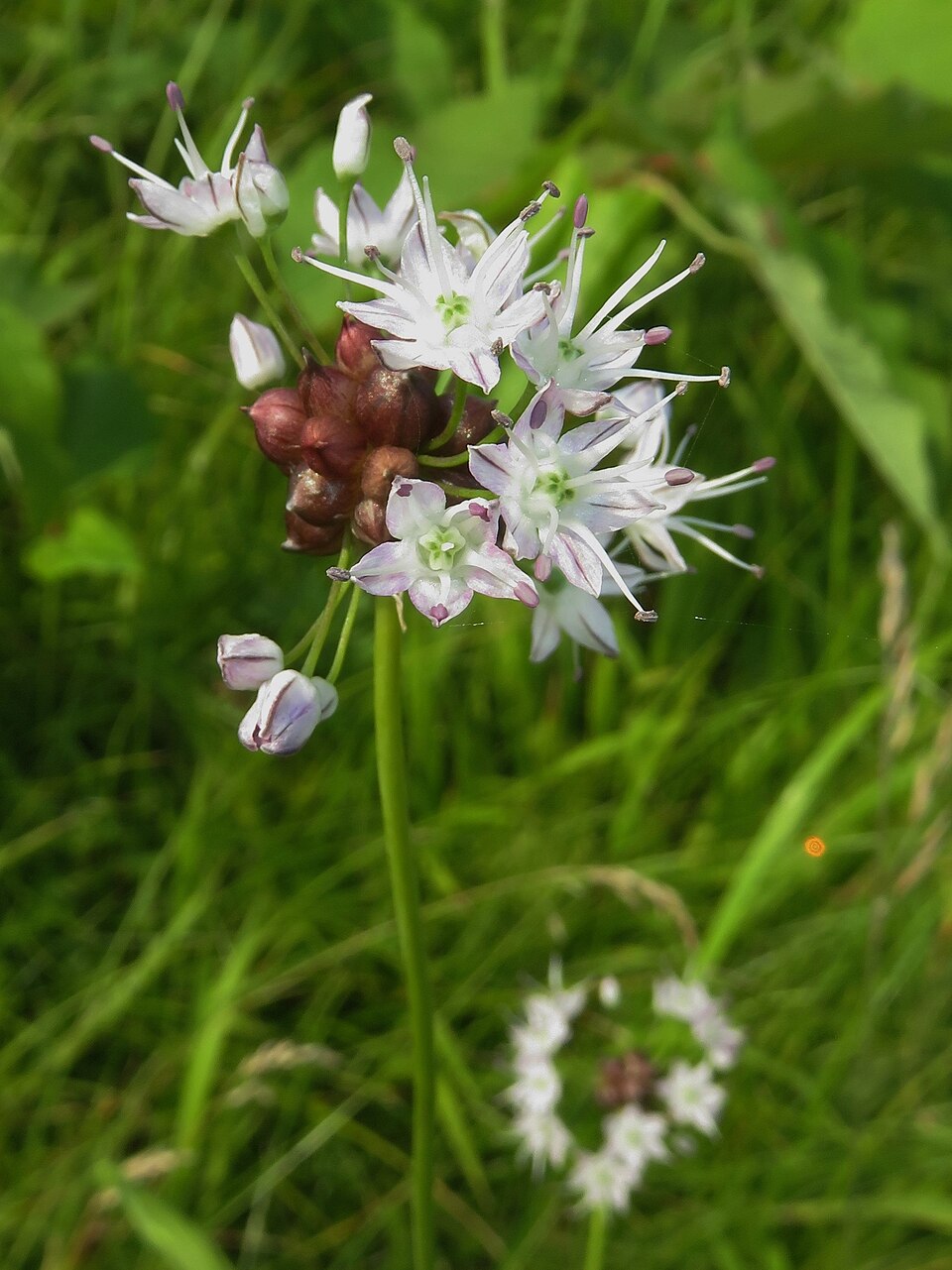
An Amaryllidaceae family plant native to the low hills of Japan, commercially cultivated as a vegetable.
Other Information
It is a commercially cultivated vegetable.
Notes
There are about 300-700 Allium species. Most species of Allium are edible (Flora of China). All alliums are edible but they may not all be worth eating! They have also been put in the family Alliaceae.
Names & Synonyms
Japanese garlic, No-biru, Sandallae, Tallae
Allium nipponicum Franch. & Sav.
References (9)
- Arora, R. K., 2014, Diversity in Underutilized Plant Species - An Asia-Pacific Perspective. Bioversity International. p 34
- Chen, B. & Qiu, Z., Consumer's Attitudes towards Edible Wild Plants, Ishikawa Prefecture, Japan. p 22 www.hindawi.com/journals/ijfr/aip/872413.pdf
- Facciola, S., 1998, Cornucopia 2: a Source Book of Edible Plants. Kampong Publications, p 5
- Kays, S. J., and Dias, J. C. S., 1995, Common Names of Commercially Cultivated Vegetables of the World in 15 languages. Economic Botany, Vol. 49, No. 2, pp. 115-152
- Pemberton, R. W. & Lee, N. S., 1996, Wild Food Plants in South Korea: Market Presence, New Crops, and Exports to the United States. Economic Botany, Vol. 50, No. 1, pp. 57-70
- Plants for a Future database, The Field, Penpol, Lostwithiel, Cornwall, PL22 0NG, UK. http://www.scs.leeds.ac.uk/pfaf/
- Seidemann J., 2005, World Spice Plants. Economic Usage, Botany, Taxonomy. Springer. p 19
- Trudy Imp. S.-Peterburgsk. Bot. Sada 3:125. 1875
- USDA, ARS, National Genetic Resources Program. Germplasm Resources Information Network - (GRIN). [Online Database] National Germplasm Resources Laboratory, Beltsville, Maryland. Available: www.ars-grin.gov/cgi-bin/npgs/html/econ.pl (10 April 2000)