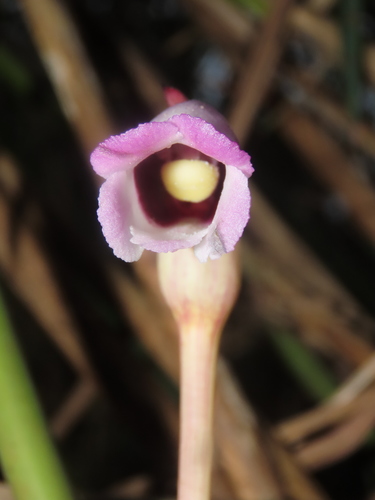
Orobanche cernua
Loefl.
Nodding Broomrape

(c) Theodore, some rights reserved (CC BY-NC-ND), uploaded by Theodore

(c) Schmidt Dávid, some rights reserved (CC BY-NC)

(c) kenttrulsson, some rights reserved (CC BY-NC), uploaded by kenttrulsson
What to Eat
Edible parts: Root, Seeds
The root is cooked for eating — it is roasted and then consumed.
Where to Find It
It is a Mediterranean climate plant. It grows in dry soils. It can grow in arid places. In northern China it grows in grasslands and forests between 500-3,000 m above sea level. In Sichuan.
Afghanistan, Africa, Arabia, Asia, Central Asia, China, East Africa, Egypt, Europe, France, Himalayas, India, Iran, Iraq, Israel, Kazakhstan, Kyrgyzstan, Mediterranean, Middle East, Mongolia, Nepal, North Africa, Pakistan, Russia, Saudi Arabia, Sinai, Spain, Sudan, Tajikistan, Tibet, Turkmenistan, Uzbekistan,
How to Identify
A plant that grows attached to other plants. It can grow for 2 or more years. It is 15-30 cm high. It is hairy. It usually has branched fleshy roots. The leaves are D to oval shaped and 1-2 cm long by 5-7 mm wide. The flowers are in spikes 5-20 cm long. They are tube shaped and pale yellow or dark purple. The fruit are capsules that are oblong and 1 cm long by 5-7 mm wide. The seeds are narrowly oval and 0.5 mm long by 0.2 mm wide.
How to Grow
We have very little information on this species and do not know if it will be hardy in Britain, though judging by its native range it should succeed outdoors at least in the milder areas of this country. It requires a well-drained soil and should succeed in sun or shade. A fully parasitic plant lacking in chlorophyll, it is entirely dependant upon its host plant for obtaining nutrient. We do not know which species it uses as hosts.
Propagation: No specific information is available for this species, but sowing seed in a greenhouse in a pot containing a host plant is suggested. Seed is probably best sown as soon as ripe where possible. It may also be feasible to sow seed in situ around a host plant.
Medicinal Uses
None known.
Other Uses
None known.
Wikipedia
Source ↗Orobanche cernua, commonly known as nodding broomrape, is a species of herb in the family Orobanchaceae. They have a self-supporting growth form and simple, broad leaves. Individuals can grow to 0.4 m. Holoparasite of Artemisia spp. Distribution: Europe, SW Asia, Russia, Kazakhstan, Turkmenistan, Uzbekistan Kyrgyzstan, Tajikistan, Afghanistan, Pakistan, N India, Nepal, China (Gansu, Hebei, Jilin, Nei Mongol, Qinghai, Shaanxi, Shanxi, Sichuan, Xinjiang, Xizang), Mongolia.
Notes
There are about 140 Orobanche species.
Names & Synonyms
Tarthuth
References (9)
- Al-Sodany, Y. M., et al, 2013, Medicinal Plants in Saudi Arabia: I. Sarrwat Mountains at Taif, KSA. Academic Journal of Plant Sciences 6 (4): 134-145
- Bailey, C. and Danin, A., 1981, Bedouin Plant Utilization in Sinai and the Negev. Economic Botany 35(2): 145-162
- Elliot, W.R., & Jones, D.L., 1997, Encyclopedia of Australian Plants suitable for cultivation. Vol 7. Lothian. p 116
- Flora of Pakistan. www.eFloras.org
- Iter hispan. 152. 1758
- Lim, T. K., 2015, Edible Medicinal and Non Medicinal Plants. Volume 9, Modified Stems, Roots, Bulbs. Springer p 61
- Plants for a Future database, The Field, Penpol, Lostwithiel, Cornwall, PL22 0NG, UK. http://www.scs.leeds.ac.uk/pfaf/
- Royal Botanic Gardens, Kew (1999). Survey of Economic Plants for Arid and Semi-Arid Lands (SEPASAL) database. Published on the Internet; http://www.rbgkew.org.uk/ceb/sepasal/internet [Accessed 11th June 2011]
- Urgamal, M., Oyuntsetseg, B., Nyambayar, D. & Dulamsuren, Ch. 2014. Conspectus of the vascular plants of Mongolia. (Editors: Sanchir, Ch. & Jamsran, Ts.). Ulaanbaatar, Mongolia. “Admon“ Press. 334pp. (p. 79-90).