Oxydendrum arboreum
(L.) DC.
Sorrel Tree, Sourwood, Tree sourwood

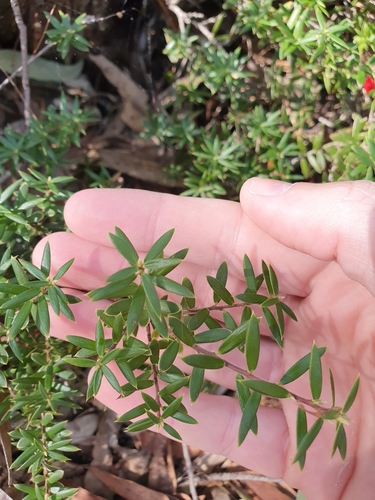
(c) teamtigerlily, some rights reserved (CC BY-NC)

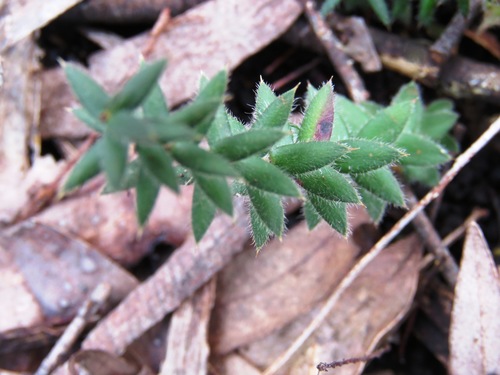
(c) Emily Summerbell, some rights reserved (CC BY), uploaded by Emily Summerbell

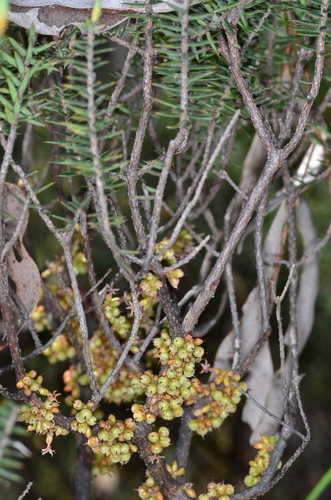
(c) Douglas Goldman, some rights reserved (CC BY-SA), uploaded by Douglas Goldman
What to Eat
Edible parts: Leaves, Honey
The leaves can be eaten raw and have a pleasant acid flavour that helps to allay thirst.
Where to Find It
It is a temperate plant. It is native to eastern North America. It grows in woods and by streams. It needs humus rich, acid soil. It suits hardiness zones 5-9. Arboretum Tasmania.
Australia, Britain, Europe, North America*, Tasmania, USA,
How to Identify
A deciduous tree. It grows 5-20 m tall. The tree is broadly cone shaped. The bark is thick and grey-brown. It is deeply furrowed. They leaves are oblong and 20 cm long by 7.5 cm wide. They taper to a fine point. They have very fine teeth. They are glossy dark green and smooth above and slightly hairy underneath. They turn red-yellow or purple in autumn. The leaves are long and sour tasting. The flowers are small and white. They are urn shaped and have a scent. They occur in large upright clusters. They are at the ends of the shoots. The fruit is a woody brown capsule.
How to Grow
It can be grown from seed or softwood cuttings.
Propagation: Surface sow seed in a shady position in a greenhouse either as soon as it is ripe in autumn or in late winter. Germination is variable. Move outside to a shady spot as soon as it germinates and overwinter in a frame. Prick seedlings into individual pots when large enough to handle and grow on for at least their first winter before planting out in late spring or early summer after the last expected frosts. Seedlings are susceptible to damping off and should be kept well-ventilated and not over-watered. Cuttings of half-ripe wood can be taken in July or August in a frame. Layering is also an option.
Medicinal Uses
The leaves are cardiac, diuretic, refrigerant, and tonic. A tea made from the leaves has been used to treat asthma, diarrhoea, and indigestion, and to check excessive menstrual bleeding. It is diuretic and serves as a folk remedy for fevers and kidney and bladder ailments. The bark has been chewed to treat mouth ulcers.
Other Uses
The wood is heavy, hard, attractive, and very close-grained, weighing 46lb per cubic foot. It is sometimes used for panelling, tool handles, bearings, and similar applications.
Wikipedia
Source ↗Oxydendrum arboreum is a deciduous tree growing to 10 m (32 ft) tall with a 6 m (19 ft) spread at a slow growth rate. Hardy to UK zone 5. Hermaphroditic flowers bloom July to August, with seeds ripening in September. It prefers light sandy or medium loamy well-drained soils and thrives in mildly acid to very acid pH. The tree grows in semi-shade or full sun and requires moist soil.
Notes
There is one Oxydendrum species.
Names & Synonyms
Lily-of-the-valley-tree
References (15)
- Beckstrom-Sternberg, Stephen M., and James A. Duke. "The Foodplant Database." http://probe.nalusda.gov:8300/cgi-bin/browse/foodplantdb.(ACEDB version 4.0 - data version July 1994)
- Brickell, C. (Ed.), 1999, The Royal Horticultural Society A-Z Encyclopedia of Garden Plants. Convent Garden Books. p 737
- Coombes, A.J., 2000, Trees. Dorling Kindersley Handbooks. p 143
- Cundall, P., (ed.), 2004, Gardening Australia: flora: the gardener's bible. ABC Books. p 966
- Etherington, K., & Imwold, D., (Eds), 2001, Botanica's Trees & Shrubs. The illustrated A-Z of over 8500 trees and shrubs. Random House, Australia. p 504
- Facciola, S., 1998, Cornucopia 2: a Source Book of Edible Plants. Kampong Publications, p 96
- Hibbert, M., 2002, The Aussie Plant Finder 2002, Florilegium. p 216
- Kermath, B. M., et al, 2014, Food Plants in the Americas: A survey of the domesticated, cultivated and wild plants used for Human food in North, Central and South America and the Caribbean. On line draft. p 599
- Kiple, K.F. & Ornelas, K.C., (eds), 2000, The Cambridge World History of Food. CUP p 1855
- Little, E.L., 1980, National Audubon Society Field Guide to North American Trees. Alfred A. Knopf. p 625
- Lord, E.E., & Willis, J.H., 1999, Shrubs and Trees for Australian gardens. Lothian. p 63
- Moerman, D. F., 2010, Native American Ethnobotany. Timber Press. p 374
- Plants for a Future database, The Field, Penpol, Lostwithiel, Cornwall, PL22 0NG, UK. http://www.scs.leeds.ac.uk/pfaf/
- Prodr. 7(2):601. 1839
- Ryan, S., 2008, Dicksonia. Rare Plants Manual. Hyland House. p 45