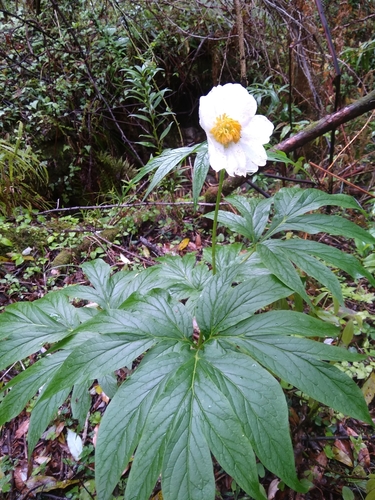
Paeonia lactiflora
Pallas
Chinese peony

(c) Svetlana Nesterova, some rights reserved (CC BY-NC), uploaded by Svetlana Nesterova
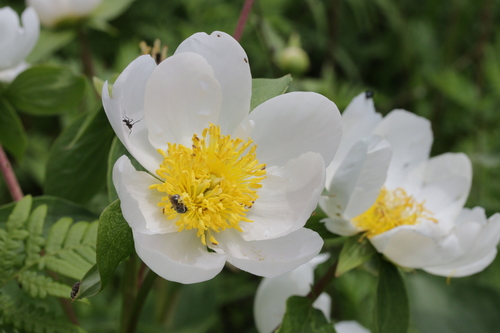
(c) Светлана Мещерягина, some rights reserved (CC BY-NC), uploaded by Светлана Мещерягина
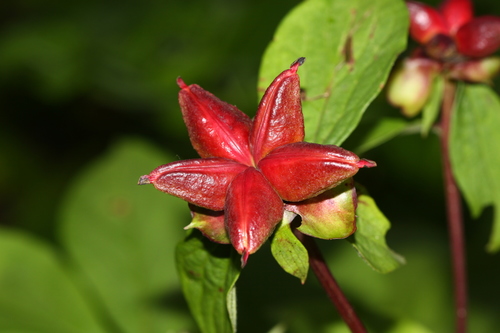
(c) V.S. Volkotrub, some rights reserved (CC BY-NC), uploaded by V.S. Volkotrub
What to Eat
Edible parts: Root, Seeds, Stem, Fruit peel - drink, Flowers, Flowers - tea
The root is cooked and eaten in a broth. Stems are eaten cooked. Seeds are powdered and mixed with tea.
Where to Find It
It is a temperate plant. It requires a deep rich neutral of alkaline soil. The soil should not be waterlogged nor too dry. It can stand medium frosts. It needs shelter from winds. It can tolerate winter temperatures down to -30°C. It suits hardiness zones 6-9. In Yunnan.
Asia, Australia, Canada, China, Japan, Korea, Mongolia, North America, Siberia, Slovenia, Tasmania, Tibet,
How to Identify
A perennial plant up to 75 m high. It spread to 50 cm across. The stems are erect. The leaves have lobes and are pointed. The flowers are large and pink or white. They have a scent. The flowers are 10 cm across. There are 2 or more per stem. There are now many cultivated varieties.
How to Grow
An easily grown and undemanding plant, it does best in a deep rich soil, preferably neutral or slightly alkaline, doing quite well in sun or light shade. Plants are tolerant of a wide range of soil conditions, but will not survive if the soil becomes waterlogged or is too dry. This species is lime tolerant. Plants grown on sandy soils tend to produce more leaves and less flowers, whilst those growing on clay take longer to become established but produce better blooms. Prefers a rich heavy soil that is well-drained but remains moist in the summer. The species is hardy to about -25°c, but there are many named varieties some of which are hardy to about -50°. Cultivated as a medicinal plant in China. A very ornamental and long-lived plant, surviving in gardens for 50 years or more. Many hundreds of named varieties have been developed for their ornamental value. Members of this genus are rarely if ever troubled by browsing deer or rabbits. A greedy plant, inhibiting the growth of nearby plants, especially legumes. Strongly resents root disturbance, taking some time to recover if it is transplanted. Plants should be planted with their crowns no more than 3cm below soil level. If planted deeper they do not flower so well. Peony species are usually self-fertile, though they will also hybridise with other species if these flower nearby at the same time. Plants take 4 - 5 years to flower from seed. They generally breed true from seed.
Propagation: Seed — best sown as soon as it is ripe in a cold frame. Fresh seed produces a root around 6 weeks after sowing, with shoots forming in spring. Stored seed is much slower and may take 18 months or more to germinate, so sow as soon as possible. Because roots are very sensitive to disturbance, many growers leave seedlings in their pots for 2 growing seasons before potting on, which allows a more robust root system to develop. If doing this, sow thinly and apply regular liquid feeds during the growing season. Alternatively, prick seedlings into individual pots as soon as they are large enough to handle and grow on in a cold frame for at least two growing seasons before planting out in spring. Divide with great care in spring or autumn, ensuring each portion has a leaf bud. Standing the lifted root in shade for several hours makes it less brittle and easier to divide. Divisions with several buds generally flower in the second year; those with only one or two buds will take considerably longer.
Medicinal Uses
The root of Chinese peony has been used in Chinese medicine for over 1,500 years. It is best known as one of the four herbs in 'Four Things Soup', a women's tonic, and is also used for gynaecological problems, cramp, pain, and giddiness. When the whole root is harvested it is called Chi Shao Yao; when the bark is removed during preparation it becomes Bai Shao Yao. The root is alterative, analgesic, anodyne, antibacterial, anti-inflammatory, antiseptic, antispasmodic, astringent, carminative, diuretic, emmenagogue, expectorant, febrifuge, hypotensive, nervine, and tonic. The key active compound is paeoniflorin, which exerts a strong antispasmodic effect on mammalian intestines, reduces blood pressure, lowers fever-induced body temperature, and protects against stress ulcers. It is taken internally for menstrual disorders, injuries, high blood pressure, pre-menstrual tension, and liver disorders. It should only be used under the supervision of a qualified practitioner and should not be prescribed for pregnant women. Roots for medicinal use are harvested in autumn from cultivated plants that are 4–5 years old and are boiled before being sun-dried for storage. Roots from wild plants are harvested in spring or preferably autumn and sun-dried. The root is one of four ingredients in 'Four Things Soup', alongside Rehmannia glutinosa, Ligusticum wallichii, and Angelica sinensis. A tea made from the dried crushed petals of various peony species has been used as a cough remedy and as a treatment for haemorrhoids and varicose veins.
Other Uses
No other uses are known. The plant is noted for its scent.
Wikipedia
Source ↗Paeonia lactiflora (Chinese peony, Chinese herbaceous peony, or common garden peony) is a species of herbaceous perennial flowering plant in the family Paeoniaceae, native to central and eastern Asia from eastern Tibet across northern China to eastern Siberia.
Production
Plants take 4-5 years to flower from seed. Plants can live for 50 years.
Notes
It is used as a medicine. It has anticancer properties. There are about 30 Paeonia species. The flowers have anti-oxidant properties.
Names & Synonyms
Bai Shao, Bai shou, Can-a, Chinese herbaceous peony, Chin Shao Yao, Mamum chai, Navadna vrtna potonika, Syakuyaku
References (19)
- Bremness, L., 1994, Herbs. Collins Eyewitness Handbooks. Harper Collins. p 198
- Cundall, P., (ed.), 2004, Gardening Australia: flora: the gardener's bible. ABC Books. p 974
- Facciola, S., 1998, Cornucopia 2: a Source Book of Edible Plants. Kampong Publications, p 165
- Hedrick, U.P., 1919, (Ed.), Sturtevant's edible plants of the world. p 460 (As Paeonia albiflora)
- Heywood, V.H., Brummitt, R.K., Culham, A., and Seberg, O. 2007, Flowering Plant Families of the World. Royal Botanical Gardens, Kew. p 240
- Hibbert, M., 2002, The Aussie Plant Finder 2002, Florilegium. p 217
- http://www.botanic-gardens-ljubljana.com/en/plants
- Hu, Shiu-ying, 2005, Food Plants of China. The Chinese University Press. p 391
- Hui, Y. H., Handbook of Food Science, Technology, and Engineering. Volume 2. Table 98:6
- Khasbagan, Hu-Yin Huai, and Sheng-Ji pei, 2000, Wild Plants in the Diet of Athorchin Mongol Herdsmen in Inner Mongolia. Economic Botany 54(4): 528-536
- Kintzios, S. E., 2006, Terrestrial Plant-Derived Anticancer Agents and Plant Species Used in Anticancer research Critical Reviews in Plant Sciences. 25: pp 79-113
- Lim, T. K., 2015, Edible Medicinal and Non Medicinal Plants. Volume 9, Modified Stems, Roots, Bulbs. Springer p 62
- Liu, Yi-tao, & Long, Chun-Lin, 2002, Studies on Edible Flowers Consumed by Ethnic Groups in Yunnan. Acta Botanica Yunnanica. 24(1):41-56
- Plants for a Future database, The Field, Penpol, Lostwithiel, Cornwall, PL22 0NG, UK. http://www.scs.leeds.ac.uk/pfaf/
- Reise russ. Reich. 3:286. 1776
- Sachula, et al, 2020, Wild edible plants collected and consumed by the locals in Daqinggou, Inner Mongolia, China. Journal of Ethnobiology and Ethnomedicine (2020) 16:60
- Valder, P., 1999, The Garden Plants of China. Florilegium. p 170
- Zeng, Y., et al, 2014, Evaluation of antioxidant activities of extracts from 19 Chinese edible flowers. SpringerPlus 2014, 3:315
- Zhang, Y., et al, Yunatov’s Records of Wild Edible Plant Used by the Mongols in Mongolia During 1940- 1951: Ethnobotanical Arrangements and Discussions. Inner Mongolia Normal University. p 6