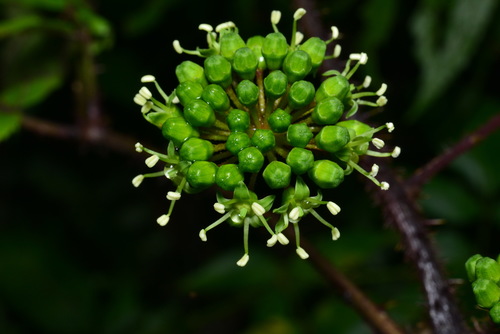
Panax trifolius
L.
Dwarf Ginseng, Ground nut, North American dwarf ginseng
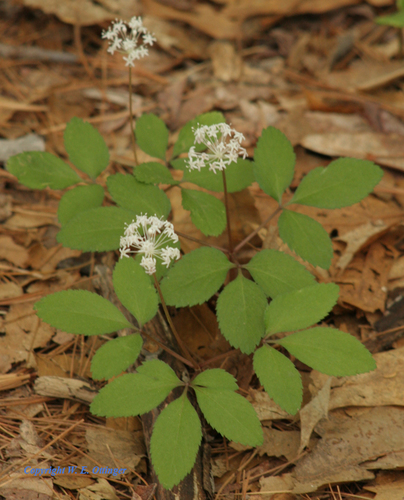
(c) pascal_samson, some rights reserved (CC BY-NC), uploaded by pascal_samson
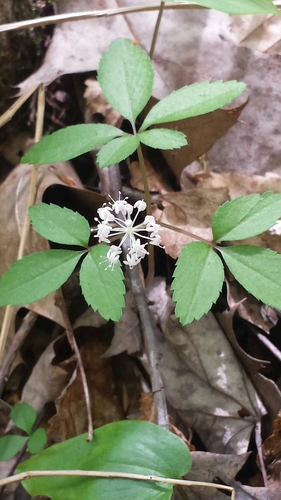
(c) Tom Norton, some rights reserved (CC BY), uploaded by Tom Norton

(c) Rich Stevenson, some rights reserved (CC BY-NC), uploaded by Rich Stevenson
What to Eat
Edible parts: Root, Tubers
The root is edible when cooked, developing a very palatable taste after boiling. Once cooled, it takes on a flavour somewhat resembling nuts.
Where to Find It
It is a temperate plant. It grows in woods and damp places. It suits hardiness zone 4.
Canada, North America, USA,
How to Identify
A perennial herb that grows 20 cm high. The leaves are in rings of three. They are 8 cm long. Each leaf is divided into 3-5 leaflets. These have coarse teeth. Plants have both sexes but individual flowers can be only male. The flowers are white.
How to Grow
Requires a moist humus-rich soil in a shady position in a woodland. The plant has leaves above the ground for only two months each year. Although plants are hermaphrodite, individual flowers are often male.
Propagation: Sow seed in a shady position in a cold frame, preferably as soon as it is ripe, otherwise as soon as it is obtained. Germination can be very slow and erratic. Prick out seedlings into individual pots when large enough to handle and grow on in a shady position in a greenhouse or frame for at least their first winter. Ensure pots are deep enough to accommodate the roots. Plant out into permanent positions in late summer. Alternatively, propagate by division in spring.
Medicinal Uses
Although closely related to ginseng, this species has been little researched for its medicinal properties. A tea made from the whole plant has been used to treat colic, indigestion, gout, and hepatitis. The root is analgesic and has been chewed as a treatment for headache, shortness of breath, fainting, and nervous debility.
Other Uses
None known.
Wikipedia
Source ↗Panax trifolius, commonly called dwarf ginseng, is a plant native to the Northeastern and Appalachian regions of North America. It is found in low mesic woods with acidic soils. It produces an umbel of white flowers in late spring. This species was used for traditional medicine by Native Americans. Its tubers can be eaten raw or boiled. The distribution of the plant is inconsistent and can become disjunct as it appears frequently in one area and absent in another with a suitable habitat. The plant is a part of the Araliaceae and occurs in a similar region with the more notable relative, Panax quinquefolium. It is sometimes referred to as "groundnut" due to the roots exhibiting a nutty flavor when eaten raw.
Names & Synonyms
References (11)
- Facciola, S., 1998, Cornucopia 2: a Source Book of Edible Plants. Kampong Publications, p 26
- Jackes, D. A., Edible Forest Gardens
- Kermath, B. M., et al, 2014, Food Plants in the Americas: A survey of the domesticated, cultivated and wild plants used for Human food in North, Central and South America and the Caribbean. On line draft. p 603
- Kiple, K.F. & Ornelas, K.C., (eds), 2000, The Cambridge World History of Food. CUP p 1778
- MacKinnon, A., et al, 2009, Edible & Medicinal Plants of Canada. Lone Pine. p 182
- NYBG Herbarium "edible" (trifolium)
- Plants for a Future database, The Field, Penpol, Lostwithiel, Cornwall, PL22 0NG, UK. http://www.scs.leeds.ac.uk/pfaf/
- Reis, S. V. and Lipp, F. L., 1982, New Plant Sources for Drugs and Foods from the New York Botanical Garden herbarium. Harvard. p 221
- Sp. pl. 1:1059. 1753
- van Wyk, B., 2005, Food Plants of the World. An illustrated guide. Timber press. p 274
- Wickens, G.E., 1995, Edible Nuts. FAO Non-wood forest products. FAO, Rome. p 108