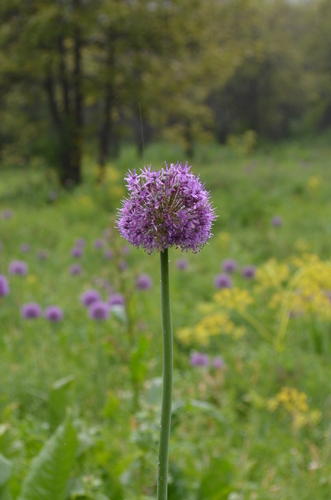
Pancratium maritimum
L.
Sea daffodil, Sea lily

(c) Falk Viczian Solarboot-Projekte gGmbH, some rights reserved (CC BY-NC), uploaded by Falk Viczian Solarboot-Projekte gGmbH
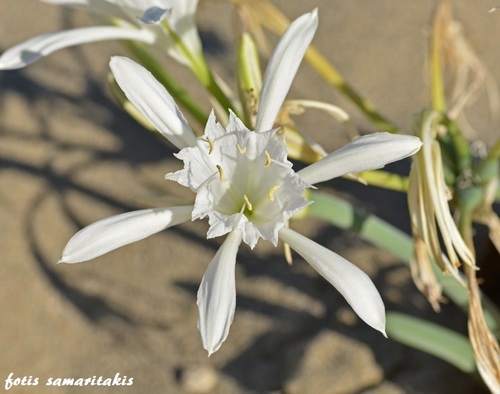
(c) fotis-samaritakis, some rights reserved (CC BY-NC), uploaded by fotis-samaritakis
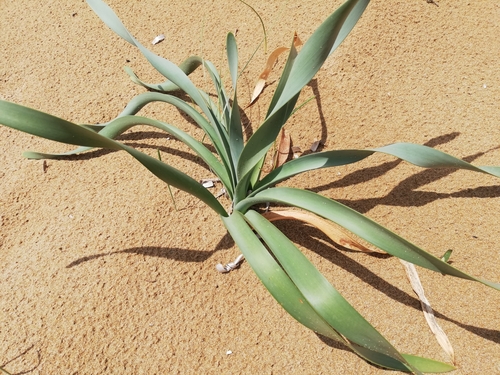
(c) keschi, some rights reserved (CC BY-NC)
What to Eat
Edible parts: Root, Seeds, Bulbs
The bulb can be cooked, though this is somewhat dubious given reports that the bulb may be poisonous. Seeds are also noted as edible, though no further details are given.
Known Hazards
Where to Find It
It grows on the Atlantic coast just above the waterline. It needs a light well drained soil and very sunny position. It grows on sandy coastlines. A hot dry summer is needed to fully ripen the bulbs. It can tolerate light frosts. It can grow in arid places.
Africa, Albania, Algeria, Armenia, Australia, Balkans, Britain, Bulgaria, Caucasus, Egypt, Europe, France, Greece, Israel, Italy, Kenya, Lebanon, Libya, Mediterranean, Middle East, North Africa, Palestine, Portugal, Slovenia, Spain, Syria, Turkey, Türkiye,
How to Identify
It is a herb plant with a bulb. It grows up to 50 cm high. It is 30 cm across. The bulb is 6 cm across. The leaves are bluish-green. They are fleshy and strap shaped. They are 5-20 mm wide. The flowers are white. There are 4-12 flowers in a head. They are on stalks 30-40 cm long. The flowers have a lily scent. The fruit is a 3-valved capsule.
How to Grow
Requires a light very well drained sandy soil in a very sunny position. Requires a warm sheltered position when grown outdoors in Britain. Requires a hot dry summer in order to fully ripen its bulb, it is more easily grown in a bulb frame in Britain. Tolerates temperatures down to about -5°c, it is only hardy in the milder areas of Britain, requiring protection even there in the winter. The bulb should be planted deeply and rapid spring growth should be encouraged. Another report says that plants are easily grown outdoors in Britain but that the leaves are susceptible to frost damage and the plant does not flower well in an average British summer. The flowers have an exotic lily scent.
Propagation: Seed is best sown as soon as it is ripe in a greenhouse. Pre-soak stored seed for 1 hour in warm water, then sow in spring in a warm greenhouse in a light sandy soil. Germination usually takes place within 1–3 months at 22°C. Sow seed thinly so seedlings can be left undisturbed in the pot for their first two years. Give an occasional liquid feed during the growing season to prevent nutrient deficiency. When plants become dormant in late summer, pot up the small bulbs, placing 2 per pot, and grow on for another one or two years in the greenhouse before planting out when dormant in late summer. Propagate also by division of offsets when the plant dies down in late summer.
Medicinal Uses
None known.
Other Uses
The woolly hairs on the inside of the seed coat (or possibly the seed case) are used to weave felt shoes and other garments.
Wikipedia
Source ↗Pancratium maritimum, or sea daffodil, is a species of bulbous plant native to both sides of the Mediterranean region and the Black Sea, from the Canary Islands, Portugal, Morocco, and Cyprus, and east to Turkey, Syria, Israel and the Caucasus. Parts of its range on the coasts of the Black Sea include southern Bulgaria, northern Turkey and Georgia. It is also naturalized in southern California, Bermuda and the Azores. Pancratium maritimum grows on beaches and coastal sand dunes, often with much of the leaves and scapes buried in the sand. Other vernacular names are sea lily, sand daffodil, sand lily and lily of St. Nicholas, (although it is not a true lily). The specific epithet maritimum means "of the sea".
Notes
There are 15 Pancratium species.
Names & Synonyms
Obmorski pankracij, Pancracio
References (14)
- Blamey, M and Grey-Wilson, C., 2005, Wild flowers of the Mediterranean. A & C Black London. p 490
- Facciola, S., 1998, Cornucopia 2: a Source Book of Edible Plants. Kampong Publications, p 9
- Hedrick, U.P., 1919, (Ed.), Sturtevant's edible plants of the world. p 460
- Hibbert, M., 2002, The Aussie Plant Finder 2002, Florilegium. p 218
- http://www.botanic-gardens-ljubljana.com/en/plants
- Hussey, B.M.J., Keighery, G.J., Cousens, R.D., Dodd, J., Lloyd, S.G., 1997, Western Weeds. A guide to the weeds of Western Australia. Plant Protection Society of Western Australia. p 18
- Mahklouf, M. H., 2019, Ethnobotanical Study of Edible Wild Plants in Libya. European Journal of Ecology. 5(2): 30-40
- Motti, R. et al, 2009, Traditional Plant Use in the Phlegraean Fields Regional Park (Campania, South Italy). Human Ecology, 37:775-782
- Morley, B. & Everard, B., 1970, Wild Flowers of the World. Ebury press. Plate 42
- Motti, R. et al, 2009, Traditional Plant Use in the Phlegraean Fields Regional Park (Campania, Southern Italy). Human Ecology 37:775-782
- Plants for a Future database, The Field, Penpol, Lostwithiel, Cornwall, PL22 0NG, UK. http://www.scs.leeds.ac.uk/pfaf/
- Royal Botanic Gardens, Kew (1999). Survey of Economic Plants for Arid and Semi-Arid Lands (SEPASAL) database. Published on the Internet; http://www.rbgkew.org.uk/ceb/sepasal/internet [Accessed 25th March 2011]
- Sp. Pl. 1:291. 1753
- World Checklist of Useful Plant Species 2020. Royal Botanic Gardens, Kew