Parajubaea cocoides
Burret
Quito palm
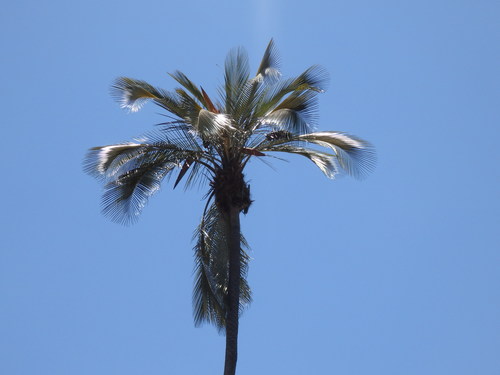
(c) naturalist1214, some rights reserved (CC BY-NC)
What to Eat
Edible parts: Seeds, Oil, Fruit, Nuts, Sap
The seed, which is about 2cm long, has a sweet taste and is a popular food with children. It can be eaten raw or cooked. An edible oil is also obtained from the seed.
Where to Find It
A tropical plant. It grows between 2,000 and 3,000 metres altitude. It requires a sunny sheltered position in a well drained soil. Plants need night temperatures below 13°C. They can grow in Sydney in Australia. It suits subtropical and temperate regions. Temperatures below -6°C can kill trees. Trees can grow in a fairly wide range of pH values.
Australia, Andes, Bolivia, Colombia*, Ecuador*, New Zealand, North America, South America, USA,
How to Identify
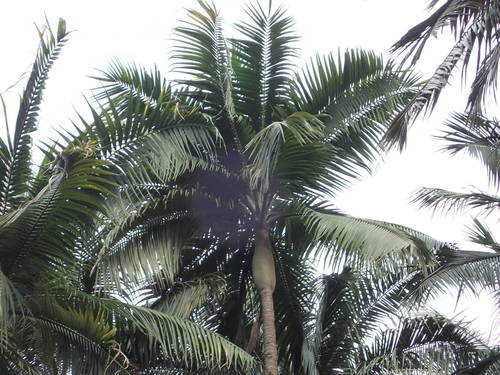
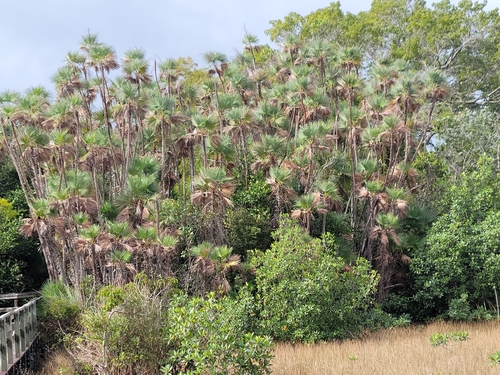
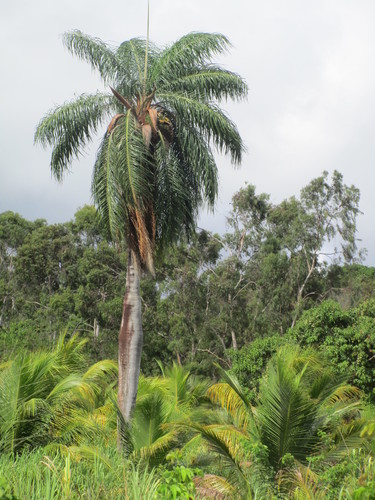
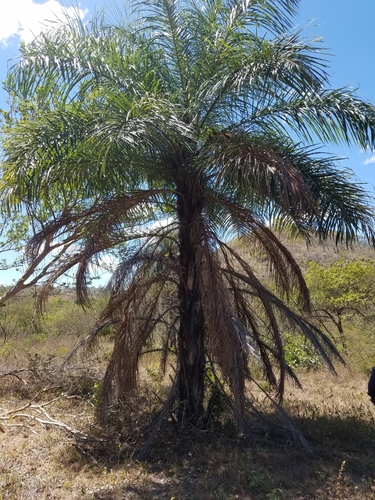
A palm with a solitary trunk. It grows to 15-20 m tall. The trunk is 20-25 cm across. It has a rounded graceful crown. The leaves are 3-5 m long. The leaves have leaflets along the leaf stalk. They are bright to dark green above and silvery underneath. The fruiting stalk hangs down from among the leaves on long strings. The male and female flowers are separate on the same stalk. The fruit is about 5-6 cm long. The fruit are covered with a very tough flesh. They are yellow green when ripe. The seed is about 2 cm long and ridged and black.
How to Grow
Requires a sunny sheltered position in a well-drained soil but with plenty of water in the growing season. Plants probably require a cool summer and quickly lose vigour in areas where night temperatures do not fall below 13°c. Plants experience sub-zero temperatures in their native range and it should therefore be possible to grow them in warm temperate zones that only experience occasional light frosts. They will possibly succeed in the milder areas of Cornwall. This species has a deep penetrating root systems and generally establishes best when planted out at a young stage. It is not suitable for container cultivation. Older plants are substantially more cold tolerant than juvenile plants, so if the plants can be protected from frosts in their earlier years it might be possible to grow them in areas at the limit of their cold tolerance. Plants are relatively fast-growing for a palm and can produce fruit in 4 years from seed. Trees are deep rooted.
Propagation: Sow seed in a warm greenhouse as soon as it is ripe, where it usually germinates freely. Stored seed is harder to germinate and should be pre-soaked for 24 hours in warm water before sowing in a warm greenhouse. Prick seedlings into individual pots when large enough to handle and grow them on in the greenhouse for at least their first two winters. Plant out into permanent positions in late spring or early summer after the last expected frosts, and provide some cold protection for their first few winters outdoors.
Medicinal Uses
None known.
Other Uses
None known.
Wikipedia
Source ↗Parajubaea cocoides, the mountain coconut, coco Cumbe or Quito palm, is a species of flowering plant in the family Arecaceae. It occurs in Ecuador, Colombia and Peru.
Production
Plants grow fairly quickly. They can produce fruit in 4 years when grown from seed.
Other Information
It is a cultivated food plant.
Notes
There are 2 or 3 Parajubaea species.
Names & Synonyms
Coco cumbe, Cocumbe palm, Mountain coconut
References (19)
- Blomberry, A. & Rodd, T., 1982, Palms. An informative practical guide. Angus & Robertson. p 135
- Castillo, R. O., 1995, Plant Genetic Resources in the Andes: Impact, Conservation, and Management. Crop Science 35:355-360
- Facciola, S., 1998, Cornucopia 2: a Source Book of Edible Plants. Kampong Publications, p 30
- Gibbons, M., 1993, Palms. Compact study Guide and Identifier. Sandstone. p 58
- Gibbons, M., 2003, A pocket guide to Palms. Chartwell Books. p 153
- Haynes, J., & McLaughlin, J., 2000, Edible palms and Their Uses. University of Florida Fact sheet MCDE-00-50-1 p 11
- Henderson, A., Galeano, G and Bernal, R., 1995, Field Guide to the Palms of the Americas. Princeton. p 150
- Jones, D.L., 1994, Palms throughout the World. Smithtonian Institution, Washington. p 56, 282
- Jones, D.L., 2000, Palms of Australia 3rd edition. Reed/New Holland. p 191
- Kermath, B. M., et al, 2014, Food Plants in the Americas: A survey of the domesticated, cultivated and wild plants used for Human food in North, Central and South America and the Caribbean. On line draft. p 605
- Lyle, S., 2006, Discovering fruit and nuts. Land Links. p 309
- Marcia, M. J., et al, 2011, Palm Uses in Northwestern South America: A Quantitative Review. Bot. Rev. (2011) 77:462-570
- Notizbl. Bot. Gart. Berlin-Dahlem 11:48. 1930
- Plants for a Future database, The Field, Penpol, Lostwithiel, Cornwall, PL22 0NG, UK. http://www.scs.leeds.ac.uk/pfaf/
- Riffle, R.L. & Craft, P., 2003, An Encyclopedia of Cultivated Palms. Timber Press. p 399
- Roa, J. A. G. & Boada, D. S. G., 2018, Fundación para el Fortalecimiento de la Fruticultura y Plantas Alimenticias no Convencionales en Colombia.
- Torre, de la L., et al, 2008, Enciclopedia de las Plantas Útiles del Ecuador. Herbario QCA. Pontificia Universidad Católica del Ecuador. p 206
- Wickens, G.E., 1995, Edible Nuts. FAO Non-wood forest products. FAO, Rome. p169
- World Checklist of Useful Plant Species 2020. Royal Botanic Gardens, Kew