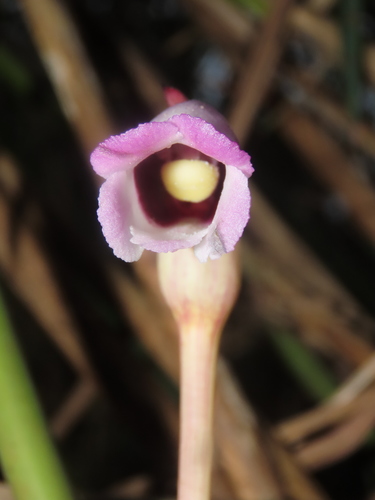
Pedicularis carnosa
Wall.
Entire leaf lousewort

gbif · cc0
Conveyor Belt
Conveyor Belt

gbif · cc0
Conveyor Belt
Conveyor Belt

gbif · cc0
Conveyor Belt
Conveyor Belt
What to Eat
Edible parts: Leaves, Roots
The leaves are cooked as a vegetable, preferably with dried fish. The roots are also edible.
Where to Find It
It is a temperate plant.
Asia, India, Northeastern India,
Countries: United Arab Emirates, Afghanistan, Armenia, Azerbaijan, Bangladesh, Bahrain, Brunei, Bhutan, China, Georgia, Indonesia, Israel, India, Iraq, Iran, Jordan, Japan, Kyrgyzstan, Cambodia, North Korea, South Korea, Kuwait, Kazakhstan, Laos, Lebanon, Sri Lanka, Myanmar, Mongolia, Maldives, Malaysia, Nepal, Oman, Philippines, Pakistan, Qatar, Saudi Arabia, Singapore, Syria, Thailand, Tajikistan, Timor-Leste, Turkmenistan, Turkey, Taiwan, Uzbekistan, Vietnam, Yemen
How to Identify
A temperate herb in the Orobanchaceae family with edible leaves and roots.
Notes
Also put in the family Scrophulariaceae.
Names & Synonyms
Sam-dipo, Sam-thapar
References (3)
- Lim, T. K., 2015, Edible Medicinal and Non Medicinal Plants. Volume 9, Modified Stems, Roots, Bulbs. Springer p 63
- Maikhuri, R, K, and Gangwar, A. K., 1993, Ethnobiological Notes on the Khasi and Garo Tribes of Meghalaya, Northeast India, Economic Botany, Vol. 47, No. 4, pp. 345-357
- Sawian, J. T., et al, 2007, Wild edible plants of Meghalaya, North-east India. Natural Product Radiance Vol. 6(5): p 420