Pedicularis sceptrum subsp. carolinum
L.
OrobanchaceaeLeaves

iNaturalist · cc-by-nc
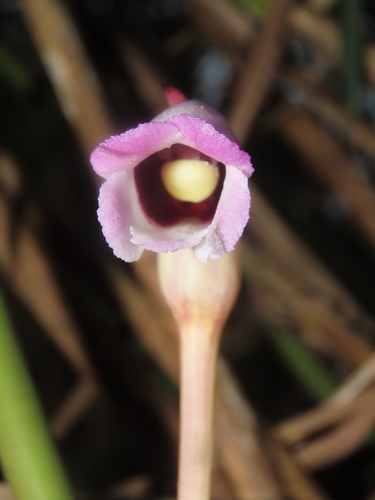
(c) Кривоногова Мария, some rights reserved (CC BY-NC)
(c) Кривоногова Мария, some rights reserved (CC BY-NC)

iNaturalist · cc-by-nc
(c) Кривоногова Мария, some rights reserved (CC BY-NC)
(c) Кривоногова Мария, some rights reserved (CC BY-NC)
iNaturalist · cc-by-nc
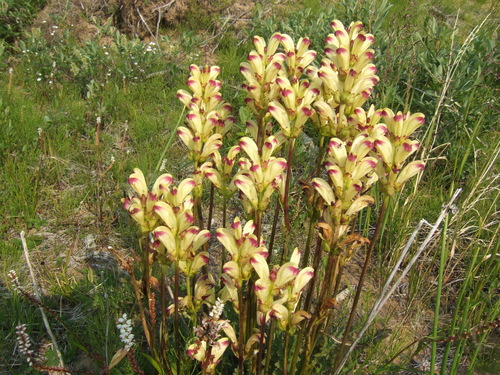
(c) Игорь Поспелов, some rights reserved (CC BY-NC)
(c) Игорь Поспелов, some rights reserved (CC BY-NC)
What to Eat
Edible parts: Leaves
The leaves are eaten.
Where to Find It
It is a temperate plant. It grows in swampy woods and moist banks between 400-500 m above sea level in north China.
Asia, Central Asia, China, Europe, Japan, Kazakhstan, Korea, Mongolia, Russia,
Countries: Andorra, United Arab Emirates, Afghanistan, Albania, Armenia, Austria, Azerbaijan, Bosnia & Herzegovina, Bangladesh, Belgium, Bulgaria, Bahrain, Brunei, Bhutan, Belarus, Switzerland, China, Cyprus, Czechia, Germany, Denmark, Estonia, Spain, Finland, France, United Kingdom, Georgia, Greece, Croatia, Hungary, Indonesia, Ireland, Israel, India, Iraq, Iran, Iceland, Italy, Jordan, Japan, Kyrgyzstan, Cambodia, North Korea, South Korea, Kuwait, Kazakhstan, Laos, Lebanon, Liechtenstein, Sri Lanka, Lithuania, Luxembourg, Latvia, Monaco, Moldova, Montenegro, North Macedonia, Myanmar, Mongolia, Malta, Maldives, Malaysia, Netherlands, Norway, Nepal, Oman, Philippines, Pakistan, Poland, Portugal, Qatar, Romania, Serbia, Russia, Saudi Arabia, Sweden, Singapore, Slovenia, Slovakia, San Marino, Syria, Thailand, Tajikistan, Timor-Leste, Turkmenistan, Turkey, Taiwan, Ukraine, Uzbekistan, Vietnam, Yemen
How to Identify
A herb. It keeps growing from year to year. It grows 60 cm tall. The leaves at the base are in a ring. They have leaf stalks 12 cm long. The leaves are 30 cm long by 4 cm wide and have many segments. There are 7-17 pairs. There are only a few leaves on the stem. They are often almost in rings of 3 and smaller than the leaves at the base. The flowers appear to be in rings and are tube shaped and yellow.
Notes
Also put in the family Scrophulariaceae.
References (1)
- Plants for a Future database, The Field, Penpol, Lostwithiel, Cornwall, PL22 0NG, UK. http://www.scs.leeds.ac.uk/pfaf/