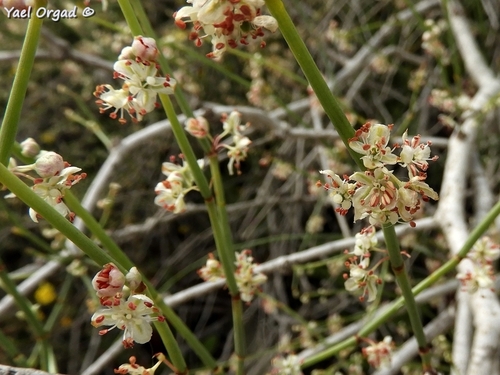
Persicaria barbata
(L.) H. Hara
Smartweed, Joint weed, Knot weed

(c) Stanley Chan, some rights reserved (CC BY-NC), uploaded by Stanley Chan

(c) Jennifer Snyder, some rights reserved (CC BY-NC), uploaded by Jennifer Snyder
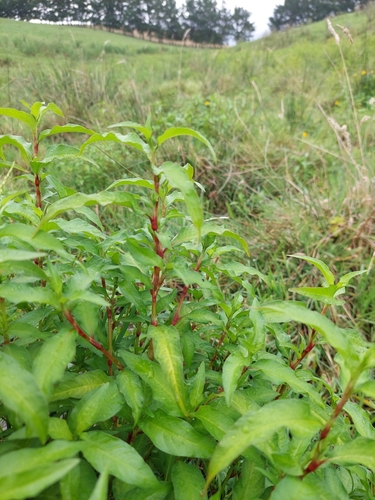
(c) nburkepile, some rights reserved (CC BY-NC)
What to Eat
Edible parts: Leaves, Vegetable
The leaves are eaten cooked as a vegetable, either on their own or mixed with other dishes. In India, leaves are used in curries; in Nepal, tender shoots and leaves are cooked and eaten; and in Congo and Madagascar, the leaves are consumed. Leaves are sold in local markets.
Known Hazards
Where to Find It
A tropical plant. It is usually beside waterways. A moisture loving plant. It grows from sea level to over 2000 m altitude. In Nepal it grows up to 1200 m altitude. It grows in moist places. It grows in wetlands. In Yunnan.
Africa, Asia, Australia, Bhutan, China, East Africa, East Timor, Himalayas, India, Indochina, Indonesia, Japan, Laos, Madagascar, Malawi, Malaysia, Myanmar, Nepal, Northeastern India, Pacific, Pakistan, Papua New Guinea, PNG, SE Asia, Sikkim, Solomon Islands, Timor-Leste, Vietnam, Zambia,
How to Identify
A herb which can grow in water or on land. It continues growing from year to year. It grows to 0.5-1.2 m tall and spreads 0.6-2 m across. The stems are erect and creeping. The stem is about 5 mm thick near the base. It can have stiff upward pointing hairs. The plant often branches repeatedly. They are often floating and can be smooth or hairy. They have a sheath which is 2 cm long and pale and lets light through. The short sheath around the stem has hairs. The leaves are 7-20 cm long by 1.5-3 cm wide. They are narrow and oval. They have short stalks. The leaves are green and are hairy on the lower midrib and along the edges. The tip is pointed. The flowers occur in branched flower arrangements at the ends of branches. These are about 10 cm long. The flowers are about 0.2 cm long and greenish white. The fruit is a small glossy black nut.
How to Grow
It can be grown from seed or by dividing the clump using sections with roots on the lower parts. It grows naturally in many places.
Propagation: Seed - sow in situ, germination is usually free and easy. Division - very easy, larger divisions can be planted out direct into their permanent positions. We have found that it is better to pot up the smaller divisions and grow them on in light shade until they are well established before planting them out.
Medicinal Uses
Not specified in available data.
Wikipedia
Source ↗Persicaria barbata, commonly known as bearded knotweed, is a species of flowering plant in the family Polygonaceae. It is native to the Arabian Peninsula and much of tropical and subtropical Asia, and has also been introduced to parts of Africa and the Pacific islands. The plant typically grows in seasonally dry tropical regions, where it occurs as an erect or sometimes prostrate annual herb, 30–60 cm tall, with hairless, line-grooved stems and lance-shaped leaves up to 15 cm long. In some descriptions it is noted as a perennial, producing robust, loosely branched stems 40–90 cm tall from a creeping rhizomatous rootstock.
Other Information
Leaves are sold in local markets.
Notes
There are about 75 Persicaria species.
Names & Synonyms
Anbawng, Anbong, Atlari, Bekh-unjubaz, Dhaktasheral, Garaara, Khursani jhar, Konde malle, Kywe-lae-chaung, Naiara, Nara, Narri, Nghe rau, Nghe trang, Niru ganneru, Panimarich, Suzat-pan, Velutta mudela mukku, Yelang
References (31)
- Ambasta, S.P. (Ed.), 2000, The Useful Plants of India. CSIR India. p 479 (As Polygonum barbatum)
- Cowie, I, 2006, A Survey of Flora and vegetation of the proposed Jaco-Tutuala-Lore National Park. Timor-Lests (East Timor) www.territorystories.nt/gov.au p 52
- Devi, O.S., P. Komor & D. Das, 2010, A checklist of traditional edible bio-resources from Ima markets of Imphal Valley, Manipur, India. Journal of Threatened Taxa 2(11): 1291-1296 (As Polygonum barbatum)
- Devi, O. S., et al, 2021, Wild edible plants associated with the people of Thoubal Khunou village and its migrated villagers. Int. J. Adv. Res. Biol. Sci. 8(9): 72-90 (As Polygonum barbatum)
- Dey, A. & Mukhererjee, A., 2015, Living and Survival Amidst Hunger: Wild Edible Botanicals as a Prime Forest Productivity in the Rural Purulia District, West Bengal, India from Colonial to Present. Research Journal of Forestry 9(3): 71-86 (As Polygonum barbatum)
- Elliot, W.R., & Jones, D.L., 1997, Encyclopedia of Australian Plants suitable for cultivation. Vol 7. Lothian. p 204
- Fowler, D. G., 2007, Zambian Plants: Their Vernacular Names and Uses. Kew. p 83 (As Polygonum barbatum)
- Fox, F. W. & Young, M. E. N., 1982, Food from the Veld. Delta Books. p 305 (As Polygonum barbatum)
- French, B.R., 2010, Food Plants of Solomon Islands. A Compendium. Food Plants International Inc. p 361
- Grubben, G. J. H. and Denton, O. A. (eds), 2004, Plant Resources of Tropical Africa 2. Vegetables. PROTA, Wageningen, Netherlands. p 564 (As Polygonum barbatum)
- Henty, E.E., & Pritchard, G.S., 1973, Weeds of New Guinea and their control. Botany Bulletin No 7, Division of Botany, Lae, PNG. p 138
- Henty, E.E., in Womersley, J.S., (ed), 1978, Handbooks of the Flora of Papua New Guinea. Melbourne University Press,Victoria. Vol 1, p 232
- Henty, E.E., 1980, Harmful Plants in Papua New Guinea. Botany Bulletin No 12. Division Botany, Lae, Papua New Guinea. p 116, 117
- Hill, M. & Hallam, D., (eds), 1997, Na Hang Nature Reserve, Tat Ke Sector. Site description and conservation evaluation. Hanoi. p 76 (As Polygonum barbatum)
- Jain et al, 2011, Dietary Use and Conservation Concern of Edible Wetland Plants at Indo-Burma Hotspot: A Case Study from Northeast India. Journal of Ethnobiology and Ethnomedicine 7:29 p 7 (As Polygonum barbatum)
- Jardin, C., 1970, List of Foods Used In Africa, FAO Nutrition Information Document Series No 2.p 95
- Konsam, S., et al, 2016, Assessment of wild leafy vegetables traditionally consumed by the ethnic communities of Manipur, northeast India. Journal of Ethnobiology and Ethnomedicine, 12:9 (As Polygonum barbatum)
- Lalfakzuala, R., 2007, Ethnobotanical usages of plants in western Mizoram. Indian Journal of Traditional Knowledge. Vol 6(3) pp 480-493 (As Polygonum barbata)
- Manandhar, N.P., 2002, Plants and People of Nepal. Timber Press. Portland, Oregon. p 353
- Martin, F.W. & Ruberte, R.M., 1979, Edible Leaves of the Tropics. Antillian College Press, Mayaguez, Puerto Rico. p 213
- Meitei, L. R., et al, 2022, An ethnobotanical study on the wild edible plants used by forest dwellers in Yangoupokpi Lokchao Wildlife Sanctuary, Manipur, India. Ethnobotany Research and Application 23:15
- Mishra, N., et al, 2016, Indigenous knowledge in utilization of wetland plants in Bhadrak district, Odisha, India. Indian Journal of Natural Products and Resources. Vol. 7(1) pp. 82-89 (As Polygonum barbatum)
- Leach, G.J., & Osborne, P.L., 1985, Freshwater Plants of Papua New Guinea. UPNG Press, p 213
- Paczkowska, G . & Chapman, A.R., 2000, The Western Australian Flora. A Descriptive Calatogue. Western Australian Herbarium. p 460
- Pham-Hoang Ho, 1999, An Illustrated Flora of Vietnam. Nha Xuat Ban Tre. p 751
- Plants for a Future database, The Field, Penpol, Lostwithiel, Cornwall, PL22 0NG, UK. http://www.scs.leeds.ac.uk/pfaf/
- Sundriyal, M., et al, 2004, Dietary Use of Wild Plant Resources in the Sikkim Himalaya, India. Economic Botany 58(4) pp 626-638
- Terra, G.J.A., 1973, Tropical Vegetables. Communication 54e Royal Tropical Institute, Amsterdam, p 68
- Wheeler, J.R.(ed.), 1992, Flora of the Kimberley Region. CALM, Western Australian Herbarium, p 148
- World Checklist of Useful Plant Species 2020. Royal Botanic Gardens, Kew
- Xu, You-Kai, et al, 2004, Wild Vegetable Resources and Market Survey in Xishuangbanna, Southwest China. Economic Botany. 58(4): 647-667. (As Polygonum barbatum)