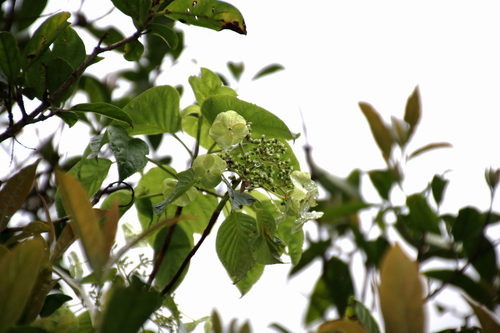
Philadelphus microphyllus
A. Gray
Littleleaf mock orange
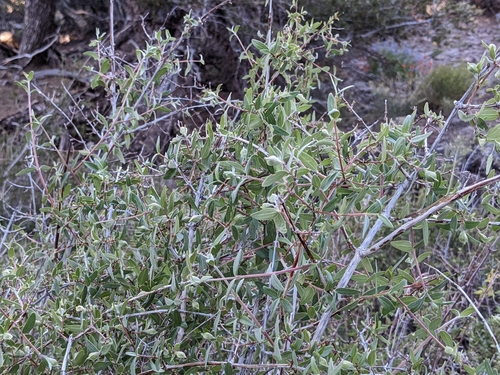
(c) Peri Lee Pipkin, some rights reserved (CC BY-NC), uploaded by Peri Lee Pipkin
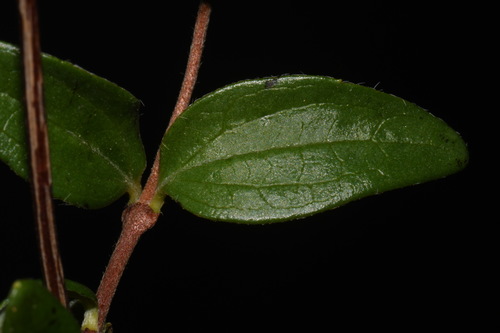
(c) Brian Finzel, some rights reserved (CC BY-SA), uploaded by Brian Finzel
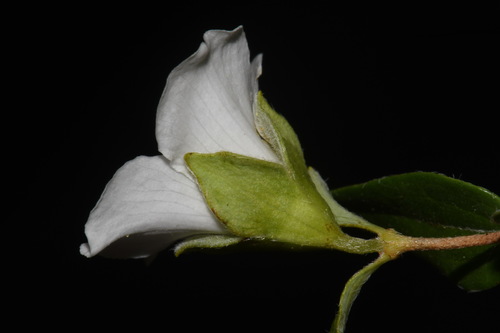
(c) Brian Finzel, some rights reserved (CC BY-SA), uploaded by Brian Finzel
What to Eat
Edible parts: Fruit
The fruit was formerly used as food, though no further details are recorded.
Where to Find It
A temperate plant. It suits hardiness zones 6-9.
Australia, North America, USA,
How to Identify
An erect shrub. it grows 90 cm high and spreads 90 cm wide. The bark peels off. The leaves are small and shiny. They have smooth edges. The flowers are white and cross shaped. They have a scent.
How to Grow
Easily grown in any moderately fertile preferably dry soil, succeeding in thin soils over chalk and tolerating poor soils. Grows well in heavy clay soils. Succeeds in semi-shade but prefers a position in full sun where it will flower more freely. Hardy to about -20°c. Plants grow best in the east and south-east of Britain, they are shy to flower in gardens with cool summers. Plants are very tolerant of pruning, one third of the stems can be cut down to the ground each year in order to promote fresh growth and heavier flowering. A very ornamental plant with aromatic flowers smelling of pineapples.
Propagation: Seed germinates best with one month of cold stratification. Sow in February in a light position in a cold frame. Prick seedlings out into individual pots when large enough to handle and grow on in a greenhouse for their first winter, then plant out in late spring or early summer after the last frosts. Half-ripe wood cuttings of 7–10cm side-shoots taken in July or August in a shaded frame root at a high percentage; plant out in spring. Cuttings of mature wood from the current year's growth, 15–25cm with a heel, taken in December and placed in a sheltered bed outdoors give a fair to good percentage. Layering in summer is very easy.
Medicinal Uses
No medicinal uses are known for this plant.
Other Uses
The leaves are rich in saponins and produce an effective lather when crushed and mixed with water. You can wash your hands by picking a couple of leaves or a bunch of blossom, wetting your hands, and rubbing the plant material vigorously as you would a bar of soap. This is a gentle cleanser that preserves the body's natural oils while removing dirt, though it is not very effective against oil or grease.
Wikipedia
Source ↗Philadelphus microphyllus is a species of Philadelphus known by the common names littleleaf mock-orange or desert syringa. It is native to northern Mexico and the southwestern quadrant of the United States as far north as Wyoming, where it grows in scrub and brush habitat in foothills and mountains, often in very rocky areas, sometimes anchoring itself in rock cracks and crevices.
Notes
There are about 75 Philadelphus species.
References (7)
- Beckstrom-Sternberg, Stephen M., and James A. Duke. "The Foodplant Database." http://probe.nalusda.gov:8300/cgi-bin/browse/foodplantdb.(ACEDB version 4.0 - data version July 1994)
- Brickell, C. (Ed.), 1999, The Royal Horticultural Society A-Z Encyclopedia of Garden Plants. Convent Garden Books. p 782
- Cundall, P., (ed.), 2004, Gardening Australia: flora: the gardener's bible. ABC Books. p 1024
- Lord, E.E., & Willis, J.H., 1999, Shrubs and Trees for Australian gardens. Lothian. p 250
- Mem. Amer. Acad. Sci. N. S. 4:54. 1849
- Moerman, D. F., 2010, Native American Ethnobotany. Timber Press. p 392
- Plants for a Future database, The Field, Penpol, Lostwithiel, Cornwall, PL22 0NG, UK. http://www.scs.leeds.ac.uk/pfaf/