Pholiota nameko
(T. Ito) S. Ito & S. Imai
Namekotake, Nameko
iNaturalist · cc-by-nc
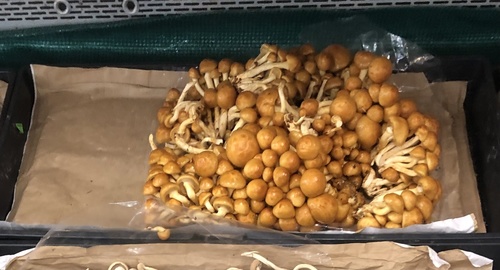
(c) eordeman, some rights reserved (CC BY-NC)
(c) eordeman, some rights reserved (CC BY-NC)
iNaturalist · cc-by-nc
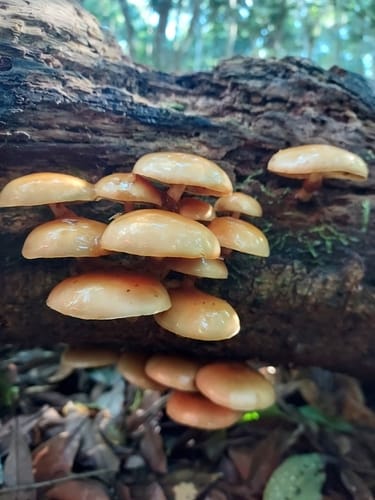
(c) 王柏輝, some rights reserved (CC BY-NC)
(c) 王柏輝, some rights reserved (CC BY-NC)
What to Eat
Edible parts: Mushroom, Fungus, Vegetable
The fruiting bodies are eaten fresh or canned, and are commonly used in miso soup.
Where to Find It
It is a tropical plant. It is grown in Japan.
Asia, Cambodia, China, Himalayas, Hong Kong, Japan, Nepal, SE Asia, Taiwan,
Countries: United Arab Emirates, Afghanistan, Armenia, Azerbaijan, Bangladesh, Bahrain, Brunei, Bhutan, China, Georgia, Indonesia, Israel, India, Iraq, Iran, Jordan, Japan, Kyrgyzstan, Cambodia, North Korea, South Korea, Kuwait, Kazakhstan, Laos, Lebanon, Sri Lanka, Myanmar, Mongolia, Maldives, Malaysia, Nepal, Oman, Philippines, Pakistan, Qatar, Saudi Arabia, Singapore, Syria, Thailand, Tajikistan, Timor-Leste, Turkmenistan, Turkey, Taiwan, Uzbekistan, Vietnam, Yemen
How to Identify
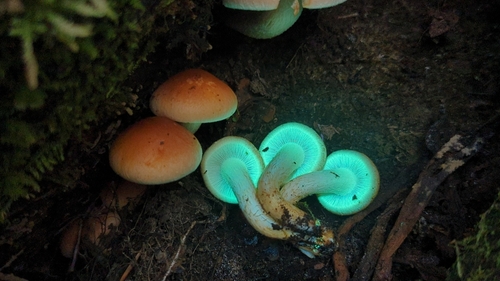
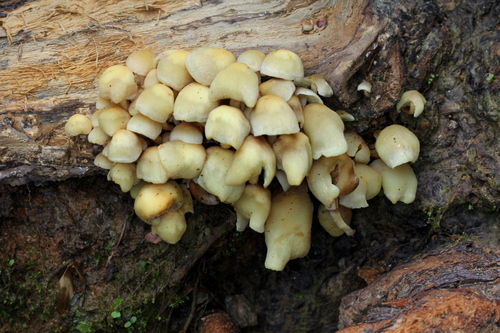
A mushroom. They have a distinctive slippery coating. The caps are small, round and honey-coloured. The stems are long, thick, pale and curved.
Nutrition Score: 28/100
| Part | Moisture | kJ | kcal | Protein | Vit A | Vit C | Iron | Zinc |
|---|---|---|---|---|---|---|---|---|
| Mushroom raw | 89.4 | 142 | 34 | 2.4 | 1 | 11.9 | 0.9 | 0.6 |
| Mushroom boiled | 92.7 | 59 | 14 | 1.6 | — | — | 0.6 | 0.4 |
Other Information
The young mushrooms are sold fresh and in cans.
Names & Synonyms
Huangu
References (11)
- Boa, E. R., 2004, Wild edible fungi and their importance to people. FAO Non Wood Forest Products Booklet 17
- Cengel, D. J. & Dany. C., (Eds), 2016, Integrating Forest Biodiversity Resource Management and Sustainable Community Livelihood Development in the Preah Vihear Protected Forest. International Tropical Timber Organization p 109
- Dongol, et al, 1995, Edible Mushrooms in Nepal
- Facciola, S., 1998, Cornucopia 2: a Source Book of Edible Plants. Kampong Publications, p 254
- Food Composition Tables for use in East Asia FAO http://www.fao.org/infoods/directory No. 509
- forests-366202-SI
- Hall, I. R., et al, 2003, Edible and Poisonous Mushrooms of the World. Timber Press. p 309
- Imai, S., 1938, Studies on the Agaricaceae of Hokkaido. 2. Jour. Facul. Agr., Hokkaido Imp. Univ., Sapporo, Vol. XLIII, Pt. 2, August, 1938
- Kiple, K.F. & Ornelas, K.C., (eds), 2000, The Cambridge World History of Food. CUP p 320
- Schneider, E., 2001, Vegetables from Amaranth to Zucchini: The essential reference. HarperCollins. p 414
- Solomon, C., 2001, Encyclopedia of Asian Food. New Holland. p 238