Platystemon californicus
Benth.
Californian poppy, Creamcups

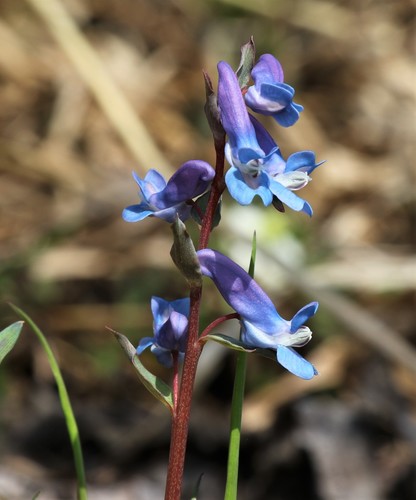
(c) Tom Hilton, some rights reserved (CC BY)

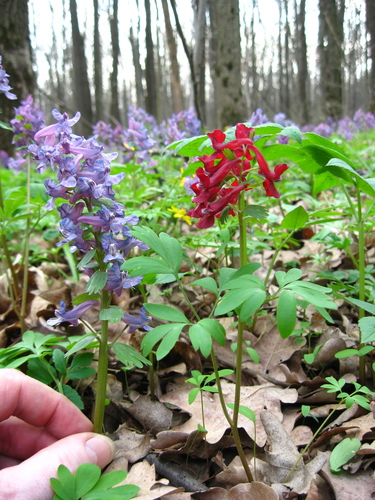
(c) Stephanie Calloway, some rights reserved (CC BY-NC), uploaded by Stephanie Calloway

no rights reserved, uploaded by Alex Heyman
What to Eat
Edible parts: Leaves
Leaves are cooked and used as greens.
Where to Find It
It grows on the fringes of the desert. It grows in open grassy areas. It needs a sunny position. It needs a well-drained soil. It can grow in arid places. It suits hardiness zones 8-10.
Australia, Britain, Europe, North America, USA,
How to Identify
An annual poppy. It can be erect or spreading. It grows 30 cm high and spreads 10 cm wide. The leaves are arranged in rings. They are narrow and oblong and 8 cm long. The flowers are open and have 6 petals. The stamen are prominent. The flowers can be cream or yellow. The flowers occur singly on short, hairy stems.
How to Grow
Succeeds in a sunny position in most soils. A highly polymorphic species, it is considered by some botanists to be an aggregate species of up to 60 segregates. The flowers have a delicate sweet perfume.
Propagation: Sow seed in situ in spring or early autumn.
Medicinal Uses
None known
Other Uses
None known Special Uses Scented Plants
Wikipedia
Source ↗An annual plant growing to 0.3 m tall by 0.1 m wide with hermaphrodite flowers. Present in leaf from May to October and flowering June to August. Wind-pollinated. Hardy to UK zone 8. Adapts to light sandy, medium loamy, and heavy clay soils with mildly acidic to basic pH. Requires full sun and prefers moist conditions.
Notes
There is possibly only one very variable Platystemon species.
References (8)
- Beckstrom-Sternberg, Stephen M., and James A. Duke. "The Foodplant Database." http://probe.nalusda.gov:8300/cgi-bin/browse/foodplantdb.(ACEDB version 4.0 - data version July 1994)
- Brickell, C. (Ed.), 1999, The Royal Horticultural Society A-Z Encyclopedia of Garden Plants. Convent Garden Books. p 809
- Cundall, P., (ed.), 2004, Gardening Australia: flora: the gardener's bible. ABC Books. p 1059
- Heywood, V.H., Brummitt, R.K., Culham, A., and Seberg, O. 2007, Flowering Plant Families of the World. Royal Botanical Gardens, Kew. p 241
- Moerman, D. F., 2010, Native American Ethnobotany. Timber Press. p 419
- Morley, B. & Everard, B., 1970, Wild Flowers of the World. Ebury press. Plate 154
- Plants for a Future database, The Field, Penpol, Lostwithiel, Cornwall, PL22 0NG, UK. http://www.scs.leeds.ac.uk/pfaf/
- Trans. Hort. Soc. London ser. 2, 1:405. 1834