Polyaulax cylindrocarpa
(Burck) Backer
Gurrumu
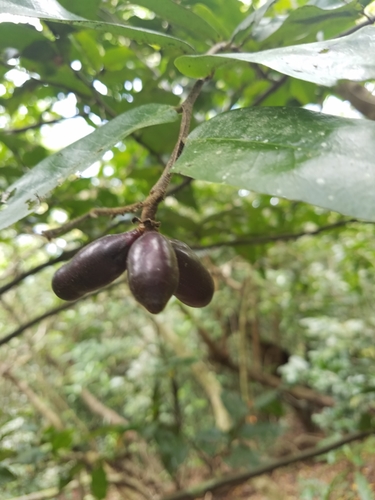
(c) mkargul, some rights reserved (CC BY-NC)

(c) viweedguy, some rights reserved (CC BY-NC)
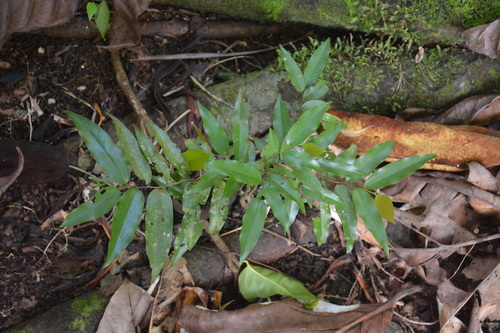
(c) Micah Freedman, some rights reserved (CC BY-NC)
What to Eat
Edible parts: Fruit
The ripe fruits are eaten and have the taste and texture of custard. The soft, succulent fruits can be harvested when they turn orange or red.
Where to Find It
A tropical plant. It grows naturally in monsoon forests. It can be on rocky sites. It needs a sunny location and a well drained soil. It grows up to 300 m above sea level.
Asia, Australia, Indonesia, Pacific, Papua New Guinea, PNG, SE Asia,
How to Identify
A shrub or small tree. It grows 4-8 m high. It spreads 3-5 m wide. The trunk can be 30 cm across. The crown is open but bushy. The young growth has brown hairs. The leaves are 3-8 cm long by 1-2.5 cm wide. They are oval. The leaves are thin and papery. They are yellowish-green and shiny above. They are dull underneath. They taper to the tip. The flowers are 2-3 cm across. They are green or yellow. They have a scent. They occur singly in the axils of leaves. The fruit are in clusters or 2-6. They are 1.5-3 cm long by 0.8-1 cm wide. They are like cylinders. The fruit turn orange or red when ripe. They are soft and succulent. The fruit is edible.
How to Grow
It can be grown from seed. It may also be able to be grown from cuttings of firm young growth.
Notes
There is only one or possibly 2 Polyaulax species.
Names & Synonyms
Pohon gurumu
References (8)
- Checklist of NT Vascular Plant Species. January 2003.
- Elliot, W.R., & Jones, D.L., 1997, Encyclopedia of Australian Plants suitable for cultivation. Vol 7. Lothian. p 410 (Photo)
- Hibbert, M., 2002, The Aussie Plant Finder 2002, Florilegium. p 238
- Norrington, L., & Campbell, C., 2001, Tropical Food Gardens. Bloomings Books. p 88
- Paczkowska, G. & Chapman, A.R., 2000, The Western Australian Flora. A Descriptive Catalogue. Western Australian Herbarium. p 145
- Sukarya, D. G., (Ed.) 2013, 3,500 Plant Species of the Botanic Gardens of Indonesia. LIPI p 466
- Wheeler, J.R.(ed.), 1992, Flora of the Kimberley Region. CALM, Western Australian Herbarium, p 58
- Yunupinu Banjgul, Laklak Yunupinu-Marika, et al. 1995, Rirratjinu Ethnobotany: Aboriginal Plant Use from Yirrkala, Arnhem Land, Australia. Northern Territory Botanical Bulletin No 21. Parks and Wildlife Commission of the Northern Territory. p 65.


