Polygonum alaskanum
(Small) Wight. ex Harsh.
Alaskan wild rhubarb
(c) Fyodor Pudovikov, some rights reserved (CC BY)
(c) Fyodor Pudovikov, some rights reserved (CC BY)
(c) Богданович Светлана, some rights reserved (CC BY-NC)
What to Eat
Edible parts: Leaves, Seeds, Stem
Leaves can be eaten raw or cooked and have an acid flavour that makes them a good sorrel substitute. Chopped leaves and stems have been added to a thick pudding of flour and sugar. The leaf stems, also raw or cooked and similarly acidic, can be cut into sections and used like rhubarb. Juice pressed from the plant can be sweetened to make a refreshing drink. The seed can be eaten raw or cooked, though it is quite small and fiddly to use.
Known Hazards
Where to Find It
It is a cold temperate or arctic plant. It grows along river banks.
Alaska, Arctic, Canada, North America, USA,
How to Identify
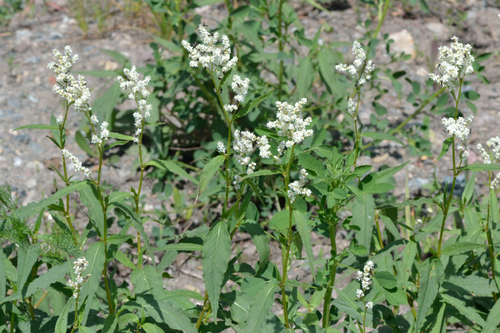
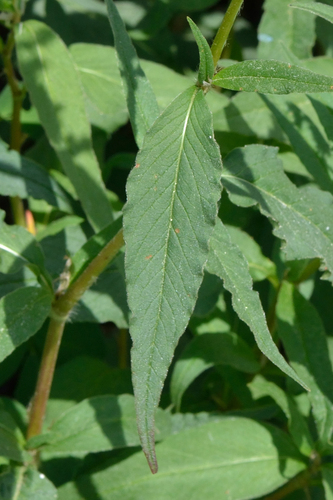
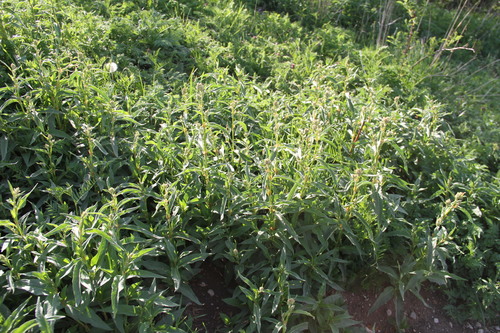
A herb. It can grow 2 m tall. The root is thick and woody. It keeps growing from year to year. The leaves are soft and can have fine hairs. The leaves are narrow and oval and up to 20 cm long. The leaves are paler green underneath. The flowers are small and white or cream but in showy clusters. The fruit are small light brown seed pods. Probably now Persicaria alpina
How to Grow
We have very little information on this species and do not know if it is hardy in Britain, though judging by its native range it should succeed outdoors in most parts of the country. It is quite possibly no more than a synonym for P. alpinum. Although very closely related to P. alpinum, it is distinct. The following notes are based on the general needs of the genus. Succeeds in an ordinary garden soil but prefers a moisture retentive not too fertile soil in sun or part shade. Repays generous treatment. Plants seem to be immune to the predations of rabbits.
Propagation: Seed should be sown in spring in a cold frame, where germination is usually free and easy. Prick seedlings into individual pots when large enough to handle and plant out during summer if sufficiently developed, or overwinter in a cold frame and plant out the following spring after the last expected frosts. Division in spring or autumn is very easy. Larger divisions can be planted directly into permanent positions, while smaller ones do better potted up and grown on in light shade in a cold frame until well established before planting out in late spring or early summer.
Medicinal Uses
The whole plant is astringent. Raw roots and stem bases have been chewed as a remedy for coughs and colds.
Other Uses
None known Special Uses
Wikipedia
Source ↗Polygonum alaskanum is a tall perennial growing to 1.8 m, with hermaphrodite flowers pollinated by insects. It adapts to light, medium, or heavy soils and tolerates mildly acid to basic pH. The plant grows in semi-shade or full sun and prefers moist soil.
Production
The young shoots about 15-30 cm tall are collected in spring.
Notes
There are about 50 (150) Polygonum species.
Names & Synonyms
Angukaq, Kooseemuk, Nakaaq, Nauciq, Naunraq, Tsii'gyuu
References (8)
- Elias, T.S. & Dykeman P.A., 1990, Edible Wild Plants. A North American Field guide. Sterling, New York p 99
- Heller, C. A., 1962, Wild Edible and Poisonous Plants of Alaska. Univ. of Alaska Extension Service. p 21
- Holloway, P. S. & Alexander, G., 1990, Ethnobotany of the Fort Yukon Region, Alaska. Economic Botany, Vol. 44, No. 2 pp. 214-225
- Jernigan, K. (Ed.), 2012, A Guide to the Ethnobotany of the Yukon-Kuskokwim Region. Draft.
- Jones, A., 2010, Plants that we eat. University of Alaska Press. p 54
- Kuhnlein, H. V., et al, 2009, Indigenous Peoples' food systems. FAO Rome p 53
- Plants for a Future database, The Field, Penpol, Lostwithiel, Cornwall, PL22 0NG, UK. http://www.scs.leeds.ac.uk/pfaf/
- Porsild, A.E., 1953, Edible Plants of the Arctic, Arctic 6:15-34, page 24