Polygonum aviculare
L.
Knot Grass, Prostrate Knotweed, Creeping wireweed

(c) Douglas Goldman, some rights reserved (CC BY-SA), uploaded by Douglas Goldman

(c) Иван Матершев, some rights reserved (CC BY-NC), uploaded by Иван Матершев

(c) Douglas Goldman, some rights reserved (CC BY-SA), uploaded by Douglas Goldman
What to Eat
Edible parts: Leaves, Seeds, Leaves - tea
Young leaves and plants can be eaten raw or cooked as a potherb and are very rich in zinc. A nutritional breakdown per 100g of fresh leaves shows: water 81.6%, protein 1.9g, fat 0.3g, carbohydrate 10.2g, fibre 3.5g, and ash 3.5g. The seed can be eaten raw or cooked — though small and fiddly to harvest, it can be used in all the ways buckwheat is used, either whole or ground into flour for pancakes, biscuits, and piñole. The leaves also make a tea substitute.
Known Hazards
Where to Find It
It is a temperate plant. It grows in hot arid places with a marked dry season. It grows in wetlands. It grows between 50-2,550 m above sea level and can be up to 4,200 m. In the Indian Himalayas it grows between 3,000-4,000 m above sea level. It can grow in arid places. In Yunnan. In Sichuan.
Africa, Andorra, Argentina, Armenia, Asia, Australia, Austria, Balkans, Belarus, Bolivia, Bosnia, Botswana, Brazil, Britain, Canada, Caucasus, Central Asia, Chile, China, East Africa, Eswatini, Ethiopia, Europe*, Falklands, France, Georgia, Germany, Himalayas, Hungary, India, Indochina, Iraq, Ireland, Kenya, Korea, Kurdistan, Kyrgyzstan, Lesotho, Lithuania, Luxembourg, Macedonia, Manchuria, Mexico, Middle East, Mongolia, Myanmar, Namibia, North America, Pakistan, Paraguay, Russia, Saudi Arabia, SE Asia, Slovenia, South Africa, Southern Africa, Spain, Swaziland, Tajikistan, Tasmania, Turkey, Türkiye, Uruguay, USA, Vietnam, Yemen, Zimbabwe,
How to Identify
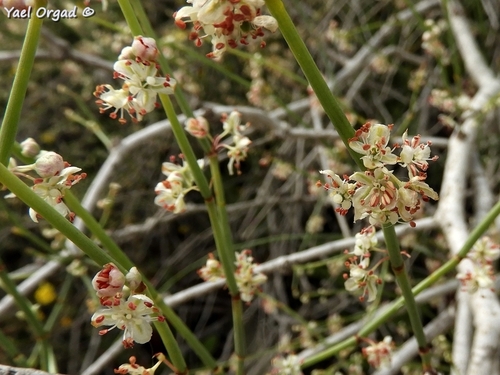
A small herb which lays along the ground. It has a long and slender but very fibrous taproot. There are many branches coming from this taproot. The branches can be upright but often lie along the ground. They can be 90-120 cm long. On young plants the lower leaves are much larger than the stem leaves. The leaves are narrow and sword shaped. The leaves are blue-green. There can be 5 flowers in the axil of a leaf. The flowers are white.
How to Grow
Succeeds in an ordinary garden soil but prefers a moisture retentive not too fertile soil in sun or part shade. Repays generous treatment, in good soils the plant will cover an area up to a metre in diameter. Prefers an acid soil. Dislikes shade. Knotweed is a common and invasive weed of cultivated ground. It is an important food plant for the caterpillars of many species of butterflies. It also produces an abundance of seeds and these are a favourite food for many species of birds. Plants seem to be immune to the predations of rabbits. The flowers have little or no scent or honey and are rarely visited by pollinating insects. Self-fertilization is the usual method of reproduction, though cross-fertilization by insects does sometimes occur. The plant also produces cleistogomous flowers - these never open and therefore are always self-fertilized. The plant is very variable and is seen by most botanists as an aggregate species of 4 very variable species, viz. - P. aviculare. L.; P. boreale. (Lange.)Small.; P. rurivacum. Jord. ex Box.; and P. arenastrum. Box.
Propagation: Seed should be sown in spring in a cold frame, where germination is usually free and easy. Prick seedlings into individual pots when large enough to handle and plant out during summer if sufficiently developed, or overwinter in a cold frame and plant out the following spring after the last expected frosts. Division in spring or autumn is very easy. Larger divisions can be planted directly into permanent positions, while smaller ones do better potted up and grown on in light shade in a cold frame until well established before planting out in late spring or early summer.
Medicinal Uses
Knotweed is a safe and effective astringent and diuretic herb used mainly to treat dysentery and haemorrhoids. The silicic acid it contains is thought to strengthen connective tissue in the lungs, making it useful for pulmonary complaints as well. The whole plant is anthelmintic, astringent, cardiotonic, cholagogue, diuretic, febrifuge, haemostatic, lithontriptic, and vulnerary. Traditionally it was widely used internally and externally for wounds, bleeding, piles, and diarrhoea. Its diuretic action is useful for dissolving stones. An alcohol-based preparation has been used successfully to treat recently developed varicose veins. The plant is harvested in summer and early autumn and dried for later use. The leaves are anthelmintic, diuretic, and emollient. The juice of the plant is weakly diuretic, expectorant, and vasoconstrictive, and applied externally it is an effective remedy for nosebleeds and sores. The seeds are emetic and purgative. Recent research found the plant useful against bacterial dysentery: of 108 patients treated internally with a paste of knotweed, 104 recovered within 5 days.
Other Uses
The plant yields a blue dye considered not much inferior to indigo, likely from the leaves. Yellow and green dyes can also be obtained from the whole plant. The roots contain tannins, though the quantity has not been specified.
Wikipedia
Source ↗Polygonum aviculare or common knotgrass is a plant related to buckwheat and dock. It is also called prostrate knotweed, birdweed, pigweed and lowgrass. It is an annual found in fields and wasteland, with white flowers from June to October. It is widespread across many countries in temperate regions, apparently native to Eurasia, naturalized in temperate parts of the Southern Hemisphere.
Notes
Chemical composition: Sugar = 2.5%. Ash = 2.44%. Very rich in zinc. There are about 50 Polygonum species.
Names & Synonyms
Ban-natia, Bandakay, Banduke, Bannalia, Banonatia, Bianduya ebesu, Bianxu, Bianxucai, Centinodia, Chencheghpashar, Cien nudos, Corredora, Drop, Gooseweed, Gorets ptichii, Gusina travka, Hunraj, Kesru, Kusdili, Machoti, Machutie, Michi-yanagi, Mit'it'ela, Nadi, Nanjujek, Nisomali, Pasto chanchero, Pasto pollo, Pato del pollo, Pimienta de agua, Pinkweed, Rau dang, Sandrug, Sangriana, Sanguinaria, Sanjines, Smartweed, Sporish, Troskot, Wireweed
References (60)
- Ambasta, S.P. (Ed.), 2000, The Useful Plants of India. CSIR India. p 479
- Amjad, M. S., et al, 2015, Ethnobotanical inventory and folk uses of indigenous plants from Pir Nasoora National Park, Azad Jammu and Kashmir. Asian Pac J Trop Biomed 2015; 5(3): 234-241
- BARANOV,
- Beckstrom-Sternberg, Stephen M., and James A. Duke. "The Foodplant Database." http://probe.nalusda.gov:8300/cgi-bin/browse/foodplantdb.(ACEDB version 4.0 - data version July 1994)
- Bodkin, F., 1991, Encyclopedia Botanica. Cornstalk publishing, p 818
- Bussman, R. W., et al, 2016, A comparative ethnobotany of Khevsureti, Samtskhe-Javakheti, Tusheti, Svaneti, and Racha-Lechkhumi, Republic of Georgia (Sakartvelo), Caucasus. Journal of Ethnobiology and Ethnomedicine.
- Bussman, R. W. et al, 2017, Ethnobotany of Samtskhe-Javakheti, Sakartvelo (Republic of Georgia), Caucasus. Indian Journal of Traditional Knowledge Vol. 16(1) pp 7-24
- Bussman, R. W., et al, 2021, Unity in diversity—food plants and fungi of Sakartvelo (Republic of Georgia), Caucasus. Journal of Ethnobiology and Ethnomedicine (2021) 17:72 p 13
- Cakir, E. A., 2017, Traditional knowledge of wild edible plants of Iğdır Province (East Anatolia, Turkey). Acta Soc Bot Pol. 2017;86(4):3568
- Cerne, M., 1992, Wild Plants from Slovenia used as Vegetables. Acta Horticulturae 318
- "Chinese Nutrition Journal", 2002, Vol 23(8) p 298 (As Polygonum ariculave)
- Curtis, W.M., 1993, The Student's Flora of Tasmania. Part 3 St David's Park Publishing, Tasmania, p 588
- Dashorst, G.R.M., and Jessop, J.P., 1998, Plants of the Adelaide Plains & Hills. Botanic Gardens of Adelaide and State Herbarium. p 52
- Denes, A., et al, 2012, Wild plants used for food by Hungarian ethnic groups living in the Carpathian Basin. Acta Societatis Botanicorum Poloniae 81 (4): 381-396
- Duke, J.A., 1992, Handbook of Edible Weeds. CRC Press. p 154
- Esperanca, M. J., 1988. Surviving in the wild. A glance at the wild plants and their uses. Vol. 2. p 35
- Ethnobotanical Study of Tehsil Kabal, Swat District, KPK, Pakistan, Table 1
- Facciola, S., 1998, Cornucopia 2: a Source Book of Edible Plants. Kampong Publications, p 185
- Flora of China @ efloras.org Volume 5
- https://en.wikipedia.org/wiki/List of wild edible plants in Mongolian cuisine
- Hwang, H., et al, 2013, A Study on the Flora of 15 Islands in the Western Sea of Jeollanamdo Province, Korea. Journal of Asia-Pacific Biodiversity Vol. 6, No. 2 281-310
- Hyde-Wyatt, B.H. & Morris D.I., 1975, Tasmanian Weed Handbook. Dept of Ag Tasmania. p 51
- Irving, M., 2009, The Forager Handbook, A Guide to the Edible Plants of Britain. Ebury Press p 175
- Kaliszewska, I & Kolodziejska-Degorska, I, 2015, The social context of wild leafy vegetables uses in Shiri, Daghestan. Journal of Ethnobiology and Ethnomedicine, 11:63
- Kang, Y., et al, 2012, Wild food plants and wild edible fungi in two valleys on the Qinling Mountains (Shaanxi, central China) Journal of Ethnobiology and Ethnomedicine; 9:26
- Kermath, B. M., et al, 2014, Food Plants in the Americas: A survey of the domesticated, cultivated and wild plants used for Human food in North, Central and South America and the Caribbean. On line draft. p 675
- Kolosova, V., et al, 2020, Foraging in Boreal Forest: Wild Food Plants of the Republic of Karelia, NW Russia. Foods 2020, 9, 1015; p 19
- Lamp, C & Collet F., 1989, Field Guide to Weeds in Australia. Inkata Press. p 224
- Lazarides, M. & Hince, B., 1993, Handbook of Economic Plants of Australia, CSIRO. p 194
- MacKinnon, A., et al, 2009, Edible & Medicinal Plants of Canada. Lone Pine. p 322
- Malezas Comestibles del Cono Sur, INTA, 2009, Buernos Aires
- Masoodi, H. U. R. & Sundriyal, R. C., 2020, Richness of non-timber forest products in Himalayan communities—diversity, distribution, use pattern and conservation status. Journal of Ethnobiology and Ethnomedicine 16:56
- Moerman, D. F., 2010, Native American Ethnobotany. Timber Press. p 423
- Ogle, B. M., et al, 2003, Food, Feed or Medicine: The Multiple Functions of Edible Wild Plants in Vietnam. Economic Botany 57(1): 103-117
- Paczkowska, G . & Chapman, A.R., 2000, The Western Australian Flora. A Descriptive Calatogue. Western Australian Herbarium. p 460
- PARMENTIER,
- Pham-Hoang Ho, 1999, An Illustrated Flora of Vietnam. Nha Xuat Ban Tre. p 746
- Pieroni, A., et al, 2020, Wild food plants traditionally gathered in central Armenia: archaic ingredients or future sustainable foods? Environment, Development and Sustainability. Springer p 9
- Plants for a Future database, The Field, Penpol, Lostwithiel, Cornwall, PL22 0NG, UK. http://www.scs.leeds.ac.uk/pfaf/
- Rana, D., et al, 2019, Ethnobotanical knowledge among the semi-pastoral Gujjar tribe in the high altitude (Adhwari’s) of Churah subdivision, district Chamba, Western Himalaya. Journal of Ethnobiology and Ethnomedicine (2019) 15:10
- READ,
- Redzic, S. J., 2006, Wild Edible Plants and their Traditional Use in the Human Nutrition in Bosnia-Herzegovina. Ecology of Food and Nutrition, 45:189-232
- Royal Botanic Gardens, Kew (1999). Survey of Economic Plants for Arid and Semi-Arid Lands (SEPASAL) database. Published on the Internet; http://www.rbgkew.org.uk/ceb/sepasal/internet [Accessed 4th June 2011]
- Sachula, et al, 2020, Wild edible plants collected and consumed by the locals in Daqinggou, Inner Mongolia, China. Journal of Ethnobiology and Ethnomedicine (2020) 16:60
- Senkardes, I & Tuzlaci, E., 2016, Wild Edible Plants of Southern Part of Nevsehir inTurkey. Marmara Pharmaceutical Journal 20:34-43
- Sharma, L. et al, 2018, Diversity, distribution pattern, endemism and indigenous uses of wild edible plants in Cold Desert Biosphere Reserve of Indian Trans Himalaya. Indian Journal of Traditional Knowledge. Vol 17(1) January 2018 pp 122-131
- Shikov, A. N. et al, 2017, Traditional and Current Food Use of Wild Plants Listed in the Russian Pharmacopoeia. Frontiers in Pharmacology. Vol. 8 Article 841
- Singh, H.B., Arora R.K.,1978, Wild edible Plants of India. Indian Council of Agricultural Research, New Delhi. p 33
- Sp. pl. 1:362. 1753
- Swaziland's Flora Database http://www.sntc.org.sz/flora
- Tareen, N. M., et al, 2016, Ethnomedicinal Utilization of Wild Edible Vegetables in District Harnai of Balochistan Province - Pakistan. Pakistan Journal of Botany 48(3): 1159-1171
- Tasmanian Herbarium Vascular Plants list p 45
- Upson, R., & Lewis R., 2014, Updated Vascular Plant Checklist and Atlas for the Falkland Islands. Falklands Conservation and Kew.
- Vieyra-Odilon, L and Vibrans, H., 2001, Weeds as Crops: The Value of Maize Field Weeds in the Valley of Toluca, Mexico. Economic Botany 55(3):426-443
- Wang, J. et al, 2013, A Study on the Utilization of Wild Plants for Food in Liangshan Yi Autonomous Prefecture. Plant Diversity and Resources. 35(4): 416-471
- World Checklist of Useful Plant Species 2020. Royal Botanic Gardens, Kew
- Wujisguleng, W., & Khasbagen. K., 2010, An integrated assessment of wild vegetable resources in Inner Mongolian Autonomous Region, China. Journal or Ethnobiology and Ethnomedicine 6:34
- www.wildediblefood.com
- Xu, You-Kai, et al, 2004, Wild Vegetable Resources and Market Survey in Xishuangbanna, Southwest China. Economic Botany. 58(4): 647-667.
- Zhang, Y., et al, 2014, Diversity of wetland plants used traditionally in China: a literature review. Journal of Ethnobiology and Ethnomedicine. 10:72