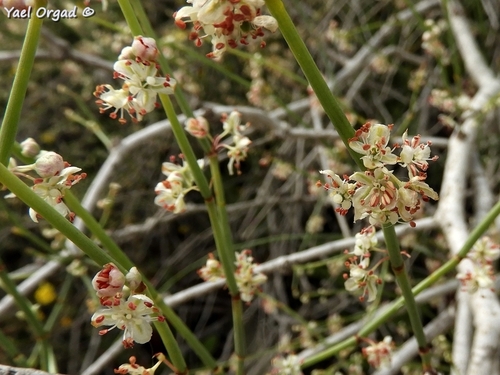
Fallopia convolvulus
(L.) A.Love
Black bindweed, Climbing buckwheat
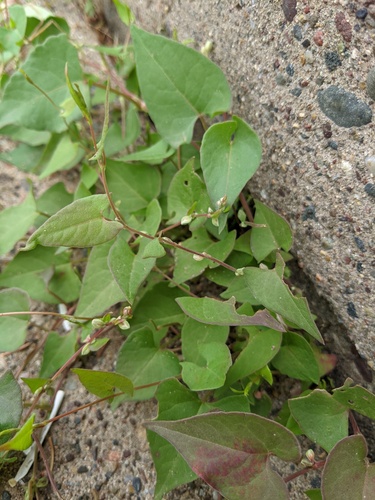
(c) Nate Martineau, some rights reserved (CC BY-NC), uploaded by Nate Martineau
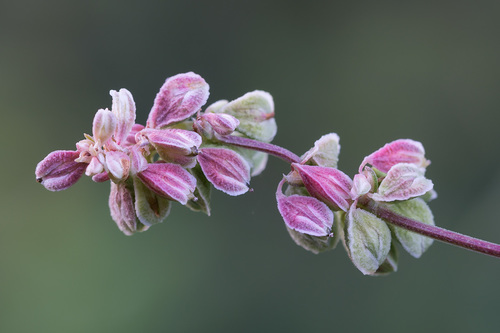
(c) Vladimir Bryukhov, some rights reserved (CC BY-NC), uploaded by Vladimir Bryukhov
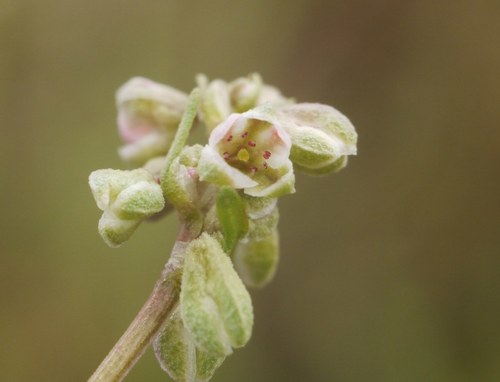
(c) Roman, some rights reserved (CC BY), uploaded by Roman
What to Eat
Edible parts: Seeds, Leaves
The seeds are made into a kind of porridge or used as flour for pancakes. The leaves are cooked as a vegetable.
Where to Find It
It is a temperate plant. It grows in moist shady places. In Pakistan it grows between 1,500-3,500 m altitude. In Sichuan and Yunnan.
Afghanistan, Africa, Asia, Australia, Balkans, Bhutan, Bosnia, Britain, Central Asia, China, Czech Republic, Europe, Himalayas, India, Indochina, Ireland, Japan, Kazakhstan, Korea, Luxembourg, Mongolia, Nepal, North Africa, North America, Pakistan, Russia, SE Asia, Spain, Tajikistan, Tasmania, Vietnam,
How to Identify
It is a climbing plant. It grows as an annual. The stems twine. The leaves end abruptly and are heart shaped. The leaf stalks are long. The flowers are white. They are in loose clusters at the ends of the plant. The fruit are a dull black colour.
Wikipedia
Source ↗Fallopia convolvulus, the black-bindweed or wild buckwheat, is a fast-growing annual flowering plant in the family Polygonaceae native throughout Europe, Asia and northern Africa. Synonyms include Polygonum convolvulus L. (basionym), Bilderdykia convolvulus (L.) Dumort, Fagopyrum convolvulus (L.) H.Gross, Fagopyrum carinatum Moench, Helxine convolvulus (L.) Raf., Reynoutria convolvulus (L.) Shinners, and Tiniaria convolvulus (L.) Webb & Moq. Other old folk names include bear-bind, bind-corn, climbing bindweed, climbing buckwheat, corn-bind, corn bindweed, devil's tether, and wild buckwheat.
Notes
There are about 9 Fallopia species.
Names & Synonyms
Corn bindweed, Divlja heljda, Habichuelones, Nghe bim
References (13)
- Ambasta, S.P. (Ed.), 2000, The Useful Plants of India. CSIR India. p 479 (As Polygonum convolvulus)
- Flora of China @ efloras.org Volume 5
- Flora of Pakistan. www.eFloras.org
- Hyde-Wyatt, B.H. & Morris D.I., 1975, Tasmanian Weed Handbook. Dept of Ag Tasmania. p 52 (As Polygonum convolvulus)
- Irving, M., 2009, The Forager Handbook, A Guide to the Edible Plants of Britain. Ebury Press p 168
- Kiple, K.F. & Ornelas, K.C., (eds), 2000, The Cambridge World History of Food. CUP p 1797 (As Polygonum convolvulus)
- Lamp, C & Collet F., 1989, Field Guide to Weeds in Australia. Inkata Press. p 224 (As Polygonum convolvulus)
- Plants for a Future database, The Field, Penpol, Lostwithiel, Cornwall, PL22 0NG, UK. http://www.scs.leeds.ac.uk/pfaf/ (As Polygonum convolvulus)
- Redzic, S. J., 2006, Wild Edible Plants and their Traditional Use in the Human Nutrition in Bosnia-Herzegovina. Ecology of Food and Nutrition, 45:189-232
- Simkova, K. et al, 2014, Ethnobotanical review of wild edible plants used in the Czech Republic. Journal of Applied Botany and Food Quality 88, 49-67
- Tasmanian Herbarium Vascular Plants list p 45
- Tardio, J., et al, Ethnobotanical review of wild edible plants in Spain. Botanical J. Linnean Soc. 152 (2006), 27-71
- Taxon 19:300. 1970