Persicaria odorata
(Lour.) Sojak
Vietnamese mint, Vietnamese coriander
(c) Lek Khauv, some rights reserved (CC BY), uploaded by Lek Khauv

no rights reserved, uploaded by Peter de Lange

no rights reserved, uploaded by Peter de Lange
What to Eat
Edible parts: Leaves, Herb
Young leaves can be used raw or cooked as a flavouring. The aroma is similar to coriander, with a hot, peppery but refreshing flavour. A few leaves can be added to a mixed salad or cooked with rice and vegetables. The flavour is destroyed by prolonged cooking. Young shoots, combined with water dropwort (Oenanthe javanica), are often added when preparing cabbage preserved in brine in the manner of sauerkraut. Older, more red leaves are generally considered too peppery for use. While relished by the Vietnamese, the flavour is not universally appreciated, though it is enjoyed by some who do not like coriander leaves. An oil called Kesom oil can be extracted from the plant and is used as a flavouring.
Where to Find It
A warm temperate to subtropical plant. It does well with lots of water. It can grow under shady conditions. It can grow in heavy soil. It can be grown in pots and hanging baskets. It suits warm or tropical conditions and cannot survive frost. It needs fertile well drained soil. It suits hardiness zones 8-10.
Asia, Australia, Cambodia, Canada, Hawaii, Indochina, Indonesia, Japan, Laos, Malaysia, North America, Pacific, SE Asia, Singapore, Tasmania, Thailand, USA, Vietnam,
How to Identify
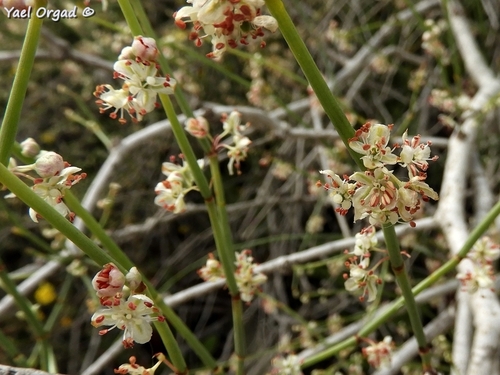
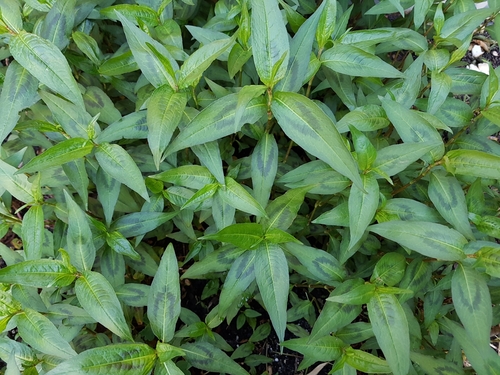
A leafy creeping plant which continues to grow from year to year. It forms roots at the nodes. The stems are reddish and have joints where the leaves join. These are 1-5 cm apart. The stems can be 35 cm high. The leaves are 5-8 cm long and sword shaped. They are green in colour with brown or red marks on the top surface. The flowers are small and pink and are produced at the end of the stems.
How to Grow
It grows easily from cuttings. The cuttings quickly form roots. Plants normally form roots along the stem where the stem touches the ground.
Propagation: Propagate by seed or by stem cuttings with 4–6 internodes, cut 8–10cm long from the tops of mature stems. Plant cuttings obliquely 5–6cm apart with a row spacing of 10–15cm in raised beds of light, well-manured soil, and water well. Under warm, humid conditions cuttings begin rooting after 3–5 days and show growth after about a week.
Medicinal Uses
The leaves are used as a diuretic, stomachic, febrifuge, and anti-aphrodisiac. Fresh leaves appear to have abortifacient properties. Juice from crushed leaves is taken as an antidote against poisonous snake bite. Externally, crushed leaves are applied to treat fever, vomiting, ringworm, and phagedaena.
Other Uses
Useful as a coriander substitute in areas where bolting is common. Attracts butterflies. Tolerates rabbit, deer, and wet soil.
Wikipedia
Source ↗Persicaria odorata is a species of flowering plant in the knotweed family, Polygonaceae. It is sometimes referred to by the common names Vietnamese coriander, rau răm (from Vietnamese), laksa leaf (calque from Malay daun laksa), Vietnamese cilantro, phak phai (from Thai: ผักแพว), praew leaf, hot mint, Cambodian mint and Vietnamese mint, is an herb whose leaves are used in Southeast Asian and Northeast Indian cooking. But despite its other name, Vietnamese coriander is unrelated to the mints, nor is it in the mint family Lamiaceae, but its general appearance and fragrance are reminiscent of them. It is also not closely related to coriander (family Apiaceae). Persicaria is in the family Polygonaceae, collectively known as "smartweeds" or "pinkweeds". The similarities in the tastes and smells between Persicaria and coriander and mint may be an example of convergent evolution.
Production
Plants grow rapidly in warm moist conditions. The leaves need to be used fresh as they do not dry satisfactorily.
Other Information
It is a cultivated food plant. It is sold in local markets.
Notes
There are about 50 Polygonum species.
Names & Synonyms
Amadokoro, Asian mint, Cambodian mint, Chan chom, Chi krasang tomhom, Coriandre du Vietnam, Daun kesom, Daun kesum, Daun laksa, Hom chan, Hot mint, Knotweed, La liao, Laksa Blatt, Laksa leaf, Paew, Pakpai, Phak phai, Phak pheo, Phrik maa, Phud phaeng, Rau Ram, Rau ram, Vietnamese coriander
References (31)
- Arora, R. K., 2014, Diversity in Underutilized Plant Species - An Asia-Pacific Perspective. Bioversity International. p 108 (As Polygonum odoratum)
- Burnie, G & Fenton-Smith, J., 1999, A Grower's Guide to Herbs. Murdoch Books. p 71 (As Polygonum odoratum)
- Cheifetz, A., (ed), 1999, 500 popular vegetables, herbs, fruits and nuts for Australian Gardeners. Random House p 147 (As Persicaria odorata)
- Creasy, R., 2000, The Edible Asian Garden. Periplus p 34 (As Polygonum odoratum)
- Cundall, P., (ed.), 2004, Gardening Australia: flora: the gardener's bible. ABC Books. p 1013 (As Persicaria odorata)
- Facciola, S., 1998, Cornucopia 2: a Source Book of Edible Plants. Kampong Publications, p 186 (As Polygonum odoratum)
- Hedrick, U.P., 1919, (Ed.), Sturtevant's edible plants of the world. p 511 (As Polygonum odoratum)
- Hemphill, I, 2002, Spice Notes. Macmillan. p 411 (As Persicaria odorata)
- Hibbert, M., 2002, The Aussie Plant Finder 2002, Florilegium. p 229, 238 (As Persicaria odorata)
- Hill, M. & Hallam, D., (eds), 1997, Na Hang Nature Reserve, Tat Ke Sector. Site description and conservation evaluation. Hanoi. p 76
- Jacquat, C., 1990, Plants from the Markets of Thailand. D.K. Book House p 61 (As Polygonum odoratum)
- Jiwajinda, S., et al, 2002, Suppressive Effects of Edible Thai Plants on Superoxide and Nitric Oxide Generation. Asian Pacific Journal of Cancer Prevention, Vol 3, 2002 (As Polygonum odoratum)
- Lazarides, M. & Hince, B., 1993, Handbook of Economic Plants of Australia, CSIRO. p 195 (As Polygonum odoratum)
- Luczaj, L., et al, 2021, Wild food plants and fungi sold in the markets of Luang Prabang, Lao PDR. Journal of Ethnobiology and Ethnomedicine (2021) 17:6 (As Polygonum odoratum)
- Martin, F.W. & Ruberte, R.M., 1979, Edible Leaves of the Tropics. Antillian College Press, Mayaguez, Puerto Rico. p 214 (As Polygonum odoratum)
- Nakahara, K. et al, 2002, Antimutagenicity of Some Edible Thai Plants, and a Bioactive Carbazole Alkaloid, Mahanine, Isolated from Micromelum minutum. Journal of Agricultural and Food Chemistry. 50: 4796-4892 (As Polygonum odoratum)
- Norrington, L., & Campbell, C., 2001, Tropical Food Gardens. Bloomings Books. p 78 (As Polygonum odoratum)
- Ogle, B. M., et al, 2003, Food, Feed or Medicine: The Multiple Functions of Edible Wild Plants in Vietnam. Economic Botany 57(1): 103-117 (As Polygonum odorum)
- Pham-Hoang Ho, 1999, An Illustrated Flora of Vietnam. Nha Xuat Ban Tre. p 743 (As Polygonum odoratum)
- Phon, P., 2000, Plants used in Cambodia. © Pauline Dy Phon, Phnom Penh, Cambodia. p 509 (As Polygonum odoratum)
- Preslia 46(2):154. 1974
- Romanowski, N., 2007, Edible Water Gardens. Hyland House. p 77
- Solomon, C., 2001, Encyclopedia of Asian Food. New Holland. p 399 (As Persicaria odorata)
- Somnasang, P., Moreno, G and Chusil K., 1998, Indigenous knowledge of wild hunting and gathering in north-east Thailand. Food and Nutrition Bulletin 19(4) p 359f (As Polygonum odoratum)
- Srichaiwong, P., et al, 2014, A Study of the Biodiversity of Natural Food Production to Support Community Upstream of Chi Basin, Thailand. Asian Social Science 10 (2): (As Polygonum odoratum)
- Staples, G.W. and Herbst, D.R., 2005, A tropical Garden Flora. Bishop Museum Press, Honolulu, Hawaii. p 464
- Terra, G.J.A., 1973, Tropical Vegetables. Communication 54e Royal Tropical Institute, Amsterdam, p 68 (As Polygonum odoratum)
- Thomson, G. & Morgan, W., (Ed.) 2000, Access to Asian Foods Newsletter, Vic Govt., Australia Issue 34; 2002 Issue 49 (As Polygonum odoratum)
- Wiersema, J. H. & Leon, B., 2013, World Economic Plants. A Standard Reference CRC Press. 2nd Ed. p 510
- Woodward, P., 2000, Asian Herbs and Vegetables. Hyland House. p 109 (As Persicaria odorata)
- Zeven, A. C. & de West, J. M. J., 1982, Dictionary of cultivated plants and their regions of diversity. Wageningen. p 62 (As Polygonum odoratum)