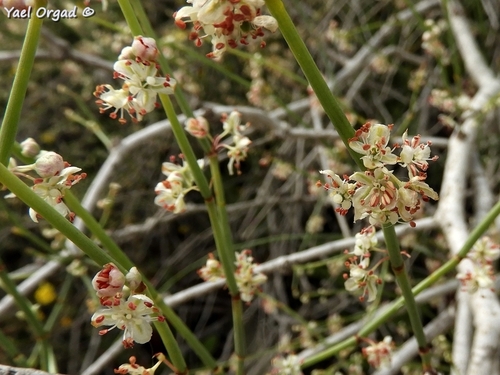
Polygonum plebeium
R. Br.
Small knotweed
no rights reserved, uploaded by 葉子
no rights reserved, uploaded by 葉子
(c) kevinjolliffe, some rights reserved (CC BY-NC), uploaded by kevinjolliffe
What to Eat
Edible parts: Seeds, Leaves, Stems, Vegetable
The soft and tender stems and leaves are cooked as a vegetable (though leaves become bitter when grown in dry places). Freshly harvested leaves can be stored 4-5 days. The seeds are crushed and cooked as damper.
Where to Find It
A tropical plant. In Nepal it grows to about 3200 m altitude. It grows in open places. It grows in damp places. It grows in the northern dried parts of West Africa. In Africa it grows between 600-2,400 m above sea levels. It can grow in arid places.
Africa, Angola, Asia, Australia, Bhutan, Botswana, Burkina Faso, Cambodia, Central Africa, China, East Africa, Eritrea, Eswatini, Himalayas, India, Indochina, Indonesia, Laos, Madagascar, Malawi, Malaysia, Middle East, Mozambique, Myanmar, Nepal, New Zealand, Northeastern India, Pakistan, Philippines, Saudi Arabia, SE Asia, Senegal, Sikkim, South Africa, Southern Africa, Swaziland, Tanzania, Vietnam, West Africa, Zambia, Zimbabwe,
How to Identify
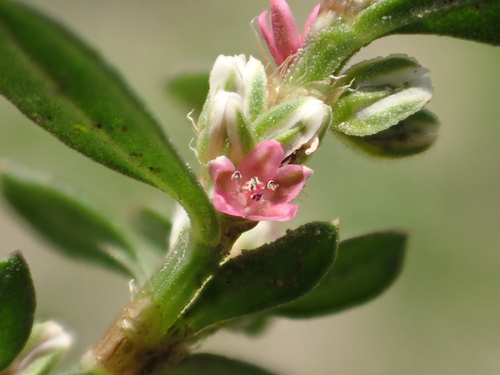
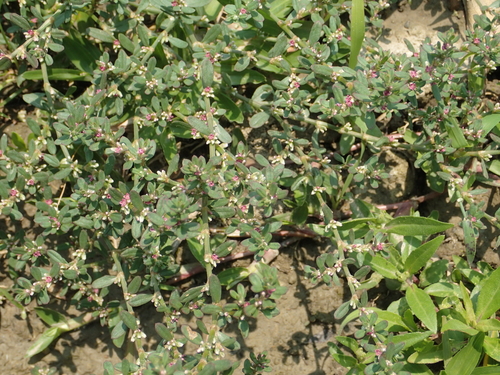
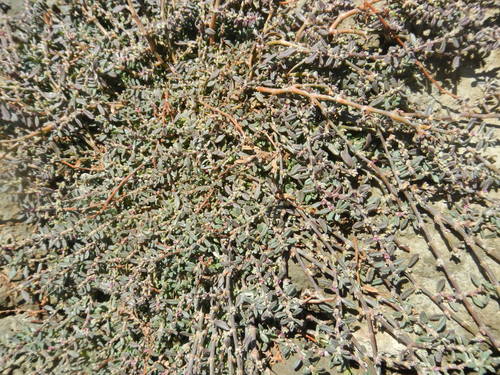
A small herb. It lays along the ground. It grows 15 cm high. The leaves are narrow. They do not have leaf stalks. There are leaf like structures at the base of the leaf stalk. The flowers are in the axils of leaves. They are pink.
Nutrition Score: 27/100
| Part | Moisture | kJ | kcal | Protein | Vit A | Vit C | Iron | Zinc |
|---|---|---|---|---|---|---|---|---|
| Leaves | 0 | — | — | 17 | — | — | — | — |
How to Grow
Plants are grown from seed or root suckers.
Medicinal Uses
The plant is used locally as an important wild vegetable in times of scarcity.
Wikipedia
Source ↗Polygonum plebeium, (common name - common knotweed), is a species of flowering plant in the knotweed family, first described in 1810 by Robert Brown from a specimen collected in Port Jackson, Australia.
Other Information
A locally important wild vegetable in times of scarcity. It is normally only occasionally eaten.
Notes
Chemical composition (after Hooper): Water = 69.36% (fresh). Fat = 2.95% (dry). Albumenoids = 17.38% (dry). Carbohydrates = 50.37% (dry). Fibre = 16.15% (dry). Ash = 15.15% (dry). Nitrogen = 2.78% (dry). Phosphoric acid = .61% (dry). Silicates = 3.27% (dry). There are about 50 Polygonum species. The Tasmanian reference may be Polygonum arenaria
Names & Synonyms
Baluni sag, Bandoki, Banjaluk, Bethe, Chakai madranga sag, Chemiti sag, Chemti sag, Chimtee sag, Chimti sag, Choti machhaichhie, Chotimachhachhie, Droonk, Dubia sag, Gavati-paral, Gorakh pan, Gull srah, Jaloo, Kethu, Khowar, Macheti, Machichi, Mechheia sag, Meree arak, Merie arak, Mooze-ara, Munia a, Muthi saga, Nga-yo-pin, Nghe thongthuong, Okthum, Pani jaluk, Pa-zun-chi-gyi, Pimpari, Pipra, Pok arkha, Pok arxa, Raniphul, Siranige soppu, Sukul jhar, Zinako okhard
References (44)
- Ambasta, S.P. (Ed.), 2000, The Useful Plants of India. CSIR India. p 481
- Arora, R. K., 2014, Diversity in Underutilized Plant Species - An Asia-Pacific Perspective. Bioversity International. p 44
- Bandyopadhyay, S. et al, 2009, Wild edible plants of Koch Bihar district, West Bengal. Natural Products Radiance 8(1) 64-72
- Baro, D., Baruah, S. and Borthukar, S. K. 2015, Documentation on wild vegetables of Baksa district, BTAD (Assam). Scholars Research Library. Archives of Applied Science Research, 2015, 7 (9):19-2
- Behera K. K., et al, 2008, Wild Edible Plants of Mayurbhanj District, Orissa, India. J. Econ. Taxon. Bot. Vol. 32 (Suppl.) pp 305-314
- Burkill, H. M., 1985, The useful plants of west tropical Africa, Vol. 4. Kew.
- Cherikoff V. & Isaacs, J., The Bush Food Handbook. How to gather, grow, process and cook Australian Wild Foods. Ti Tree Press, Australia p 196
- Curtis, W.M., 1993, The Student's Flora of Tasmania. Part 3 St David's Park Publishing, Tasmania, p 589
- Dangol, D. R., 2002, Economic uses of forest plant resources in western Chitwan, Nepal. Banko Janakari, 12(2): 56-64
- Dobriyal, M. J. R. & Dobriyal, R., 2014, Non Wood Forest Produce an Option for Ethnic Food and Nutritional Security in India. Int. J. of Usuf. Mngt. 15(1):17-37
- Dutta, U., 2012, Wild Vegetables collected by the local communities from the Churang reserve of BTD, Assam. International Journal of Science and Advanced Technology. Vol. 2(4) p 123
- Flora of Pakistan. www.eFloras.org
- Fox, F. W. & Young, M. E. N., 1982, Food from the Veld. Delta Books. p 305
- Grivetti, L. E., 1980, Agricultural development: present and potential role of edible wild plants. Part 2: Sub-Saharan Africa, Report to the Department of State Agency for International Development. p 71
- Grubben, G. J. H. and Denton, O. A. (eds), 2004, Plant Resources of Tropical Africa 2. Vegetables. PROTA, Wageningen, Netherlands. p 425
- HOOPER,
- IRVINE,
- Jain et al, 2011, Dietary Use and Conservation Concern of Edible Wetland Plants at Indo-Burma Hotspot: A Case Study from Northeast India. Journal of Ethnobiology and Ethnomedicine 7:29 p 7
- Jardin, C., 1970, List of Foods Used In Africa, FAO Nutrition Information Document Series No 2.p 96
- Joshi, N., et al, 2007, Traditional neglected vegetables of Nepal: Their sustainable utilization for meeting human needs. Tropentag 2007. Conference on International Agricultural Research for Development.
- Lazarides, M. & Hince, B., 1993, Handbook of Economic Plants of Australia, CSIRO. p 195
- Majeed, M., et al, 2021, Gathered Wild Food Plants among Diverse Religious Groups in Jhelum District, Punjab, Pakistan. Foods 2021, 10, 594.
- Manandhar, N.P., 2002, Plants and People of Nepal. Timber Press. Portland, Oregon. p 374
- Marandi, R. R. & Britto, S. J., 2015, Medicinal Properties of Edible Weeds of Crop Fields and Wild plants Eaten by Oraon Tribals of Latehar District, Jharkhand. International Journal of Life Science and Pharma Research. Vo. 5. (2) April 2015
- Martin, F.W. & Ruberte, R.M., 1979, Edible Leaves of the Tropics. Antillian College Press, Mayaguez, Puerto Rico. p 214
- Paczkowska, G . & Chapman, A.R., 2000, The Western Australian Flora. A Descriptive Calatogue. Western Australian Herbarium. p 461
- Patiri, B. & Borah, A., 2007, Wild Edible Plants of Assam. Geethaki Publishers. p 117
- Peters, C. R., O'Brien, E. M., and Drummond, R.B., 1992, Edible Wild plants of Sub-saharan Africa. Kew. p 162
- Pegu, R., et al, 2013, Ethnobotanical study of Wild Edible Plants in Poba Reserved Forest, Assam, India. Research Journal of Agriculture and Forestry Sciences 1(3):1-10
- Pham-Hoang Ho, 1999, An Illustrated Flora of Vietnam. Nha Xuat Ban Tre. p 746
- Royal Botanic Gardens, Kew (1999). Survey of Economic Plants for Arid and Semi-Arid Lands (SEPASAL) database. Published on the Internet; http://www.rbgkew.org.uk/ceb/sepasal/internet [Accessed 4th June 2011]
- Sakar, A. & Das, A. P., 2018, The traditional knowledge on edible wild leafy vegetables of Rabha Tribe in Duars of North Bengal: a potential reinforcement to food security. Pleione 12(2): 275 - 281. 2018.
- Sarma, H., et al, 2010, Updated Estimates of Wild Edible and Threatened Plants of Assam: A Meta-analysis. International Journal of Botany 6(4): 414-423
- Scudder, 1971,
- Singh, H.B., Arora R.K.,1978, Wild edible Plants of India. Indian Council of Agricultural Research, New Delhi. p 33
- Sinha, R. & Lakra, V., 2007, Edible weeds of tribals in Jharkhand, Orissa and West Bengal. Indian Journal of Traditional Knowledge 6(1) January 2007 pp 217-222
- Sundriyal, M., et al, 2004, Dietary Use of Wild Plant Resources in the Sikkim Himalaya, India. Economic Botany 58(4) pp 626-638
- Swapna, M. M. et al, 2011, A review on the medicinal and edible aspects of aquatic and wetland plants of India. J. Med. Plants Res. 5 (33) pp. 7163-7176
- Swaziland's Flora Database http://www.sntc.org.sz/flora
- Terra, G.J.A., 1973, Tropical Vegetables. Communication 54e Royal Tropical Institute, Amsterdam, p 68
- Thiselton-Dywer, W.T., (Ed.), 1913, Flora of Tropical Africa. Vol VI-section 1. Reeve, p 105
- Vartak, V.D. and Kulkarni, D.K., 1987, Monsoon wild leafy vegetables from hilly regions of Pune and neighbouring districts, Maharashtra state. J. Econ. Tax. Bot. Vol. 11 No. 2 pp 331-335
- Williamson, J., 2005, Useful Plants of Malawi. 3rd. Edition. Mdadzi Book Trust. p 205
- World Checklist of Useful Plant Species 2020. Royal Botanic Gardens, Kew