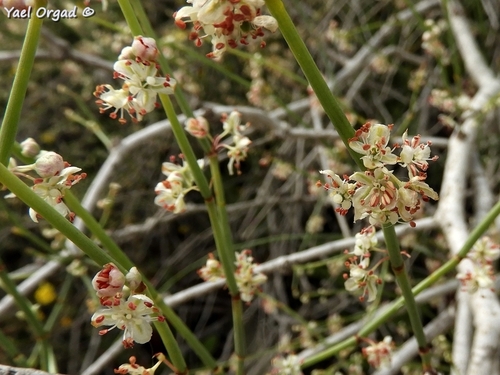
Persicaria punctata
(Elliott) Small
Dotted Smartweed

(c) aarongunnar, some rights reserved (CC BY), uploaded by aarongunnar

(c) Alex Abair, some rights reserved (CC BY), uploaded by Alex Abair

(c) Sandy Wolkenberg, some rights reserved (CC BY), uploaded by Sandy Wolkenberg
What to Eat
Edible parts: Leaves, Seeds
The leaves are cooked as a vegetable. The seeds are also edible.
Where to Find It
It is a tropical plant. In Argentina it grows from sea level to 1,000 m above sea level.
Argentina, Asia, Bolivia, Brazil, Central America*, Colombia, Cuba, Dominican Republic, Ecuador, Haiti, India, Mexico*, North America, Northeastern India, Paraguay, Puerto Rico*, South America*, Uruguay, West Indies*,
How to Identify
A herb. It can grow for 1 or 2 years. It can grow to 1 m tall. The leaves are 4-12 cm long by 1-3 cm wide.
How to Grow
It can be grown from seeds or rhizomes.
Wikipedia
Source ↗Persicaria punctata (syn. Polygonum punctatum) is a species of flowering plant in the knotweed family known by the common names dotted smartweed and dotted knotweed. Persicaria punctata is native to the Americas, where it can be found in moist and wet habitat types from Canada to Argentina including the West Indies. It is an extremely variable plant. It may be annual or perennial. Persicaria punctata grows from a rhizome and produces decumbent or erect stems which may just exceed one meter (40 in.) in length. The branching stems may root at nodes that come in contact with the substrate. The lance-shaped leaves are up to 15 centimeters long and have stipules widened into bristly brown ochrea that wrap around the stems. The inflorescence is a number of branching clusters of dotted greenish flowers with white edges, sometimes tinged pink.
Other Information
It is cultivated.
Notes
There are about 50 Polygonum species.
Names & Synonyms
Acatoria, Ajicillo, Barbasco, Caa tai, Cataia, Correguela, Duraznillo, Persiana, Pimienta de agua, Sanguinaria, Yerba del bicho, Yerba de sapo
References (7)
- Ambasta, S.P. (Ed.), 2000, The Useful Plants of India. CSIR India. p 481 (As Polygonum punctatum)
- Duke, J.A., 1992, Handbook of Edible Weeds. CRC Press. p 154 (As Polygonum punctatum)
- Malezas Comestibles del Cono Sur, INTA, 2009, Buernos Aires (As Polygonum punctatum)
- Plants of Haiti Smithsonian Institute http://botany.si.edu/antilles/West Indies (As Elliott)
- Rao, R.R. & Neogi, B., 1980, Observation on the Ethnobotany of the Khasi and Garo tribes in Meghalaya (India). J. Econ. Tax. Bot. Vol. 1 pp 157-162 (Also as Polygonum punctatum)
- Sketch bot. S. Carolina 1:455. 1817 (As Elliott)
- Torre, de la, L., et al, 2008, Enciclopedia de las Plantas Útiles del Ecuador. Herbario QCA. Pontificia Universidad Católica del Ecuador. p 526 (As Polygonum punctatum)