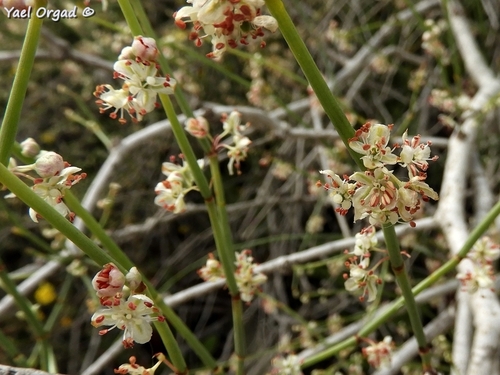
Polygonum sachalinense
F. Schmidt
Giant knotweed, Sakhalin Knotweed, Sachaline

(c) Oleksandr Shynder, some rights reserved (CC BY-NC)

(c) Oleksandr Shynder, some rights reserved (CC BY-NC)

(c) Oleksandr Shynder, some rights reserved (CC BY-NC)
What to Eat
Edible parts: Leaves, Seeds
Young spring shoots can be eaten raw or added to salads, or cooked as an asparagus substitute. They have an acid flavour, though in practice they more closely resemble a rhubarb substitute. Older stems and shoot tips can be cooked after peeling; they taste like a mild, lemon-tinged version of rhubarb and are considered superior in quality. The seed can be cooked, ground into a powder for use as a soup thickener and flavouring, or used as an extender in flour. The seed is quite small and fiddly to work with.
Known Hazards
Where to Find It
It is a temperate plant.
Asia, Britain, Europe, Japan, North America, USA,
How to Identify
A vigorous perennial growing 3.6 m tall and 3 m wide at a fast rate, hardy to UK zone 5. Dioecious with male and female flowers on separate plants; flowering occurs July to October with seeds ripening August to October. Thrives in light sandy, medium loamy, and heavy clay soils across mildly acidic to mildly alkaline pH ranges. Adapts to semi-shade or full sun and prefers moist soil.
How to Grow
Succeeds in ordinary garden soil in sun or shade. Hardy to about -25°c. An extremely invasive plant, capable of sending up new shoots at a considerable distance from the main clump. Considered a pest in many areas, if grown in the garden it should be planted within a barrier to contain its roots. Plants seem to be immune to the predations of rabbits. Dioecious, male and female plants must be grown if seed is required.
Propagation: Sow seed in spring in a cold frame. Germination is usually straightforward. Once seedlings are large enough to handle, prick them out into individual pots and plant out during summer if they have grown sufficiently. If not, keep them in a cold frame over winter and plant out the following spring after the last expected frosts. Division can be done in spring or autumn. Larger divisions can go directly into their permanent positions. Smaller divisions are better potted up and grown on in light shade in a cold frame until well established, then planted out in late spring or early summer.
Medicinal Uses
None known
Other Uses
The plant is a potential source of biomass. Its vigorous growth also makes it a candidate for use as ground cover.
Wikipedia
Source ↗A vigorous perennial growing 3.6 m tall and 3 m wide at a fast rate, hardy to UK zone 5. Dioecious with male and female flowers on separate plants; flowering occurs July to October with seeds ripening August to October. Thrives in light sandy, medium loamy, and heavy clay soils across mildly acidic to mildly alkaline pH ranges. Adapts to semi-shade or full sun and prefers moist soil.
Notes
There are about 50 Polygonum species.
Names & Synonyms
References (6)
- Duke, J.A., 1992, Handbook of Edible Weeds. CRC Press. p 154
- Elias, T.S. & Dykeman P.A., 1990, Edible Wild Plants. A North American Field guide. Sterling, New York p 99
- Facciola, S., 1998, Cornucopia 2: a Source Book of Edible Plants. Kampong Publications, p 186 (As Reynoutria sachalinensis)
- C. J. Maximowicz, Mem. Acad. Imp. Sci. St.-Petersbourg Divers Savans 9:233. 1859 (Prim. fl. amur.)
- Plants for a Future database, The Field, Penpol, Lostwithiel, Cornwall, PL22 0NG, UK. http://www.scs.leeds.ac.uk/pfaf/
- Tanaka,