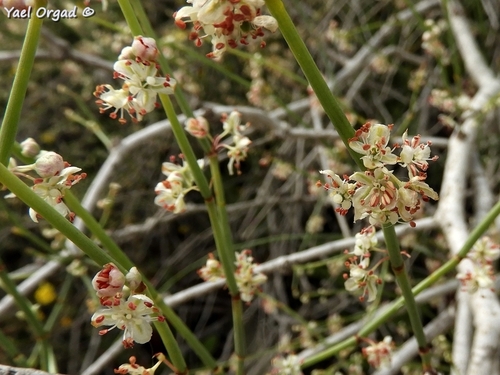
Polygonum tomentosum
Willd.
PolygonaceaeLeaves

iNaturalist · cc0
no rights reserved
no rights reserved
iNaturalist · cc0
no rights reserved
no rights reserved
iNaturalist · cc0
no rights reserved
no rights reserved
What to Eat
Edible parts: Leaves
It has been found in analysis of the intestinal contents of the Tollund Man body, found in peat in Denmark in 1950.
Where to Find It
A tropical plant. It grows in wet parts of tropical Asia.
Africa, Angola, Asia, Cambodia, Central Africa, East Africa, Ethiopia, Indochina, Madagascar, Malawi, Myanmar, Nigeria, SE Asia, South Africa, Southern Africa, West Africa,
Countries: United Arab Emirates, Afghanistan, Armenia, Angola, Azerbaijan, Bangladesh, Burkina Faso, Bahrain, Burundi, Benin, Brunei, Bhutan, Botswana, Congo (DRC), Central African Republic, Congo (Republic), Cote d'Ivoire, Cameroon, China, Cape Verde, Djibouti, Algeria, Egypt, Eritrea, Ethiopia, Gabon, Georgia, Ghana, Gambia, Guinea, Equatorial Guinea, Guinea-Bissau, Indonesia, Israel, India, Iraq, Iran, Jordan, Japan, Kenya, Kyrgyzstan, Cambodia, Comoros, North Korea, South Korea, Kuwait, Kazakhstan, Laos, Lebanon, Sri Lanka, Liberia, Lesotho, Libya, Morocco, Madagascar, Mali, Myanmar, Mongolia, Mauritania, Mauritius, Maldives, Malawi, Malaysia, Mozambique, Namibia, Niger, Nigeria, Nepal, Oman, Philippines, Pakistan, Qatar, Rwanda, Saudi Arabia, Seychelles, Sudan, Singapore, Sierra Leone, Senegal, Somalia, South Sudan, Sao Tome & Principe, Syria, Eswatini, Chad, Togo, Thailand, Tajikistan, Timor-Leste, Turkmenistan, Tunisia, Turkey, Taiwan, Tanzania, Uganda, Uzbekistan, Vietnam, Yemen, South Africa, Zambia, Zimbabwe
How to Identify
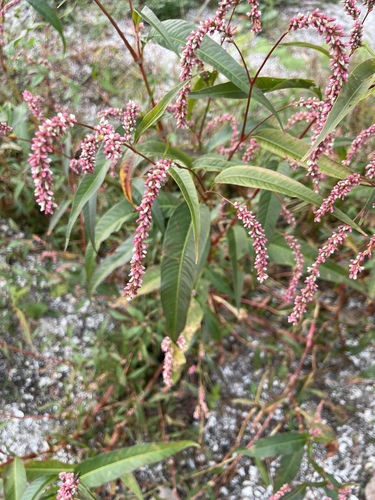
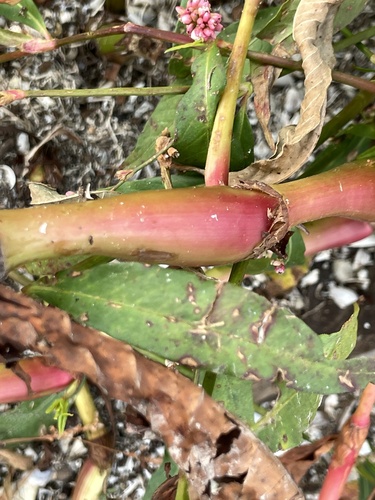
A perennial herb. It grows 0.5-1.5 m tall. It can float. The stems have stripes. The stems are 1.5 cm across. The leaves are sword shaped and have a white coating. The flower spikes occur at the top of the plant. The flowers are white. The dry fruit looks like a lens with 2 prominent sides.
Notes
There are about 50 Polygonum species.
Names & Synonyms
Kanteang hae, Kan traing he, Nghe nuoc
References (7)
- Cengel, D. J. & Dany, C., (Eds), 2016, Integrating Forest Biodiversity Resource Management and Sustainable Community Livelihood Development in the Preah Vihear Protected Forest. International Tropical Timber Organization p 125
- Jardin, C., 1970, List of Foods Used In Africa, FAO Nutrition Information Document Series No 2.p 96
- Martin, F.W. & Ruberte, R.M., 1979, Edible Leaves of the Tropics. Antillian College Press, Mayaguez, Puerto Rico. p 214
- Phon, P., 2000, Plants used in Cambodia. © Pauline Dy Phon, Phnom Penh, Cambodia. p 509
- Tanaka, Y & Van Ke, N., 2007, Edible Wild Plants of Vietnam. Orchid Press. p 122
- Terra, G.J.A., 1973, Tropical Vegetables. Communication 54e Royal Tropical Institute, Amsterdam, p 68
- Thiselton-Dywer, W.T., (Ed.), 1913, Flora of Tropical Africa. Vol VI-section 1. Reeve, p 110