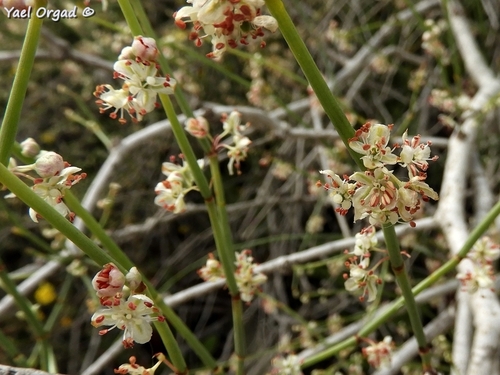
Polygonum weyrichii
(F. Schmidt ex Maxim.) Ronse Decr.
White Knotweed, Chinese knotweed

Wikimedia Commons - Qwert1234

Wikimedia Commons
What to Eat
Edible parts: Leaves, Seeds
Young shoots are eaten cooked. The seeds, though rather small and fiddly to work with, can be dried and ground into a powder for use with cereals in making bread, porridge, and similar foods.
Known Hazards
Where to Find It
It suits hardiness zones 4-8.
Asia, Japan,
How to Identify
A perennial plant growing to 1.5 m (5 ft) tall, hardy to UK zone 5. Flowers from July to September. Hermaphroditic and insect-pollinated. Adapts to light sandy, medium loamy, and heavy clay soils with mildly acid to basic pH. Tolerates semi-shade or full sun, prefers moist soil, and can withstand maritime exposure.
How to Grow
Succeeds in an ordinary garden soil but prefers a moisture retentive not too fertile soil in sun or part shade. Repays generous treatment. Plants seem to be immune to the predations of rabbits.
Propagation: Sow seed in spring in a cold frame; germination is usually free and easy. Once seedlings are large enough to handle, prick them out into individual pots and plant out during summer if they have reached sufficient size. If not, overwinter in a cold frame and plant out the following spring after the last expected frosts. Division can be done in spring or autumn. Larger divisions can go directly into permanent positions, but smaller divisions are better potted up and grown on in light shade in a cold frame until well established, then planted out in late spring or early summer.
Medicinal Uses
None known
Other Uses
None known
Wikipedia
Source ↗A perennial plant growing to 1.5 m (5 ft) tall, hardy to UK zone 5. Flowers from July to September. Hermaphroditic and insect-pollinated. Adapts to light sandy, medium loamy, and heavy clay soils with mildly acid to basic pH. Tolerates semi-shade or full sun, prefers moist soil, and can withstand maritime exposure.
Notes
There are about 50 Polygonum species.
Names & Synonyms
References (2)
- Mem. Acad. Imp. Sci. St.-Peersbourg Divers Savans 9:234. 1859 (Prim. fl. amur.) (As Polygonum weyrichii)
- Plants for a Future database, The Field, Penpol, Lostwithiel, Cornwall, PL22 0NG, UK. http://www.scs.leeds.ac.uk/pfaf/ (As Polygonum weyrichii)