Abroma augusta
(L) L.f.
Perennial Indian hemp, Maria herrania

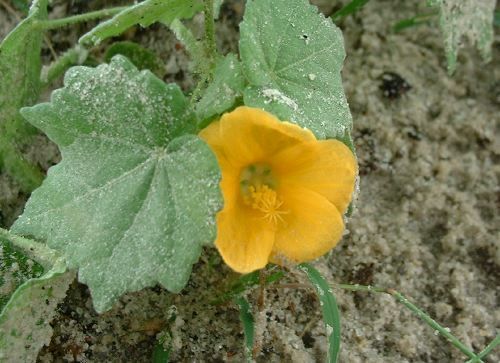
(c) Cheongweei Gan, some rights reserved (CC BY-NC)
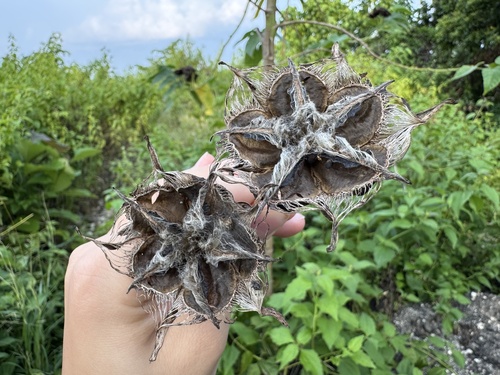
(c) Aleksandra Churilina, some rights reserved (CC BY-NC)
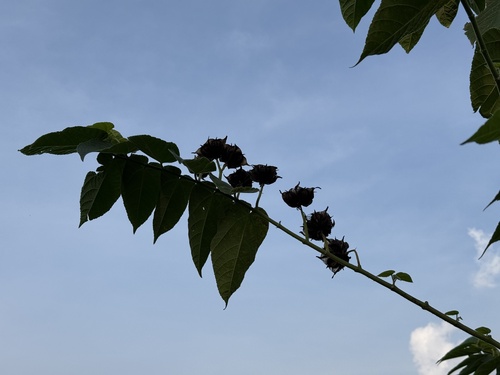
(c) Aleksandra Churilina, some rights reserved (CC BY-NC)
What to Eat
Edible parts: Leaves, Vegetable, Fruit, Seed, Seeds - oil
None known
Where to Find It
A tropical plant. It mostly grows in the highlands in the tropics. In North India it grows between 300-1,100 m above sea level. It does well in seasonally moist and dry climates. It is drought tolerant. It needs an average, well-drained soil. It needs an acid pH. It needs full sun. It suits hardiness zones 10-11.
Africa, Amazon, Asia, Australia, Brazil, China, Ecuador, Himalayas, India, Indochina, Indonesia, Malaysia, Micronesia, Myanmar, Nepal, Northeastern India, Pacific, Palau, Papua New Guinea, PNG, Peru, Philippines, SE Asia, Sikkim, South America, Thailand, Vietnam, Yap,
How to Identify
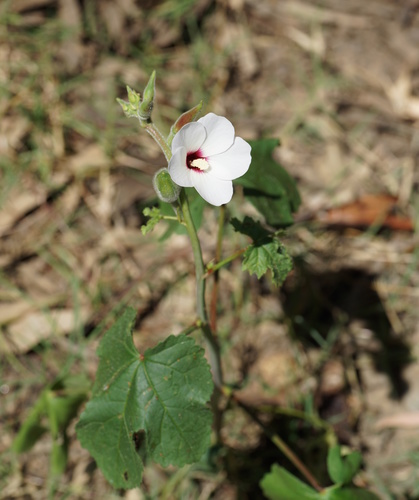
A shrub or small tree. It grows 5 m tall. There are prickles along the stem. The leaves are twice divided and there are 8-18 pairs of pinnae. There are up to 50 pairs of pinnules on each pinnae. The flowers are yellow. They are in large clusters at the ends of branches. The pods are flattened.
How to Grow
It grows wild. It can be grown from seeds or cuttings of half ripe wood. Seeds germinate in 21-30 days at 24°C.
Propagation: Propagated from seed, which germinates in 21–30 days at 72°F (24°C). Sow in April and prick out seedlings into individual pots once large enough to handle.
Medicinal Uses
The fresh viscid sap of the root bark is considered a valuable emmenagogue and uterine tonic. The plant's juice is used to treat dysmenorrhoea, and the root has been used to treat itch. The plant is also used in the treatment of diabetes.
Other Uses
The plant is used in soil reclamation projects. A high-quality fibre obtained from the bark is soft, glossy, strong, white, and clean, and is much valued for local uses — it has been suggested as a potential substitute for silk. Like jute, it is a good cordage fibre used in making ropes and nets, and is also used for false hair. The bark is retted in water for around a week before the fibres can be extracted. The plant is sometimes grown as an ornamental and is noted as an industrial fibre crop in carbon farming contexts.
Wikipedia
Source ↗Abroma augusta is a shrub growing to 3 m (9 ft) by 2 m (6 ft) at a fast rate, hardy to UK zone 10. It grows in light sandy, medium loamy, and heavy clay well-drained soils, tolerating mildly acid, neutral, and very acid pH. The plant requires full sun and prefers moist soil.
Production
In Sikkim seeds are available October to January.
Other Information
A minor wild leafy vegetable. The seeds are eaten raw by children.
Notes
There is only one Abroma species. They grow in Asia. This one is used for making ropes and strong bags (bilums). It is used in medicine. The leaves have protective effect against diabetes. It has also been put in the family Sterculiaceae.
Names & Synonyms
Batthuc, Bon naga, Boguinca, Cacahuillo, Cacao de monte, Cacau-de-jacare, Cacau-jacare, Cay tai meo, Chinne, Chuit, Devil's cotton, Dieng-tyrkhum, Kumal, Kushi bakau, Kushiikam, Kushikan, Kushikiam, Mamua, Muc, Mway-ma-naing, Mway-say, Mway-seik-phay-pin, Nesa-paubim, Nga-be, Sanukapari, Sanu kapase, Sweet chuil, Teindum, Ulat kambal, Ulat-kam-bala, Ulot kombol
References (29)
- Suppl. pl. 341. 1782 ("1781") "<I>Ambroma augusta</I>" (Abroma augustum (L.) L. f.)
- Ambasta S.P. (Ed.), 2000, The Useful Plants of India. CSIR India. p 2
- Azam, F. M. S., et al, 2014, Are Famine Food Plants Also Ethnomedicinal Plants? An Ethnomedicinal Appraisal of Famine Food Plants of Two Districts of Bangladesh. Evidence-Based Complementary and Alternative Medicine Volume 2014, Article ID 741712, 28 pages
- Badwar, R. R., & Fernandez, R. R., 2011, Edible Wild Plants of the Himachal Pradesh State by IHBT, Himalayas, Daya Publishing House,. Delhi, India
- Bennett, B. C., 1990, Useful Plants of Amazonian Ecuador. US Agency for International Development. Fifth Progress Report. New York Botanical Gardens. p 40 (As Herrania mariae)
- Borrell, O.W., 1989, An Annotated Checklist of the Flora of Kairiru Island, New Guinea. Marcellin College, Victoria Australia. p 139, 223
- Creed-kanashiro, H., et al, Traditional food system of an Awajun community in Peru. Indigenous Peoples' food systems Chp. 4 (As Herrania mariae)
- ecocrop.fao.org
- Fern, K., 2012, Tropical Species Database http://theferns.info/tropical/ (As Herrania mariae)
- Grandtner, M. M. & Chevrette, J., 2013, Dictionary of Trees, Volume 2: South America: Nomenclature, Taxonomy and Ecology. Academic Press p 298 (As Herrania mariae)
- Jiwajinda, S., et al, 2002, Suppressive Effects of Edible Thai Plants on Superoxide and Nitric Oxide Generation. Asian Pacific Journal of Cancer Prevention, Vol 3, 2002
- Kuhnlein, H. V., et al, 2009, Indigenous Peoples' food systems. FAO Rome p 82 (As Herrania mariae)
- Llamas, K.A., 2003, Tropical Flowering Plants. Timber Press. p 266
- Medhi, P., Sarma, A and Borthakur, S. K., 2014, Wild edible plants from the Dima Hasao district of Assam, India. Pleione 8(1): 133-148
- Mot So Rau Dai an Duoc O Vietnam. Wild edible Vegetables. Ha Noi 1994, p 102 (Including nutritional value)
- Paz, F. S., et al, 2021, Edible Fruit Plant Species in the Amazon Forest Rely Mostly on Bees and Beetles as Pollinators. Journal of Economic Entomology, XX(XX), 2021, 1–13 (As Theobroma mariae)
- Peekel, P.G., 1984, (Translation E.E.Henty), Flora of the Bismarck Archipelago for Naturalists, Division of Botany, Lae, PNG. p 373, 372
- Pham-Hoang Ho, 1999, An Illustrated Flora of Vietnam. Nha Xuat Ban Tre. p 495
- Powell, J.M., Ethnobotany. In Paijmans, K., 1976, New Guinea Vegetation. Australian National University Press. p 108
- Plant Resources Of South East Asia PROSEA Vol 8 p 311
- Recher, P, 2001, Fruit Spirit Botanical Gardens Plant Index. www.nrg.com.au/~recher/ seedlist.html p 4
- Savita, et al, 2006, Studies on wild edible plants of ethnic people in east Sikkim. Asian J. of Bio Sci. (2006) Vol. 1 No. 2 : 117-125
- Smith, N., et al, 2007, Amazon River Fruits. Flavors for Conservation. Missouri Botanical Gardens Press. p 150 (As Herrania mariae var. putumayonis)
- Sukarya, D. G., (Ed.) 2013, 3,500 Plant Species of the Botanic Gardens of Indonesia. LIPI p 574
- Sundriyal, M., et al, 1998, Wild edibles and other useful plants from the Sikkim Himalaya, India. Oecologia Montana 7:43-54
- Thai Forestry Bulletin 23:62-108, 1995
- Van den Eynden, V., et al, 2003, Wild Foods from South Ecuador. Economic Botany 57(4): 576-603 (As Herrania mariae var. putumayonis)
- Wild edible plants of Himachal Pradesh
- World Checklist of Useful Plant Species 2020. Royal Botanic Gardens, Kew