Quercus borealis
F. Michx.
Red oak, Norther red oak
no rights reserved
(c) cassi saari, some rights reserved (CC BY-NC)

(c) Susan Elliott, some rights reserved (CC BY-NC)
What to Eat
Edible parts: Acorns, Nuts
The northern red oak is one of the most important oaks for timber production in North America. Quality red oak is of high value as lumber and veneer, while defective logs are used as firewood. Other related oaks are also cut and marketed as red oak, although their wood is not always of as high a quality. These include eastern black oak, scarlet oak, pin oak, Shumard oak, southern red oak and other species in the red oak group. Construction uses include flooring, veneer, interior trim, and furniture. It is also used for lumber, railroad ties, and fence posts. Red oak wood grain is so open that smoke can be blown through it from end-grain to end-grain on a flat-sawn board. For this reason, it is subject to moisture infiltration and is unsuitable for outdoor uses such as boatbuilding or exterior trim. The acorns can be collected in autumn, shelled, tied up in a cloth, and leached to remove bitterness. They can then be eaten whole or ground into meal.
Where to Find It
It is a temperate plant. It grows on deep, well drained soils.
Australia, Britain, Canada, Europe, North America, USA,
How to Identify
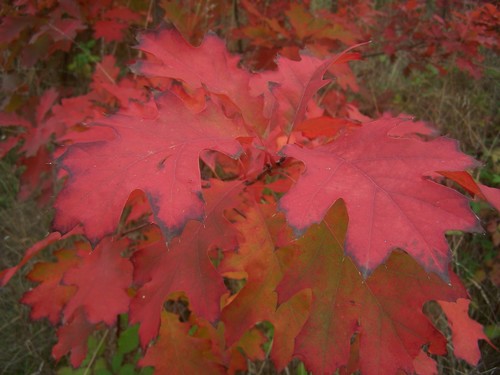
A tree with a large dome shape. The branches are straight. It grows 35 m high. The bark is shiny grey and turns dark brown and develops cracks. The leaves are alternate and with shorter stout stalks than scarlet oak. Both sides of the leaf are matt green. The leaves turn dark red in autumn. The acorns are held in shallow saucer like cups. The acorns ripen in their second year. The kernels are bitter.
How to Grow
Plants are grown from seed.
Production
It grows rapidly.
Notes
There are about 600 Quercus species.
Names & Synonyms
References (6)
- Beckstrom-Sternberg, Stephen M., and James A. Duke. "The Foodplant Database." http://probe.nalusda.gov:8300/cgi-bin/browse/foodplantdb.(ACEDB version 4.0 - data version July 1994)
- Harris, E & J., 1983, Field Guide to the Trees and Shrubs of Britain. Reader's Digest. p 153
- Hibbert, M., 2002, The Aussie Plant Finder 2002, Florilegium. p 244
- Lord, E.E., & Willis, J.H., 1999, Shrubs and Trees for Australian gardens. Lothian. p 69
- N. Amer. sylv. 1:98. 1817
- Schuler, S., (Ed.), 1977, Simon & Schuster's Guide to Trees. Simon & Schuster. No. 150
More from Fagaceae